 WhatsApp Us Now

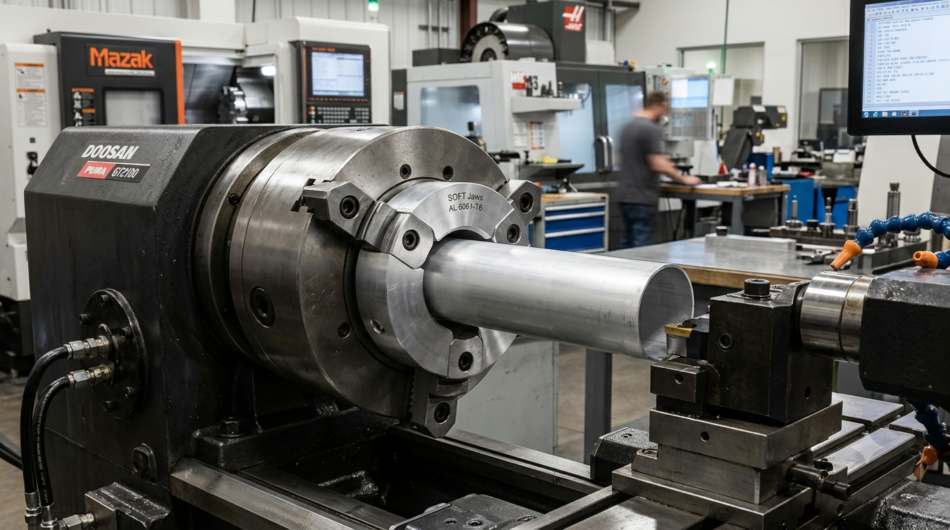
A part can look secure in a chuck but still come out oval, dented, or out of size. This problem is common when machining thin-walled parts, such as aluminum tubes, stainless steel sleeves, and plastic housings. Even a small amount of extra clamping force can change the shape of the part and lead to costly mistakes.
Soft Jaws can help solve this problem by spreading the clamping force across a larger area. When the jaws match the shape of the workpiece, they can hold it firmly without putting too much pressure on one small point.
However, choosing the right soft jaws is not just about the material. Jaw shape, contact area, clamping force, and cutting load also matter. A good setup must hold the part securely while keeping its shape and size within the required limits.
In this guide, we will explain the different types of soft jaws, how to choose the right ones, and how to set them up to reduce part damage during machining.
Why Thin-Walled Parts Need a Different Grip
Thin-walled parts need careful handling because their walls can bend or change shape under pressure. A clamping method that works well for a solid steel part may damage a thin aluminum tube or a light metal sleeve.
Before choosing jaws, machinists should understand how clamping force affects the workpiece and why contact area is important.
How Clamping Force Can Distort a Part
Clamping force is the pressure used to hold a workpiece in place. The force must be strong enough to prevent movement during machining. However, too much force can damage thin-walled parts.
For example, when a thin aluminum tube is held with too much pressure, its round shape may become oval. A stainless steel sleeve may develop dents, while a plastic housing may bend or crack.
These problems can be difficult to notice while the part is still inside the chuck. After removing the part, a machinist may find that its diameter or roundness has changed.
Excessive pressure can also cause dimensional errors even when the part does not visibly move during cutting. This is why the correct clamping force is just as important as a secure grip.
Why Jaw Contact Area Matters
Jaw contact area is the part of the workpiece that touches the jaws. When the jaws touch only a small area, the pressure is concentrated in that area. This can increase the risk of dents, marks, and deformation.
Soft jaws with a properly machined bore or contour can support more of the workpiece surface. This helps spread the clamping force and reduces pressure on individual points.
For example, flat jaws may not provide enough support for a round, thin-walled tube. A jaw set with a matching round bore can provide better contact around the tube.
The goal is not simply to increase the contact area. The jaws must also fit correctly and provide enough grip to resist the forces created during machining.
What to Check Before Choosing Jaws
Before selecting soft jaws, check these important details:
- Part shape: Is the workpiece round, square, irregular, or hollow?
- Wall thickness: How thick are the walls, and which areas are most likely to bend?
- Workpiece material: Is the part made from aluminum, stainless steel, plastic, or another material?
- Machining load: Will the job involve light finishing cuts or heavier material removal?
- Contact area: How much of the part can the jaws safely support?
- Tool access: Will the jaw design leave enough room for the cutting tool?
These details help you choose jaws that provide a safe grip without changing the part’s shape.
Which Soft Jaw Types Work Best?
Different jobs need different jaw designs. The best option depends on the part material, production quantity, required accuracy, and machining conditions.
Machinable Aluminum Jaws for Custom Shapes
Machinable aluminum jaws are a useful choice when a shop needs a custom gripping shape. They can be bored or machined to match the workpiece, making them suitable for many thin-walled components.
These jaws are often helpful for short production runs, prototype work, and jobs that need frequent jaw changes. Their custom shape can support the part over a wider area and reduce concentrated pressure.
However, aluminum jaws have limits. They may wear faster than hardened steel jaws in demanding applications. Chips can also damage the contact surface or affect the fit.
Inspect the jaws regularly and replace or remachine them when wear prevents consistent contact.
Polymer or Soft Inserts for Delicate Surfaces
Polymer jaws and soft inserts can help protect parts that are easily scratched or marked. They may be useful for plastic housings, finished surfaces, and delicate components that do not need heavy clamping force.
These materials can provide a gentler contact surface than hard metal jaws. However, their performance depends on the material, temperature, contact pressure, and cutting load.
Some polymers may soften under heat, compress under pressure, or wear after repeated use. They may not be suitable for heavy cuts or high-speed applications without proper testing.
Always check the insert manufacturer’s guidance and test the setup before using it for production.
Bored and Contoured Jaws for Wider Support
Bored soft jaws are machined with an opening that matches the shape of the workpiece. Contoured jaws use a custom profile to support parts with special shapes.
For round parts, a correctly sized bore can provide more even contact than standard flat jaws. For irregular parts, a custom contour can support selected surfaces while leaving room for machining tools.
Standard flat jaws may be enough for strong, simple workpieces. However, thin-walled components often benefit from a more accurate fit.
Collets are another option for some round parts. They can provide accurate, distributed gripping when the part size, shape, and machine are suitable. The final choice should depend on the required accuracy, available equipment, and machining load.
How to Choose Jaws for the Part and the Cut
Choosing the right soft jaws requires more than checking the size of the workpiece. You must also consider the material, cutting forces, and accuracy needed for the finished part.
Match Jaw Material to the Workpiece
The jaw material should suit the workpiece and the type of machining being done.
For aluminum tubing: Machinable aluminum jaws with a close-fitting bore can support the tube and help reduce ovalization. For finished or easily marked surfaces, suitable soft inserts may also help.
For thin stainless steel sleeves: Custom-bored jaws with a smooth contact surface can help reduce scratches and pressure marks. The setup must still provide enough grip for the cutting load.
For plastic housings: Suitable polymer inserts or custom soft jaws can protect the surface from scratches and dents. However, the material must resist compression and heat under the expected working conditions.
There is no single jaw material that works best for every part. Consider wear, grip, surface finish, chip buildup, and the force needed for machining.
Balance Holding Force With Cutting Load
The jaws must hold the workpiece securely against cutting forces. If the force is too low, the part may move, vibrate, or come loose. If it is too high, the walls may bend or change shape.
Check the chuck or fixture manufacturer’s data for gripping force, operating speed, jaw limits, and safe setup instructions. Do not guess the force needed for a delicate part.
Also consider the direction and depth of the cut. Heavy cuts may need a different gripping method from light finishing cuts.
Use a Fit Test Before Running a Full Batch
Always test a new jaw setup on a sample part before machining a full batch.
- Check the contact pattern using marking dye or another approved shop method.
- Measure runout with a suitable measuring tool.
- Measure the part’s shape before clamping and after releasing it.
- Increase or adjust clamping force only as needed, following the manufacturer’s limits.
- Record the lowest tested force that provides reliable holding under the actual cutting conditions.
A good fit test can reveal uneven contact and deformation before they affect several finished parts.
Set Up Soft Jaws to Reduce Part Damage
Even good jaws can cause problems when installed or used incorrectly. Correct setup helps improve grip, accuracy, and repeatability.
Machine the Jaw Face or Bore in Place
Boring soft jaws in the chuck can help match their gripping surface to the actual working position. This can improve contact and reduce errors caused by jaw movement or setup differences.
The general process is to install the correct jaws, prepare the chuck according to the manufacturer’s instructions, and machine the gripping surface using an approved setup.
During this process:
- Use the correct boring method and suitable jaw-loading equipment.
- Follow the chuck manufacturer’s instructions for jaw engagement and boring pressure.
- Use only approved speeds and safe operating procedures.
- Check the finished bore for size, shape, and contact with the workpiece.
Never assume that a bore is correct simply because it matches the nominal part diameter. Actual contact and measurements are important.
Keep Contact Clean and Even
Chips, burrs, and dirt between the jaws and the workpiece can prevent proper seating. Oil or coolant may also affect grip, depending on the setup.
Clean the contact surfaces before clamping. Check for damaged jaw edges and remove burrs using an approved method.
Make sure the workpiece sits in the intended position and that all jaws contact it correctly. Uneven contact can cause runout, vibration, and poor dimensional accuracy.
Track the Results That Matter
Measuring results helps you understand whether a jaw design is working well.
Record these details for each setup:
- Wall thickness: Measure the workpiece before machining.
- Clamping force: Record the measured or manufacturer-specified value using the appropriate method.
- Runout: Check how closely the part runs around its intended center.
- Scrap rate: Record the number of rejected parts compared with the total produced.
- Jaw wear: Inspect contact surfaces for damage and changes in shape.
- Setup time: Record how long it takes to prepare and verify the jaws.
Compare these measurements across different jaw designs and production batches. Use actual shop records rather than estimated improvements.
Best Soft Jaws by Application
The following examples explain how to approach common thin-walled machining jobs. The results must be confirmed through testing because actual performance depends on the part, machine, jaw design, and cutting conditions.
Case Study: Thin-Wall Aluminum Tube
A thin aluminum tube may become oval when standard jaws apply pressure over a small area.
A custom-bored soft jaw can provide a closer fit around the tube. This may spread the force more evenly and reduce changes in roundness.
To check the result, measure the tube’s roundness or diameter at several points before clamping and after releasing it. Record the clamping force and the number of rejected parts.
Compare the measurements with those from the original setup. Do not claim a reduction in ovalization or scrap unless the shop’s test data confirms it.
Case Study: Stainless Sleeve With a Finished Outer Surface
A stainless steel sleeve with a finished outer surface may show scratches or dents when held with unsuitable hard jaws.
Custom soft jaws with a smooth, broad contact area may help protect the surface while holding the sleeve securely.
Inspect the finished surface under consistent lighting and measure runout before and after machining. Also record the time needed to prepare the jaws.
These results help determine whether the custom jaw design provides enough benefit to justify its setup time and cost.
Case Study: Plastic Enclosure or Fragile Housing
Plastic housings can bend, crack, or develop marks when clamped too tightly. Suitable soft inserts may help protect their surfaces.
However, inserts that are too soft may compress and allow the part to move. Heat from machining can also affect some plastics.
Test the insert material on a sample housing. Check the part’s shape before and after clamping, inspect for surface marks, and confirm that the grip remains secure during the planned cut.
Record the insert material, cutting conditions, measured results, and any damage. Use these findings to select a setup that balances surface protection with reliable holding.
Choose Jaws That Hold Firmly Without Changing the Part
The best soft jaws for thin-walled parts provide a secure grip without putting unnecessary pressure on delicate walls. The right choice depends on jaw fit, contact area, material, and machining forces.
Custom-bored or contoured jaws can provide better support than standard flat jaws when they match the workpiece correctly. Polymer inserts may help protect delicate surfaces, while machinable aluminum jaws offer flexibility for custom gripping shapes.
Before production, test the setup on a sample part. Measure runout, check the part’s shape before and after clamping, and record the clamping force and scrap rate. Follow the chuck manufacturer’s operating limits and safety instructions throughout the process.
The main takeaway is simple: choose soft jaws that support the workpiece across a suitable contact area and use only the force needed to hold it securely during machining. This approach can help reduce part damage, improve consistency, and avoid unnecessary waste.


