 WhatsApp Us Now

If you search for the best ADHD supplements, you will find a long list of products promising better focus, memory, energy, and productivity. But choosing a supplement for ADHD is not as simple as picking the product with the most ingredients.
There is currently no dietary supplement that can be considered a proven replacement for evidence-based ADHD treatment in adults. Some supplements, including omega-3 fatty acids and certain vitamins or minerals, have been studied, but results vary and the evidence is often limited.
That does not mean supplements have no place in a healthy routine. It means they should be evaluated based on the ingredient, the quality of the evidence, individual nutritional needs, and potential interactions with medications.
What Are ADHD Supplements?
ADHD supplements are non-prescription products marketed to support areas such as attention, concentration, memory, mood, or energy.
They can include:
- Omega-3 fatty acids
- Vitamins and minerals
- Herbal extracts
- Amino acids
- Botanical ingredients
- Functional mushrooms
- Combination formulas
Some products are sold as capsules, powders, tablets, or gummies. The format itself does not determine whether a supplement works.
A product called an ADHD focus supplement, for example, may contain several ingredients associated with cognitive health, but that does not necessarily mean the finished product has been clinically tested in adults with ADHD.
This is one of the most important things to remember when comparing supplements.
What Are the Best ADHD Supplements for Adults?
There is no scientifically established single “best” supplement for every adult with ADHD. Research has explored several nutrients and natural products, but the strength of evidence differs substantially.
1. Omega-3 Fatty Acids
Omega-3s are among the most frequently researched supplements in relation to ADHD.
They are found naturally in foods such as fatty fish and are also available as supplements.
Research has produced mixed results. A 2023 meta-analysis of randomized controlled trials found that omega-3 supplementation did not significantly improve core ADHD symptoms overall compared with placebo, although longer treatment periods showed a possible benefit that requires further investigation.
NCCIH likewise describes the evidence as uncertain and notes that much of the ADHD research has focused on children and adolescents rather than adults.
So omega-3s may be worth discussing with a healthcare professional, particularly as part of overall nutrition, but they should not automatically be viewed as an ADHD treatment.
2. Vitamins and Minerals
You may also see vitamins for ADHD containing nutrients such as vitamin D, magnesium, zinc, iron, or B vitamins.
These nutrients are important for normal health. However, having an adequate nutritional status and taking additional supplements are two different things.
If someone has a documented deficiency, correcting it can be important. But that does not mean taking extra amounts will improve ADHD symptoms.
High doses of some vitamins and minerals can also cause unwanted effects, making it important to avoid the assumption that more is better.
A balanced diet remains a basic part of healthy ADHD management. NICE guidance emphasizes good nutrition, a balanced diet, and regular exercise for adults with ADHD.
3. Herbal Supplements
Herbal products are another category commonly promoted as natural ADHD supplements.
Ingredients such as ginkgo, ginseng, bacopa, and other botanical extracts have been investigated, but the evidence is inconsistent.
NCCIH reports that several complementary approaches studied for ADHD have limited or inconclusive evidence. It also highlights that herbal products can have side effects and interact with medications.
For example, St. John’s wort can interact with a number of medicines, which is one reason “natural” should never automatically be interpreted as “risk-free.”
What About Mushroom Supplements for ADHD?
Mushrooms have become increasingly popular in the wellness and cognitive-support space.
You may see products marketed as mushroom supplements for ADHD, mushroom gummies for ADHD, or mushroom-based focus formulas.
Functional mushrooms such as Lion’s Mane have attracted scientific interest because researchers are investigating their potential neurological and cognitive effects. However, research specifically showing that mushroom supplements effectively treat adult ADHD remains limited.
That distinction matters.
A mushroom product may be designed to support general wellness or cognitive health without having clinical evidence demonstrating that it treats ADHD.
If you are considering mushroom products, look at the specific mushroom species, whether the product contains whole mushroom material or an extract, and what evidence exists for that particular ingredient.
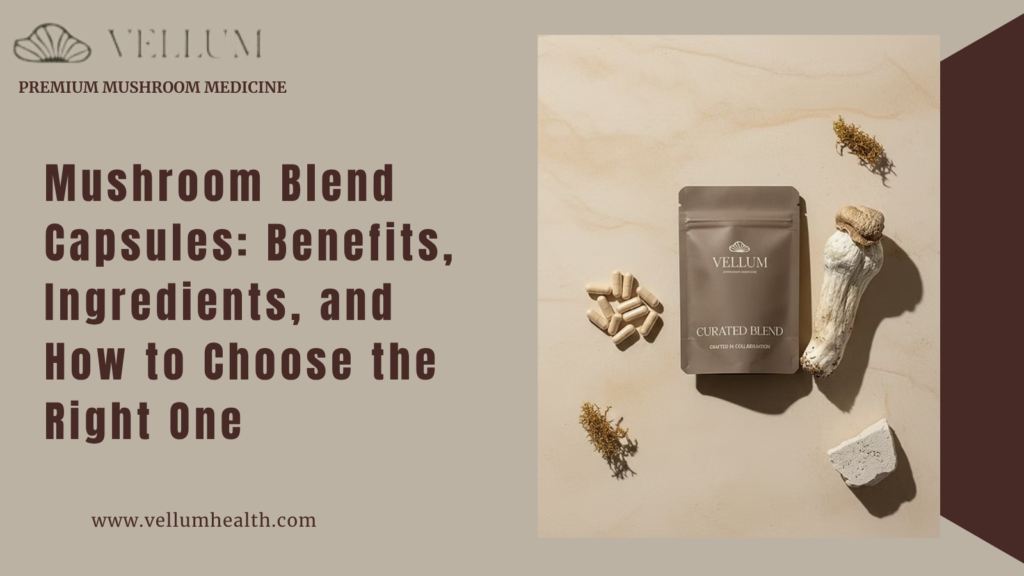
Mushroom Gummies vs. Mushroom Capsules
The word “mushroom” on a supplement label does not tell you everything about the product.
Mushroom gummies for ADHD may contain extracts or powders combined with sweeteners and other ingredients. Mushroom capsules may contain powdered mushroom material, extracts, or blends.
You may also come across:
- Mushroom blend capsules
- Mushroom extract capsules
- Functional mushroom capsules
- Mushroom powders
- Mushroom gummies
These terms describe product formats or formulations, not proof of effectiveness for ADHD.
It is also important to distinguish functional mushrooms from psychoactive mushroom products. Names such as Penis Envy capsules or Blue Pulaski mushroom capsules can refer to products associated with psilocybin-containing mushrooms rather than conventional functional mushroom supplements. They should not automatically be grouped together with products such as Lion’s Mane or Reishi.
What Should You Look for in an ADHD Supplement?
Rather than searching only for the product labeled “best,” look at the details behind the product.
Check the Ingredient List
Look for clearly identified ingredients and amounts. Avoid relying solely on broad claims such as “supports focus” or “boosts brain power.”
Look for Evidence
Ask whether the actual ingredient has been studied in humans and whether those studies involved adults with ADHD.
Evidence from laboratory research or studies involving a different population does not automatically translate into a proven ADHD benefit.
Consider Your Existing Medications
Supplements can interact with prescription and over-the-counter medicines.
NCCIH recommends discussing complementary health products with healthcare providers and checking for potential side effects or interactions before use.
Avoid “Too Good to Be True” Claims
Be cautious of products promising instant focus, dramatically increased productivity, or a complete replacement for ADHD medication.
ADHD is a complex neurodevelopmental condition, and no single supplement should be presented as a universal solution.
Can Supplements Replace ADHD Medication?
Generally, supplements should not be treated as automatic substitutes for prescribed ADHD treatment.
Evidence-based ADHD care can involve medication, psychological or behavioral interventions, environmental changes, or combinations of these approaches depending on the individual’s needs.
NICE guidance recommends considering medication for adults when ADHD symptoms significantly affect everyday life and also describes non-pharmacological approaches in appropriate circumstances.
If you are already taking ADHD medication and want to add a supplement, speak with your healthcare professional first. Do not stop or change prescribed medication based solely on supplement marketing claims.
Frequently Asked Questions
What are the best ADHD supplements for adults?
There is no single supplement proven to be the best for all adults with ADHD. Omega-3s, vitamins, minerals, herbs, and other ingredients have been studied, but the evidence varies and remains limited for many products.
Do natural ADHD supplements work?
Some ingredients have shown potential in research, but evidence is generally inconsistent. A supplement should not be assumed to treat ADHD simply because it is described as natural.
Are vitamins good for ADHD?
Vitamins are important for overall health, particularly when someone has a deficiency. However, taking additional vitamins has not been established as a general treatment for adult ADHD.
Do mushroom supplements help with ADHD?
Research into functional mushrooms and cognitive health is ongoing. At present, there is not enough clinical evidence to consider mushroom supplements an established treatment for adult ADHD.
The Bottom Line
The search for the best ADHD supplements can quickly become confusing because supplement marketing often moves faster than the research.
Omega-3 fatty acids have received considerable attention, while vitamins, minerals, herbs, and functional mushrooms have also been investigated. However, the evidence is not strong enough to say that one supplement works for every adult with ADHD, or that supplements can replace established ADHD treatment.
A more useful approach is to focus on the ingredient rather than the marketing label. Look at the available human research, understand what the supplement is actually intended to do, check for potential interactions, and consider your individual nutritional needs.
For readers interested in functional mushrooms and evidence-informed wellness, Vellum Health provides educational resources that can help you better understand mushroom ingredients, supplements, and what current research does — and does not — tell us.


