 WhatsApp Us Now

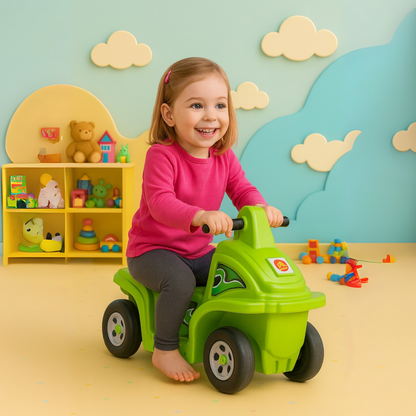
A pretend drive around the garden can be more than entertainment. Age-appropriate ride-on toys give preschool children opportunities to move, explore and practise new skills. Foot-powered cars and tricycles can be useful additions to playtime when they match a child’s abilities and are used under supervision.
Encouraging Movement and Coordination
Pushing along with their feet or turning pedals gets children moving. Steering, stopping and changing direction also provide practice in coordinating movements. Early childhood guidance includes tricycles among the equipment that supports preschoolers’ large-muscle development.
Creating Opportunities to Learn Through Play
Ride-on toys can turn an ordinary space into an imaginary bus route, delivery round or shopping trip. Parents and teachers can introduce simple games, such as stopping at a pretend crossing or following a clear path. These activities give children opportunities to practise listening, making choices and taking turns.
Choosing the Right Ride-On Toy
Consider the child’s size, coordination and confidence alongside the manufacturer’s age and weight guidance. They should be able to reach the ground or pedals as intended and control the toy comfortably. For tricycles, the American Academy of Pediatrics notes that most children are ready around age three, although individual readiness varies.
Foot-powered and pedal-powered toys require active movement; battery-powered models offer a different experience and should not be assumed to provide the same exercise.
Keeping Playtime Safe
Supervise riding on flat, traffic-free surfaces away from stairs, pools and driveways. Follow the product’s instructions, check for loose or damaged parts, and use appropriate protective equipment. For tricycles, a properly fitted bicycle helmet and closed-toe shoes are recommended.
With a suitable toy and a safe place to explore, riding can become an enjoyable part of a preschooler’s varied, active playtime.


