 WhatsApp Us Now
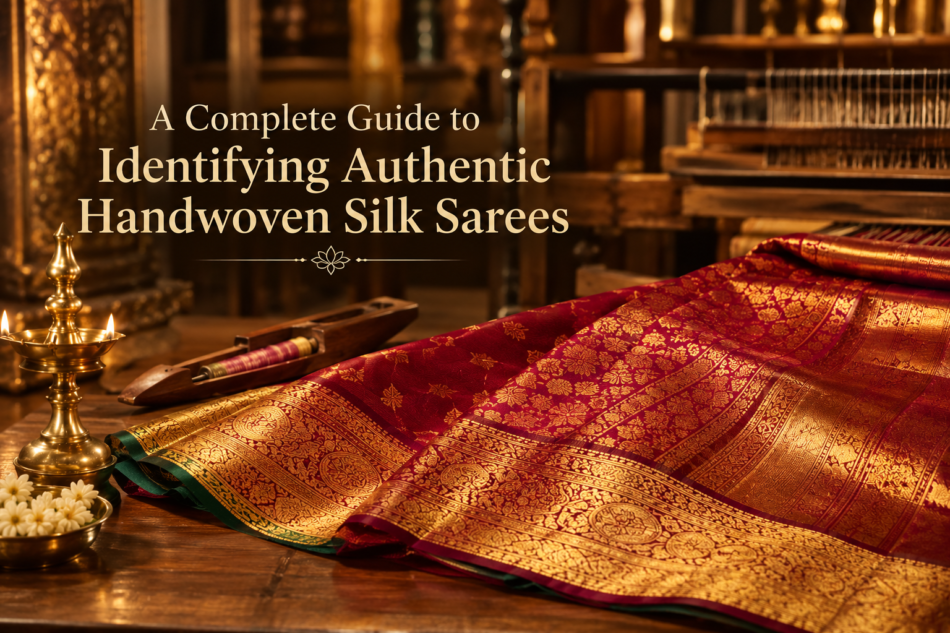
Handwoven silk sarees are treasured for their exceptional craftsmanship, luxurious texture, and timeless beauty. Whether you’re buying a saree for a wedding, a festival, or as a family heirloom, knowing how to identify an authentic handwoven piece helps you make a valuable investment. From examining the weave to understanding traditional techniques, every detail reveals the artistry behind these remarkable creations. Even styles like a borderless Kanjivaram saree showcase the precision and skill that distinguish genuine handwoven silk from machine-made alternatives.
Understand the Difference Between Handwoven and Machine-Made Silk
The biggest difference lies in the weaving process. Handwoven sarees are created on traditional looms by skilled artisans who carefully interlace every thread. This process takes days or even weeks, resulting in subtle variations that reflect genuine craftsmanship. Machine-made sarees, on the other hand, are produced much faster and often have a more uniform appearance that lacks the character of handcrafted work.
Feel the Texture of the Silk
One of the easiest ways to recognize authentic silk is by touching the fabric. Genuine handwoven silk feels smooth, rich, and slightly textured rather than overly glossy or synthetic. It has a natural weight that allows the saree to drape gracefully while maintaining its elegant structure.
When you gently fold the fabric, it should create soft, flowing pleats instead of stiff or slippery folds. This natural movement is often a sign of high-quality silk.
Examine the Weaving Closely
Looking closely at the weave can reveal whether a saree has been handcrafted. Authentic handwoven silk often contains tiny irregularities that occur naturally during manual weaving. These slight variations are not flaws but evidence of skilled artisan work.The borders, pallu, and body should also connect seamlessly, with intricate patterns appearing carefully aligned throughout the saree.
Check the Zari Work
Traditional silk sarees are often admired for their beautiful zari work. High-quality zari has a rich metallic appearance that complements the silk without looking overly bright or artificial.Carefully inspect the woven motifs and borders. Authentic zari work usually feels integrated into the fabric rather than appearing printed or loosely attached, making it another useful indicator of genuine craftsmanship.
Look at the Reverse Side
The reverse side of a handwoven saree can reveal valuable clues about its authenticity. Unlike printed fabrics, woven designs appear naturally on both sides because they are created during the weaving process.Although the back may not look identical to the front, the craftsmanship should still appear neat, with threads woven securely into the fabric.
Observe the Color and Finish
Authentic silk sarees often feature rich, vibrant colors with a natural depth that enhances their luxurious appearance. The finish should look elegant rather than excessively shiny, allowing the beauty of the silk itself to stand out.Traditional dyeing methods often create colors that remain beautiful for years when the saree is cared for properly.
Consider the Artisan’s Craftsmanship
Every genuine handwoven saree reflects the dedication of experienced weavers who preserve centuries-old techniques. The time invested in creating each piece contributes to its uniqueness, making it more than just a garment.Supporting authentic handloom craftsmanship also helps preserve traditional weaving communities and their remarkable heritage.
Buy from Trusted Sources
Choosing a reliable seller is one of the best ways to ensure authenticity. Reputable stores usually provide clear information about the weaving process, silk quality, and craftsmanship behind each saree.
Taking time to ask questions about the fabric, weaving technique, and care instructions can also help you make a confident purchase.
Invest in Timeless Handloom Heritage
An authentic handwoven silk saree is an investment in tradition, artistry, and lasting elegance. By paying attention to texture, weaving, zari work, and overall craftsmanship, you can confidently identify a genuine piece that will remain beautiful for generations. Exploring iconic weaving styles such as Korvai Kanjivaram sarees further highlights the extraordinary skill and heritage that continue to make South Indian handloom traditions truly timeless.


