 WhatsApp Us Now

Industrial processing plants often handle challenging materials such as slurry, wastewater, pulp, sludge, and other fluids containing suspended solids. These applications require valves that can manage demanding flow conditions while providing dependable isolation. Selecting an unsuitable valve may lead to leakage, blockages, excessive wear, and frequent maintenance.
Businesses looking for a reliable knife gate valve manufacturer in Ahmedabad should understand the importance of valve design, material selection, pressure ratings, and application requirements. Choosing the correct knife gate valve helps improve operational reliability and supports efficient industrial processing.
What Is a Knife Gate Valve?
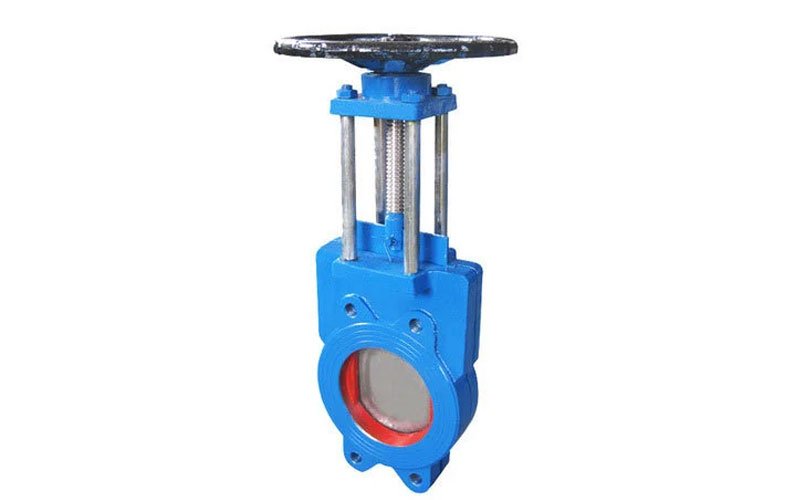
A knife gate valve is an industrial valve designed primarily for on-off flow control in applications involving liquids, slurry, and certain media containing suspended solids.
It uses a flat, blade-like gate that moves vertically through the flow passage. As the gate closes, its sharp lower edge helps cut through or move past certain soft solids and fibrous materials.
Knife gate valves are available in different designs, including unidirectional and bidirectional configurations. Their suitability depends on the media, pressure, temperature, and required sealing performance.
Why Proper Valve Selection Is Important
Different industrial applications have different operating conditions. A valve suitable for wastewater treatment may not be appropriate for highly abrasive mining slurry or chemical processing.
Selecting the correct knife gate valve helps businesses:
- Reduce the risk of unsuitable sealing and leakage.
- Handle solids-containing media more effectively.
- Minimise unnecessary maintenance and downtime.
- Improve isolation performance.
- Support reliable operation under specified conditions.
The valve must always be selected according to the actual application rather than its size alone.
Consider the Type of Media
The characteristics of the material passing through the valve are among the most important selection factors.
Slurry: Slurry applications may contain suspended solids that can cause abrasion and wear. The valve should have suitable construction and sealing arrangements.
Wastewater: Wastewater systems may contain suspended particles, sludge, and fibrous materials. The valve design should accommodate the expected media.
Pulp and Paper: Fibrous materials require suitable gate movement and flow passage design to minimise operational difficulties.
Mining Applications: Abrasive slurry can cause significant wear, making material selection and internal construction especially important.
Understanding the media helps determine the appropriate valve design and construction materials.
Choose Suitable Body and Gate Materials
Material selection directly affects valve durability and resistance to corrosion and abrasion.
Common material options include:
- Cast Iron: Used in various general-purpose industrial applications.
- Carbon Steel: Suitable for applications requiring mechanical strength.
- Stainless Steel: Often selected where corrosion resistance is important.
- Special Alloys: May be considered for demanding chemical or corrosive environments.
The gate material should also be compatible with the operating media. Buyers should evaluate the chemical composition, temperature, and abrasive characteristics before finalising their selection.
Understand Pressure and Temperature Requirements
Every knife gate valve has specified pressure and temperature limits. Selecting a valve outside its rated operating conditions may affect safety, sealing, and service life.
Buyers should confirm the maximum working pressure, operating temperature, and pressure difference across the closed valve.
It is also important to understand whether the valve will operate under full pressure, low-pressure conditions, or intermittent service. These details help determine the correct construction and sealing arrangement.
Evaluate Sealing and Operating Mechanisms
Knife gate valves may use different seat and sealing arrangements depending on their design and application.
Soft-seated designs can provide effective shut-off in suitable applications, while metal-seated designs may be considered for certain demanding operating conditions.
Operating mechanisms may include:
- Manual handwheel operation
- Pneumatic actuation
- Electric actuation
- Hydraulic actuation
The choice depends on valve size, operating frequency, accessibility, and automation requirements.
Common Industrial Applications
Knife gate valves are widely used in industries that require isolation of solids-containing or challenging media.
- Wastewater treatment plants
- Mining and mineral processing
- Pulp and paper manufacturing
- Chemical processing facilities
- Power generation plants
- Sludge and bulk material handling systems
Each application requires a valve with suitable pressure ratings, materials, and sealing characteristics.
Importance of Quality and Inspection
Before purchasing, buyers should review the valve’s technical specifications, material details, dimensional requirements, and relevant testing documentation.
Allied Valves India is a business name buyers may consider when exploring industrial valve sourcing options. Buyers should independently verify product specifications, application suitability, quality documentation, and commercial terms before placing an order.
Regular inspection and maintenance of the gate, seats, packing, and operating mechanism also help maintain dependable performance.
Conclusion
Proper knife gate valve selection is essential for reliable industrial processing, particularly when handling slurry, wastewater, pulp, and other challenging media. Factors such as valve design, material compatibility, pressure rating, sealing arrangement, and operating mechanism all influence performance.
By evaluating these requirements carefully and selecting a suitable valve, industries can reduce operational problems, improve maintenance planning, and support dependable flow isolation.


