 WhatsApp Us Now

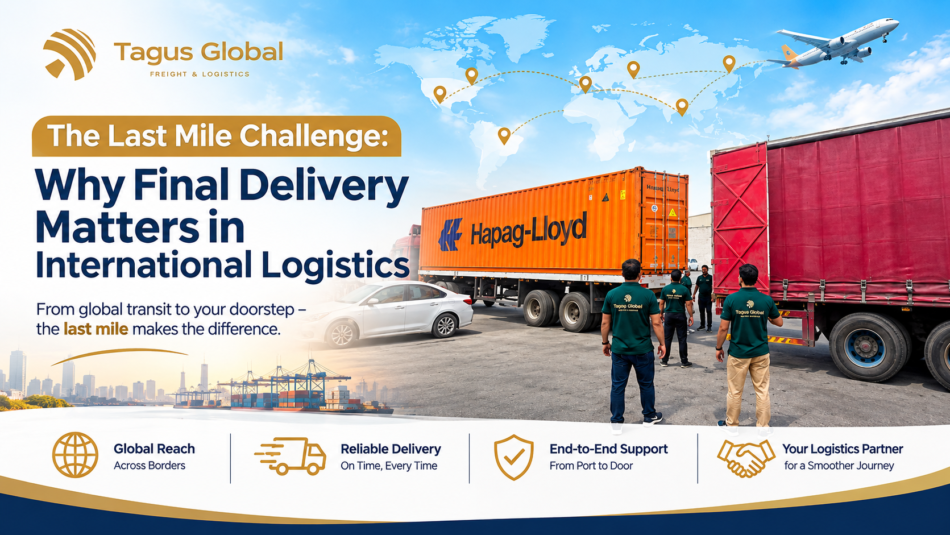
A shipment can cross oceans on schedule and still disappoint. The vessel docks, the paperwork clears, and then everything depends on a short stretch of road between the port and the customer’s door. That final stretch, the last mile, is where international logistics stops being a process and becomes a personal experience. In 2026, with Saudi Arabia handling record volumes, it is also where the gap between good and average providers shows most.
Why Customers Judge You on the Final Delivery
Customers rarely remember the ocean leg. They remember whether the delivery matched the promise. Bringg’s 2026 Delivery Experience Survey of 1,040 consumers found that 65 percent said a good delivery experience made them buy from a brand again, even at a higher price. The reverse is just as strong, since half of shoppers said they stopped buying from a retailer after a bad delivery. The damage is also quiet. A separate 2026 Bringg report found that 42 percent of shoppers are likely to stop buying after a failed delivery, yet only 33 percent would leave a negative review. Most unhappy customers simply disappear, so a provider may never hear what went wrong.
Saudi Arabia in 2026: More Volume, More Handoffs
The Kingdom’s delivery market is moving fast. The delivery sector handled more than 132 million orders in the second quarter of 2026, growth of 30.5 percent. Online spending is rising alongside it. Ecommerce sales through Mada cards reached SAR 37.6 billion in July 2026, up 26 percent from a year earlier.
Every extra order is another handoff between port, warehouse, truck and recipient. For any business choosing a Freight forwarder in Saudi Arabia, final delivery is no longer a side detail. It is a core part of what the contract should promise.
From Jeddah Port to the Doorstep
Jeddah shows the pressure clearly. Jeddah Islamic Port handled a record 582,900 TEUs in October 2026, 27.45 percent above its previous peak. Container handling across Saudi ports rose 14 percent year on year to about 866,200 TEUs. Back in July, daily truck movements at the port reached 20,000.
Busy ports mean crowded gates, tight truck slots and warehouses working near capacity. That is why Freight forwarding companies in Jeddah are best judged not by how fast they clear a container, but by how reliably they move it onward to a home, an office or a warehouse.
Where Delivery Delays Really Come From
Bringg’s 2026 Last-Mile Performance Outlook surveyed 150 executives at large retail and logistics companies. For operators running their own fleets, late deliveries were the top challenge at 37 percent, with inaccurate ETAs, capacity constraints and exception handling each named by 30 percent. Even firms that control their own trucks struggle with timing.
Saudi rules add another layer. Since January 1, 2026, the Transport General Authority requires every shipment delivered within the Kingdom to carry a valid National Address. A missing or incorrect address is no longer just an inconvenience, it can stop a delivery. Add port congestion, document mismatches and recipients who are not available, and small gaps stack up fast. The fix is rarely a new gadget. It is clear ownership. Someone must be responsible from the dock to the doorstep, and the customer must know who that is.
Tracking and Communication Are Part of the Service
Tracking is the promise that someone is watching. When updates stop, customers assume the worst. Because unhappy shoppers tend to leave rather than complain, silence from a provider is costly.
Useful tracking is simple: a confirmed delivery window, a message when the truck is close, a driver contact number and proof of delivery afterwards. Accurate arrival estimates matter too, since nearly one in three fleet operators in the Bringg outlook name inaccurate ETAs as a top challenge.
Choosing a Forwarder Who Owns the Last Mile
Rankings and advertisements say very little about final delivery. When comparing the Top freight forwarders in Saudi Arabia, ask questions that reveal how they behave when something goes slightly wrong:
- Who is my single point of contact until the shipment is delivered?
- How do you confirm delivery windows, and what happens if I miss one?
- How do you check the National Address and documents before dispatch?
- What proof of delivery do I receive, and how quickly?
Clear, specific answers usually signal a team that manages the last mile well. At Tagus Global, we treat final delivery as part of the shipment itself, not an afterthought. Our teams coordinate the handover between port, transport and the receiving address, and keep customers informed so nobody is left guessing.
Final Thoughts
Saudi logistics in 2026 is full of impressive numbers, from record port volumes to booming order counts. Yet customers measure success with one simple test: did it arrive when and how I expected?
The last mile is where that test is passed or failed. Businesses and families who choose partners that take this stretch seriously save money, avoid stress and build trust that lasts well beyond one shipment.
Frequently Asked Questions
1. What is the last mile in international logistics?
It is the final leg of a shipment’s journey, from the port or local hub to the receiving address. It is short in distance but often decides how the customer rates the whole service.
2. Why do delivery delays still happen in 2026?
Bringg’s 2026 outlook shows late deliveries and inaccurate ETAs remain top challenges even for companies running their own fleets. In Saudi Arabia, port congestion and address or document errors add to the risk.
3. What is the National Address requirement for deliveries in Saudi Arabia?
Since January 1, 2026, shipments delivered within the Kingdom must include a valid National Address. Checking it before dispatch helps avoid failed or delayed deliveries.
4. How does tracking improve customer satisfaction?
It removes guesswork. Delivery windows, timely alerts and proof of delivery keep customers informed, which matters because many unhappy customers leave without complaining.
5. What should I ask a forwarder about final delivery?
Ask who your single contact is, how delivery windows are confirmed, how addresses and documents are verified, and what proof of delivery you receive.


