 WhatsApp Us Now

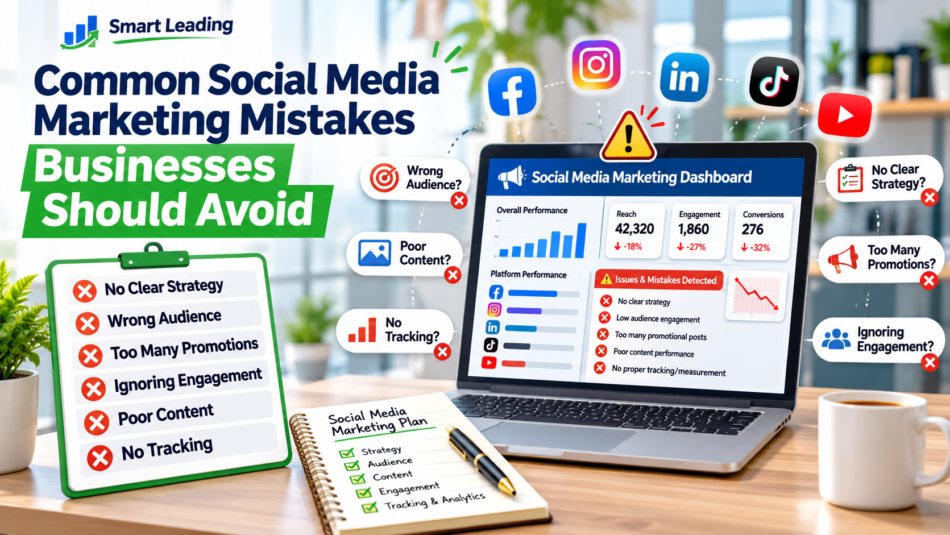
Social media marketing has become an important part of business growth. From small local businesses to established companies, brands use platforms like Facebook, Instagram, LinkedIn, and TikTok to reach potential customers, promote their services, and build stronger relationships with their audience. However, having a social media presence does not automatically lead to more customers or higher sales. Many businesses spend time creating posts, sharing updates, and running advertisements without seeing meaningful results. In most cases, the problem is not social media itself but the mistakes businesses make when planning and managing their marketing activities.
Understanding common social media marketing mistakes can help businesses use their resources more effectively. Whether your goal is to increase brand awareness, generate leads, or improve customer engagement, avoiding these mistakes can help you develop a stronger digital marketing strategy and achieve better long-term results.
Why Social Media Marketing Mistakes Can Affect Business Growth
Social media provides businesses with opportunities to communicate directly with their customers. However, it is also a competitive environment where people see content from hundreds of brands, creators, and other users. If your business content does not provide value or connect with the right audience, people may scroll past it without taking action. Poor social media strategies can result in low engagement, limited website traffic, wasted advertising budgets, and missed customer inquiries. These problems often occur when businesses focus on posting content without understanding their audience or measuring performance.
For example, a company may publish posts every day but fail to generate leads because its content does not explain how its services solve customer problems. Successful social media marketing requires more than consistent activity. Businesses need clear objectives, relevant content, effective communication, and regular performance analysis. Identifying common mistakes is the first step toward building a marketing strategy that supports measurable business growth.
1. Starting Social Media Marketing Without a Clear Strategy
One of the most common mistakes businesses make is creating social media accounts without developing a marketing plan. Many business owners begin posting because competitors are active on social media. They share promotional graphics, product images, or business updates without defining what they want to achieve. Although these activities may generate occasional engagement, they often fail to support specific business objectives. Without a strategy, businesses may struggle to maintain consistent messaging, identify their ideal customers, or measure the effectiveness of their campaigns.
How to Avoid This Mistake
Start by identifying the main purpose of your social media marketing efforts.
For example, you may want to increase brand awareness, attract website visitors, generate customer inquiries, or promote a particular service. Once your goals are clear, identify your target audience and choose platforms that align with their preferences. Develop a content plan that includes educational posts, service information, customer-focused content, and promotional campaigns. A structured strategy helps businesses use social media with a clear purpose rather than treating it as an activity that simply needs to be completed.
2. Not Understanding Your Target Audience
Creating content without understanding your audience is another major social media marketing mistake. Different customers have different interests, challenges, and expectations. A business that tries to reach everyone may struggle to create content that connects with anyone.
For example, a company offering business consulting services may have an audience interested in professional advice, productivity, and business development. A home improvement company may attract people looking for renovation ideas, design inspiration, and practical maintenance tips.
Using the same marketing approach for both audiences would likely produce different results.
How to Avoid This Mistake
Begin by researching your ideal customers. Consider their age groups, interests, location, purchasing habits, and the problems they want to solve. Avoid making assumptions based only on broad demographic information. Review customer questions, social media comments, website inquiries, and existing audience insights to understand which topics matter most. You can also examine the performance of previous posts to identify content that attracts meaningful engagement. When businesses understand their audience, they can create more relevant content and communicate in ways that encourage genuine customer interest.
3. Choosing the Wrong Social Media Platforms
Some businesses believe they need to maintain an active account on every popular social media platform.
However, each platform has a different audience, content style, and purpose. Attempting to manage too many channels can reduce content quality and make marketing activities difficult to maintain.
For example, a business-to-business service provider may find LinkedIn useful for professional networking, while a visually focused brand may benefit from Instagram. This does not mean one platform is always better than another. The right choice depends on where potential customers spend their time and how they prefer to interact with businesses.
How to Avoid This Mistake
Identify the platforms that align with your industry and target audience. Instead of creating accounts everywhere, focus on the channels where you can consistently publish relevant content and communicate with potential customers. Study how users engage with content on each platform. Instagram may require strong visual presentation, while LinkedIn often supports professional insights and industry discussions. Once your business has established a consistent presence on its most important platforms, you can evaluate whether expanding to additional channels makes sense. Focusing on the right platforms helps reduce unnecessary work and allows businesses to improve content quality.
4. Posting Too Much Promotional Content
Social media users generally do not want to see advertisements every time they open an app. However, many businesses use their profiles almost entirely to promote products, announce discounts, or encourage immediate purchases. Although promotional content has an important role in marketing, excessive advertising can make a business profile repetitive and less useful. People are more likely to engage with brands that provide information, entertainment, inspiration, or solutions to common problems.
How to Avoid This Mistake
Create a balanced content strategy that combines educational, informative, and promotional posts.
For example, a digital marketing company can share practical tips about website optimization, content planning, and online advertising. These posts provide value while demonstrating the company’s knowledge. Businesses can also publish behind-the-scenes updates, customer experiences, frequently asked questions, and explanations of their services.
Promotional posts should focus on how a product or service helps customers rather than simply telling people to buy. When your content provides useful information, followers have more reasons to stay connected with your business.
5. Ignoring Comments, Messages, and Customer Feedback
Social media marketing is a two-way communication channel. Businesses can publish content, but customers also expect opportunities to ask questions and share their experiences. Ignoring comments or direct messages can create a negative impression, especially when someone is interested in purchasing a product or booking a service.
For example, a potential customer may send a message asking about pricing or availability. If the business does not respond, that customer may contact a competitor instead.
Customer feedback is equally important. Businesses that ignore reviews or respond aggressively to criticism may damage their online reputation.
How to Avoid This Mistake
Make customer communication part of your social media management process. Check relevant comments and messages regularly, and provide clear, professional responses. When customers ask questions, offer useful information and explain the appropriate next step. If someone shares negative feedback, acknowledge their concern respectfully and avoid unnecessary public arguments. You can also encourage conversations by asking relevant questions and inviting customers to share their experiences. Active communication helps businesses build relationships and makes potential customers feel more comfortable reaching out.
6. Publishing Inconsistent or Low-Quality Content
Consistency plays an important role in maintaining an active social media presence. Some businesses publish multiple posts during one week and then remain inactive for several weeks. Others share content frequently but pay little attention to quality. Both approaches can make it difficult to maintain audience interest.
Low-quality content may include unclear images, poorly written captions, repetitive messages, or posts that do not offer useful information. Posting frequently does not automatically improve marketing results. Businesses need to balance quality with a realistic publishing schedule.
How to Avoid This Mistake
Create a content calendar that helps organize your social media activities. Plan posts around relevant customer questions, seasonal topics, business updates, and marketing campaigns. You do not need to publish several times per day. Choose a schedule that your business can maintain without sacrificing content quality.
Before publishing, review the content to ensure that it communicates a clear message and supports your marketing goals. Use readable text, appropriate visuals, and captions that encourage meaningful engagement. Consistent, useful content can help businesses maintain a professional online presence and build familiarity with their audience.
7. Using Poor-Quality Images and Videos
Visual content is a major part of social media marketing. Images and videos often create the first impression customers have of a business. Poor lighting, blurry images, difficult-to-read graphics, and confusing videos can make even valuable content less appealing.
Businesses sometimes rely on generic visuals that do not accurately represent their products or services. Although stock images can be useful in certain situations, authentic business visuals often provide more relevant information about the company.
How to Avoid This Mistake
Use clear, high-quality images that reflect your brand and communicate the purpose of each post. Whenever possible, showcase actual products, completed projects, team activities, or service processes.
For example, a kitchen remodeling company can share before-and-after project photographs, while a restaurant can display real images of its menu items. Short videos can also help explain products, answer common questions, or demonstrate how a service works.
Keep videos focused and make sure important information is easy to understand. You do not always need expensive equipment. Good lighting, clear audio, stable footage, and thoughtful editing can improve visual content significantly. Professional-looking visuals can help businesses create a stronger impression and encourage users to explore their content.
8. Ignoring Brand Consistency Across Social Media Platforms
Brand consistency helps customers recognize and remember a business. However, some companies use different logos, colors, messaging styles, or business information across their social media accounts. This inconsistency can make it difficult for potential customers to identify the official business profile.
For example, if a company’s Instagram account uses one brand name while its Facebook page displays another, visitors may become confused. A consistent brand identity supports familiarity and creates a more professional online experience.
How to Avoid This Mistake
Use the same official business name, recognizable logo, and core brand colors across relevant platforms. Your business descriptions should clearly explain what services or products you offer. Keep contact information and website links accurate and consistent. The tone of your messaging should also reflect your brand personality. A professional service provider may use informative language, while a lifestyle brand may prefer a more conversational approach. You can adapt content formats for different platforms while maintaining consistent branding.
Over time, recognizable visuals and messaging can help customers become more familiar with your business.
9. Running Paid Ads Without Proper Planning
Social media advertising can help businesses reach targeted audiences and promote specific products or services.
However, paid advertising can become expensive when campaigns are launched without clear goals or proper monitoring. Some businesses boost posts simply because they want more likes or views. While these metrics may indicate attention, they do not necessarily lead to customer inquiries or sales. Other companies target audiences that are too broad or direct users to website pages that do not match the advertisement. These mistakes can result in unnecessary advertising expenses.
How to Avoid This Mistake
Before running advertisements, identify your campaign objective. If your goal is lead generation, focus on creating advertisements that encourage relevant users to contact your business or complete an inquiry form. Choose targeting options that align with your intended customers and the platform’s available settings. Your advertisement should clearly explain what you offer and why it may be useful. Make sure the landing page provides information consistent with the advertisement. Start with a manageable budget and monitor campaign performance regularly. Evaluate results based on meaningful outcomes, such as qualified leads, purchases, or conversion costs, rather than focusing only on impressions. A well-planned advertising strategy can help businesses make better use of their marketing budgets.
10. Not Tracking Social Media Marketing Performance
One of the most important mistakes businesses should avoid is ignoring performance data. Some companies measure success entirely through follower counts or the number of likes their posts receive. Although engagement metrics can be useful, they do not always indicate whether social media marketing is contributing to business growth.
For example, a post may receive hundreds of likes but generate no website visits or customer inquiries. Without tracking results, businesses may continue investing resources in content that does not support their goals.
How to Avoid This Mistake
Use the analytics tools available on your social media platforms to monitor relevant performance metrics. These may include reach, engagement, profile visits, website clicks, and audience growth. If your goal is lead generation, track inquiries, appointment requests, form submissions, and other meaningful actions whenever possible. Website analytics can also help you understand how visitors arriving from social media interact with your pages. Review performance regularly to identify which content types, platforms, and campaigns produce the most valuable results. Use these findings to improve your strategy instead of making marketing decisions based only on assumptions.
How Social Media Mistakes Can Affect Your Website Traffic and Leads
Social media marketing and website performance are closely connected. Businesses often use social platforms to introduce potential customers to their brand before directing them to a website for more detailed information. However, mistakes in content planning, audience targeting, and advertising can reduce the quality of website traffic.
For example, a business may publish an interesting social media post that attracts many clicks. But if the linked page does not provide relevant information, visitors may leave without exploring further.
Similarly, advertisements targeting the wrong audience can increase website traffic without producing qualified leads. This is why businesses should connect their social media strategies with their broader digital marketing goals. Social media content should create interest, while website pages should provide helpful information and clear opportunities to take action. A coordinated approach can improve the journey from discovering a business on social media to contacting it or making a purchase.
Why Businesses Benefit From Professional Social Media Marketing Services
Managing social media effectively requires more than designing graphics and publishing captions. Businesses need to understand their target audience, choose appropriate platforms, create relevant content, manage customer interactions, and evaluate campaign results. For small and growing companies, handling these responsibilities alongside daily operations can become challenging. Professional social media marketing services can help businesses develop a clear strategy and maintain more consistent communication across digital channels.
Smart Leading provides social media marketing, SEO, and digital marketing services to help businesses improve their online presence and reach potential customers. Through content planning, marketing strategy, and online visibility improvements, Smart Leading supports businesses working toward stronger customer engagement and lead generation. Combining social media marketing with search engine optimization can also help businesses reach customers at different stages of their buying journey.
For example, social media can introduce a brand to new audiences, while SEO can help people discover its website when searching for relevant products or services. When businesses coordinate these activities, they can create more consistent messaging and provide customers with a better experience across different online channels.
How to Improve Your Social Media Marketing Strategy
Improving social media marketing begins with reviewing your current activities and identifying areas that need attention. Start by examining your existing profiles. Make sure business information is accurate, branding is consistent, and your content clearly communicates what your company offers.
Next, evaluate your audience. Determine whether your followers match your target customers and which types of posts generate meaningful interactions. Review your content strategy to identify repetitive promotional posts, outdated information, or topics that do not support your business goals. You should also examine your posting schedule. Consistency is important, but content quality should remain a priority. If you are running paid advertisements, review targeting settings, campaign objectives, and conversion performance.
Finally, use analytics to measure progress and guide future decisions. Remember that improving social media performance is an ongoing process. Audience preferences, platform features, and market conditions can change, so your strategy should remain flexible. Businesses that regularly evaluate and improve their marketing efforts are better positioned to build relevant audiences and generate valuable customer opportunities.
Conclusion
Social media marketing can help businesses increase brand awareness, connect with potential customers, and support long-term growth. However, common mistakes such as inconsistent posting, poor audience targeting, excessive promotional content, and ineffective advertising can reduce its overall value. Avoiding these problems requires clear goals, useful content, consistent branding, and meaningful customer communication. Businesses should also monitor performance regularly and use reliable data to improve their marketing decisions. By developing a structured social media strategy and focusing on customer needs, companies can build stronger relationships, improve their online visibility, and create more opportunities for website traffic and lead generation.
Frequently Asked Questions
What is the biggest mistake businesses make on social media?
One major mistake is marketing without clear goals or understanding the target audience. This often leads to irrelevant content, low engagement, and campaigns that do not support business growth.
How can businesses improve their social media engagement?
Businesses can improve engagement by publishing helpful content, using relevant visuals, responding to customer comments, maintaining consistency, and creating posts that encourage genuine conversations with their audience.
Can poor social media marketing affect business sales?
Yes, ineffective social media marketing can reduce customer interest and lead opportunities. Poor targeting, unclear messaging, and weak customer communication may prevent potential buyers from taking action.


