 WhatsApp Us Now

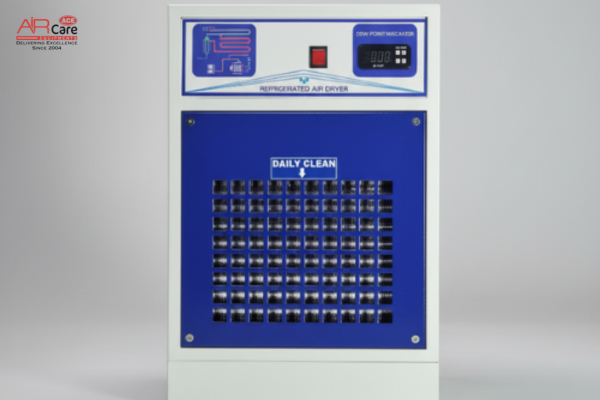
Compressed air is widely used in manufacturing, healthcare, automotive workshops, and other industries. However, compressed air can contain moisture that may damage equipment, affect product quality, and cause corrosion in pipelines. A Compressed Air Dryer helps remove this moisture and provides cleaner, drier air for industrial applications.
Air Care Equipment provides industrial compressed air solutions to meet different operational requirements. Understanding how an air dryer works, its benefits, and its applications can help businesses choose the right equipment for their compressed air systems.
Quick Answer: What Is a Compressed Air Dryer?
A Compressed Air Dryer is a device that removes moisture from compressed air before it enters the distribution system or connected equipment. Depending on the application, businesses can choose refrigerated, desiccant, or other suitable dryer technologies. The correct selection depends on the required dew point, airflow, operating pressure, and air quality standards.
Why Is a Compressed Air Dryer Important?
Moisture naturally enters compressed air systems through atmospheric air. When air is compressed and cools, water vapour can condense into liquid water.
Without effective moisture control, this water may cause several problems:
- Pipeline corrosion: Moisture can contribute to rust and deterioration in metal pipelines.
- Equipment damage: Water can affect pneumatic tools, valves, and other connected components.
- Product quality issues: Moisture may contaminate products or interfere with manufacturing processes.
- Maintenance costs: Excess moisture can increase servicing requirements and equipment downtime.
- Production interruptions: Water accumulation can affect the reliability of compressed air systems.
Installing a suitable compressed air dryer helps control moisture and supports more reliable operation.
How Does a Compressed Air Dryer Work?
The working principle depends on the dryer type.
Refrigerated Air Dryer
A refrigerated dryer cools compressed air so that water vapour condenses into liquid water. The condensate is then separated and drained, and the air is reheated where the design requires it.
Refrigerated dryers are commonly considered for general industrial applications where a moderate pressure dew point is sufficient.
Desiccant Air Dryer
A desiccant dryer uses a moisture-absorbing material to remove water vapour from compressed air. These dryers are suitable for applications that require lower dew points than conventional refrigerated dryers typically provide.
The appropriate technology depends on the air quality requirements and operating conditions of the application.
Key Benefits of a Compressed Air Dryer
A properly selected and maintained Compressed Air Dryer offers several benefits.
Protects Equipment
Removing excess moisture helps protect downstream equipment and pneumatic components from water-related problems.
Supports Product Quality
Dry compressed air can help reduce moisture contamination in manufacturing processes where air quality is important.
Helps Reduce Maintenance
Controlling condensate can reduce moisture-related servicing and help improve system reliability.
Improves Operational Reliability
A suitable dryer helps maintain the required air quality and reduces problems associated with excess moisture.
Supports Different Industrial Applications
Compressed air dryers are used in many industries, including manufacturing, automotive, pharmaceuticals, food processing, and healthcare, depending on the required air quality.
How Does a Reciprocating Air Compressor Work With an Air Dryer?
A Reciprocating Air Compressor uses a piston moving inside a cylinder to compress air. It is used in workshops, small industrial facilities, and other applications depending on its capacity and design.
Like other compressors, a reciprocating model can deliver air containing moisture. As the compressed air cools, some of that moisture may condense into liquid water.
An appropriately sized air dryer can help manage this moisture before the air reaches sensitive equipment. When selecting a dryer for a reciprocating compressor, consider:
- Compressor airflow capacity
- Maximum operating pressure
- Inlet air temperature
- Ambient temperature
- Required pressure dew point
- Expected operating conditions
The dryer should be selected according to the actual system requirements rather than compressor type alone.
Why Is a Medical Air Compressor Different?
A Medical Air Compressor supplies compressed air for healthcare applications where air quality, reliability, and system design are especially important.
Medical compressed air systems must meet the applicable healthcare requirements and relevant standards. Moisture control is one part of managing compressed air quality, but a dryer alone does not make compressed air suitable for medical use.
When planning a medical air system, consider the required air purity, filtration, monitoring, redundancy, maintenance, and applicable standards. Equipment selection should be completed with qualified professionals who understand the relevant healthcare requirements.
How to Choose the Right Compressed Air Dryer
Choosing the correct dryer requires an understanding of your compressed air system and its intended use.
| Selection Factor | What to Consider |
|---|---|
| Airflow capacity | Match the dryer to the actual compressed air demand |
| Operating pressure | Confirm that the dryer supports the system pressure |
| Inlet temperature | Check the expected temperature of incoming compressed air |
| Ambient conditions | Consider the temperature and environment where the dryer operates |
| Pressure dew point | Select a dryer that meets the application’s moisture requirements |
| Air quality | Identify any additional filtration or treatment requirements |
| Maintenance | Review servicing, condensate drainage, and consumable requirements |
Correct sizing helps avoid inadequate drying and unnecessary operating costs. Allow for the actual operating conditions and follow the manufacturer’s sizing guidance.
Compressed Air Solutions From Air Care Equipment
Air Care Equipment provides industrial compressed air equipment and related solutions. Businesses evaluating a Compressed Air Dryer should first identify their required airflow, operating pressure, dew point, and application-specific air quality requirements.
Explore the following resources on the Air Care Equipment website:
- Compressed Air Dryer Solutions — learn more about compressed air drying equipment.
- Air Receiver Tank Guide — understand the role of an air receiver in a compressed air system.
- Advantages and Disadvantages of an Air Receiver Tank — explore key considerations when using an air receiver tank.
Review the equipment specifications and consult the supplier to determine the most appropriate configuration for your system.
Frequently Asked Questions
1. What is the main purpose of a compressed air dryer?
Its main purpose is to remove moisture from compressed air to help protect equipment, control condensate, and meet the air quality requirements of the application.
2. Which type of compressed air dryer should I choose?
Refrigerated dryers are commonly used for general industrial requirements, while desiccant dryers are considered when lower dew points are needed. The final choice depends on the application and operating conditions.
3. Does a reciprocating air compressor need a dryer?
A dryer may be required when moisture in the compressed air could affect equipment, product quality, or the process. The decision depends on the application and required air quality.
4. Is a compressed air dryer sufficient for a medical air compressor?
No. A dryer is only one part of a medical compressed air system. Medical applications require appropriate air purity, filtration, monitoring, system design, and compliance with applicable standards.
5. How do I select the correct dryer capacity?
Consider compressor airflow, operating pressure, inlet temperature, ambient conditions, and the required pressure dew point. Follow the manufacturer’s sizing guidance to select a suitable unit.
Conclusion
A Compressed Air Dryer plays an important role in controlling moisture and maintaining compressed air quality. Selecting the right dryer can help protect equipment, reduce moisture-related problems, and support reliable industrial operations.
Whether your system uses a Reciprocating Air Compressor or requires a Medical Air Compressor, equipment selection should be based on the application’s air quality requirements and operating conditions.
Air Care Equipment can be a starting point for exploring industrial compressed air solutions. Review the available specifications and consult a qualified supplier to identify equipment suitable for your system.


