 WhatsApp Us Now

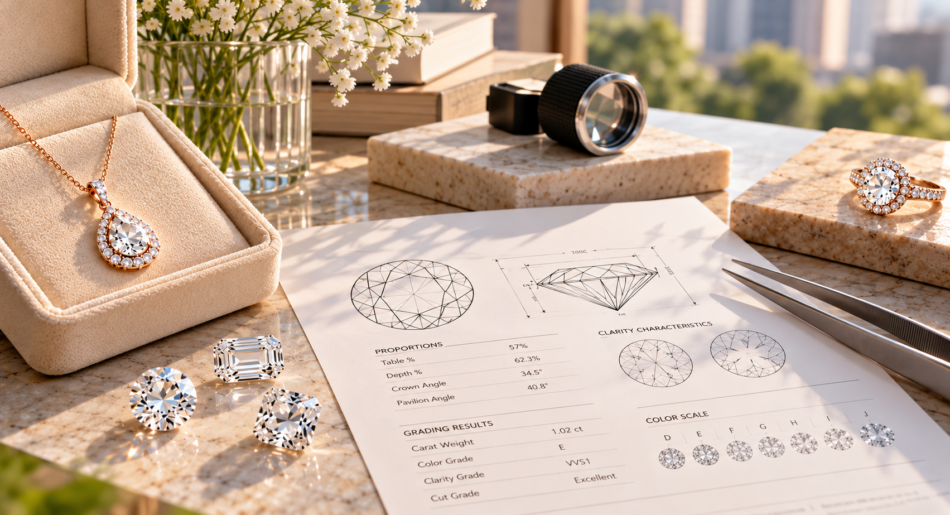
Choosing a lab-grown diamond involves more than comparing prices or selecting a shape you like. Understanding the diamond’s reported quality factors helps you evaluate different stones, review available documentation, and decide which specifications suit your preferences and budget.
A grading report can provide useful information about a diamond’s carat weight, colour, clarity, measurements, and other characteristics assessed by the issuing laboratory. However, understanding how these details work together is just as important as reading the grades themselves.
Understanding the Quality Factors of Certified Lab Grown Diamonds
Certified lab-grown diamonds are assessed using grading methods that may report several characteristics of the stone. The exact information depends on the laboratory and the type of report issued.
The four commonly discussed factors are carat, colour, clarity, and cut. Together, they help buyers compare diamonds, but no single factor determines the overall appearance or suitability of a stone.
Carat measures diamond weight, while colour and clarity describe specific characteristics assessed under the laboratory’s grading system. Cut-related information, where provided, helps buyers understand aspects of a diamond’s proportions and light performance.
When comparing two diamonds, review their complete specifications rather than focusing only on carat weight or one prominent grade. A smaller diamond with different proportions may look quite different from a heavier stone, and the setting can also influence its appearance.
Choosing a Lab Grown Diamond Engagement Ring
When selecting a lab grown diamond engagement ring, begin with the design and how the ring will be worn. A solitaire setting highlights one centre diamond, while a halo setting adds smaller stones around it. Three-stone rings create a balanced composition, and bezel settings offer a clean appearance by surrounding the diamond with metal.
The diamond’s shape also influences the final look. Round diamonds offer a classic style, oval diamonds create an elongated appearance, and emerald-cut diamonds provide a more structured silhouette.
Once you have a preferred design, compare the available diamond specifications. Consider how carat weight, colour, clarity, and proportions affect the appearance of the centre stone within that setting.
Practical details deserve attention too. Confirm the ring size, gold purity, setting height, and whether the design will sit comfortably alongside a wedding band. These factors help you assess the complete ring rather than the diamond alone.
Best Lab Grown Diamond Certification in India: What Should Buyers Compare?
The search for the best lab grown diamond certification in India should begin with understanding what a grading report can establish and how its details can be verified.
Different gemological laboratories may use their own reporting formats and grading procedures. Rather than choosing a report based only on a laboratory’s name, examine the document’s contents, verification options, and relevance to the specific diamond you intend to purchase.
Before making a decision, consider these points:
- Laboratory identity: Check which laboratory issued the report and whether its details are clearly presented.
- Report verification: Use the laboratory’s official verification service where available to compare the report number and recorded information.
- Diamond identification: Confirm that the report identifies the stone as laboratory-grown.
- Recorded specifications: Compare the diamond’s weight, measurements, colour, clarity, and other reported characteristics with the seller’s description.
- Documentation clarity: Ask the seller to explain any unfamiliar terms or differences between the report and product listing.
SGL and IGI are examples of laboratories buyers may encounter when researching lab-grown diamond documentation. The most suitable report depends on the specific diamond, the information provided, and the buyer’s need for verifiable details. Avoid assuming that every report from any laboratory contains identical information.
Comparing Reported Grades Without Focusing on One Number
Reported quality factors are most useful when considered together. A higher grade in one category does not automatically mean that a diamond will look better in every setting or offer the best value for your budget.
For example, two diamonds may have similar carat weights but differ in colour or clarity. Their proportions and shape may also affect how large they appear or how they interact with light. Looking at the complete specifications helps you understand these differences.
If possible, compare the diamonds under consistent lighting and ask the Jewellery to explain any visible differences. The report provides documented grading information, while seeing the stone can help you understand its appearance in person.
For multi-stone jewellery, clarify whether the report covers only the centre diamond or provides information about additional stones. A centre-stone report should not be assumed to describe every smaller diamond in the setting.
Diamond Certification and Gold Hallmarking
Diamond grading documentation and gold hallmarking serve different purposes. A diamond report records characteristics of the stone, while applicable gold hallmarking relates to the purity of the gold used in the jewellery.
In India, buyers can ask about the relevant BIS hallmark and HUMID details for eligible hallmarked gold jewellery. These details can be checked through official BIS resources where applicable.
Before purchasing a ring or another piece of diamond jewellery, confirm the stated gold purity and ask which diamond documents will accompany the item. Do not assume that a diamond grading report also verifies gold purity or that every product comes with the same certification arrangements.
Reviewing both sets of information helps you understand the materials and documentation associated with your purchase.
Making a Confident Certified Diamond Purchase
Before ordering, match the available report with the product description, confirm the diamond specifications, and review the final price. Gold weight, making charges, setting complexity, and applicable taxes may all contribute to the total cost.
Also check the seller’s return, exchange, and buyback terms separately. A grading report does not guarantee a particular resale value or replace the retailer’s published policies.
At Awaken Jewels, reviewing product-specific diamond documentation and gold details can help buyers make informed choices when exploring lab-grown diamond jewellery. Taking time to compare reported quality factors allows you to choose a diamond based on its documented characteristics, appearance, and suitability for your intended design.
