 WhatsApp Us Now

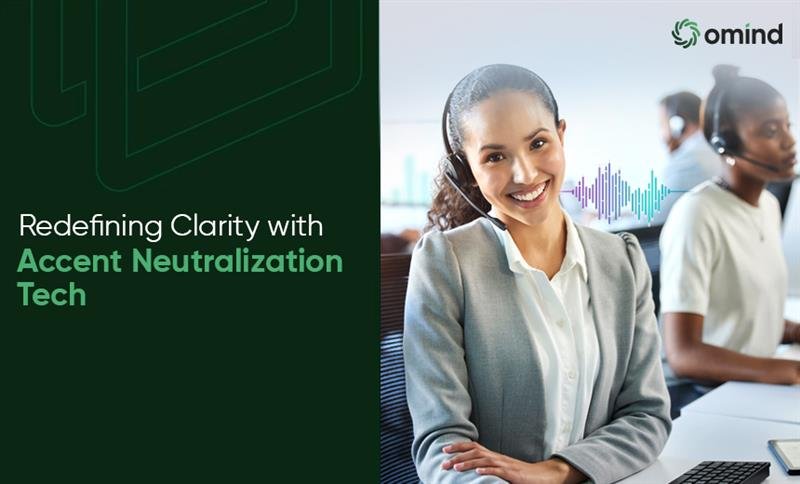
In an increasingly interconnected global economy, effective communication is more important than ever. Whether you are collaborating with international colleagues, managing a remote customer support team, or pitching to clients overseas, your voice is your primary business tool. However, heavy regional accents can sometimes lead to miscommunication, repetition, and cognitive fatigue for listeners.
Enter the next frontier in audio technology: accent neutralization AI.
Far from erasing cultural identity, advanced AI accent reduction software is designed to bridge communication gaps seamlessly. By leveraging cutting-edge machine learning and audio processing, these tools use a real-time accent harmonizer to ensure your message is understood clearly the first time, every time.
Here is a look at how this technology works, its practical applications, and why it is transforming the way the world talks.
Understanding Accent Neutralization AI
To understand accent neutralization AI, it helps to first understand how accents are formed. Accents are essentially a unique combination of phonemes (sound units), intonation patterns, speech pacing, and rhythm associated with a particular geographic region or native language.
Traditional speech therapy or accent reduction classes can take months, or even years, of rigorous practice to yield noticeable results. Accent neutralization AI, however, achieves this digitally and instantaneously.
Rather than simply changing a speaker’s voice into a robotic, generic monotone, modern AI models analyze the speaker’s voice print in milliseconds. The algorithm identifies specific phonetic nuances that might be difficult for a global audience to parse, and gently adjusts them toward a more internationally understood baseline—all while preserving the speaker’s natural vocal timbre, emotion, and identity.
The Magic of the Real-Time Accent Harmonizer
The true breakthrough in this technology is speed. While post-processing audio software has been able to alter speech for years, it was useless for live conversations. Today, the development of the real-time accent harmonizer has changed the game.
Here is a step-by-step breakdown of how it operates in fractions of a second:
- Audio Capture: As you speak into a microphone, the software captures your raw audio stream.
- Deep Neural Network (DNN) Analysis: The AI instantly breaks down your speech into its core components: pitch, cadence, formant frequencies, and pronunciation patterns.
- Phonetic Mapping: The system compares your pronunciation against a vast dataset of target-accent models, identifying potential friction points for the listener.
- Instant Synthesis: The AI reconstructs the audio wave in real time—smoothing out vowel sounds, adjusting consonant clarity, and pacing the delivery—before outputting the clean, harmonized audio to your listener.
All of this happens with a latency of mere milliseconds, allowing for completely natural, uninterrupted back-and-forth conversation on video calls, VoIP platforms, and customer service headsets.
Key Benefits of AI Accent Reduction Software
The adoption of AI accent reduction software is growing rapidly across multiple industries due to the tangible benefits it provides:
1. Enhanced Global Customer Experience
For multinational corporations, customer support centers are often the frontline of the brand. When customers struggle to understand a support agent due to a thick accent, frustration builds. Real-time accent harmonization ensures that customer interactions are smooth, reducing Average Handling Time (AHT) and dramatically improving Customer Satisfaction (CSAT) scores.
2. Boosting Professional Confidence
Language barriers can cause anxiety for non-native speakers, leading to hesitation and imposter syndrome in international meetings. By utilizing accent neutralization tools, professionals can speak freely, knowing their core message won’t be lost in translation or misinterpreted due to pronunciation quirks.
3. Combating Bias in the Workplace
Accents are frequently tied to unconscious bias. Studies show that speakers with heavy regional or non-native accents are sometimes unfairly judged on their competence or intelligence. Accent neutralization tools help level the playing field, ensuring that employees are evaluated on what they say, rather than how they sound.
4. Superior Cross-Cultural Collaboration
Remote work has made global teams the norm. Effective collaboration requires clear communication. Harmonizing speech patterns helps eliminate the friction of misheard instructions or misunderstood feedback during high-stakes project planning.
The Ethical Consideration: Preservation vs. Clarity
A common question surrounding accent neutralization AI is: Does this erase cultural diversity?
Developers and ethicists are acutely aware of this concern. The goal of ethical AI accent reduction is not to homogenize human speech or force everyone to sound the same. Rather, it is a tool for accessibility and inclusion. Just as closed captions help the hard of hearing, and translation software helps bridge language divides, real-time accent harmonizers act as an auditory bridge for global commerce.
Users retain full control over when and how the software is applied, ensuring that it remains an empowering tool rather than a restrictive one.
The Future of Spoken Communication
As machine learning models become lighter, faster, and more context-aware, accent neutralization AI will become a standard feature in our communication stack. Soon, running a real-time accent harmonizer will be as commonplace as using a video filter or a background noise-canceling microphone.
By breaking down the subtle barriers of pronunciation, this technology is paving the way for a truly borderless workforce—where ideas, innovations, and conversations can flow effortlessly across the globe.


