 WhatsApp Us Now

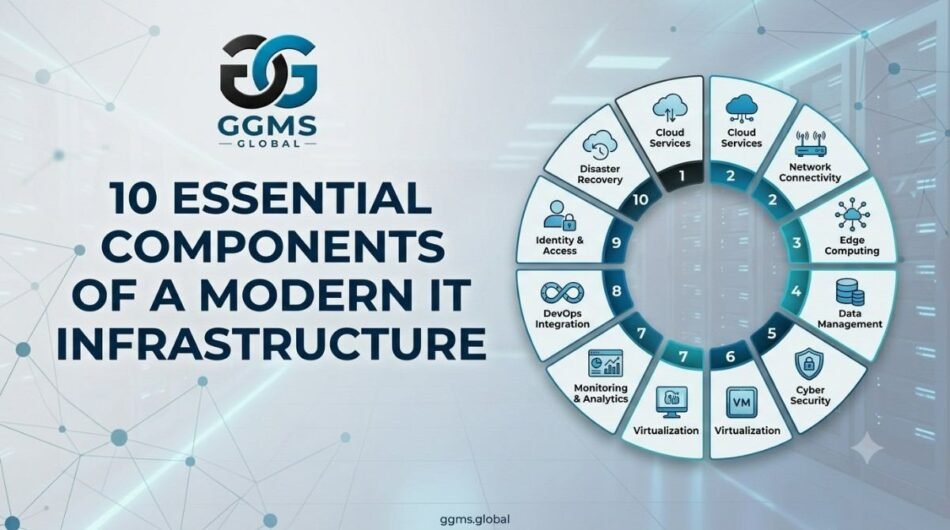
Discover 10 essential IT infrastructure components, including servers, networking, cloud, cybersecurity, backup, storage, monitoring, endpoints, software, and support.
A reliable IT environment is the foundation of modern business operations. From communication and data storage to cybersecurity and cloud applications, every business depends on technology working smoothly and securely. Choosing the right IT infrastructure services in Oman can help organizations improve performance, protect business data, and create a scalable technology environment.
For businesses looking for an IT infrastructure solution in Oman, it is important to understand the key components that make an infrastructure reliable, secure, and easy to manage. Here are 10 essential components every modern business should consider.
1. Servers
Servers provide the computing power needed to run applications, databases, file-sharing systems, business platforms, and other critical workloads. Depending on business requirements, organizations may use physical servers, virtual servers, or a combination of both.
A properly designed server environment can improve application performance, availability, and resource utilization while supporting future business growth.
2. Networking
A strong network connects employees, devices, servers, applications, and cloud resources. Networking infrastructure typically includes switches, routers, wireless access points, firewalls, and structured cabling.
Reliable business networking helps employees access applications and information quickly while supporting secure communication between offices, remote users, and cloud platforms. Professional network planning is especially important for businesses with growing numbers of users and connected devices.
3. Storage
Businesses generate large amounts of documents, databases, customer information, applications, and other digital assets. Reliable storage infrastructure ensures that this information remains accessible and organized.
Organizations may use network-attached storage, storage area networks, local storage, or cloud-based storage depending on their requirements. Storage should also be designed with performance, capacity, security, and future expansion in mind.
4. Cybersecurity
Cybersecurity is an essential part of modern IT infrastructure. Businesses face risks such as malware, phishing, ransomware, unauthorized access, and data breaches.
A comprehensive security strategy can include firewalls, endpoint protection, access controls, network security, vulnerability management, email security, and employee awareness. Security should be integrated into infrastructure design rather than treated as an afterthought.
5. Cloud Services
Cloud technology provides businesses with flexible access to computing resources, applications, storage, and other IT services. Organizations can use public, private, or hybrid cloud environments depending on their operational and security requirements.
Cloud infrastructure can support remote work, business continuity, application deployment, collaboration, and scalable resource management without requiring every workload to remain on physical infrastructure.
6. Backup and Disaster Recovery
Hardware failures, cyberattacks, accidental deletion, and unexpected disruptions can put business data at risk. Regular backups provide an additional layer of protection by maintaining recoverable copies of important information.
A modern backup and disaster recovery strategy should define what data needs protection, how frequently backups should run, where backups are stored, and how quickly systems need to be restored.
7. IT Monitoring
IT monitoring helps businesses identify infrastructure problems before they become major disruptions. Monitoring tools can track servers, networks, storage, applications, security events, and system performance.
Proactive monitoring allows IT teams to identify unusual activity, performance bottlenecks, resource limitations, and potential failures. This can reduce downtime and improve the overall reliability of business systems.
8. Endpoints and Devices
Laptops, desktops, smartphones, tablets, printers, and other connected devices are important parts of an organization’s IT environment. These endpoints provide employees with access to business applications and information.
Businesses should manage endpoints through appropriate security controls, software updates, access policies, device management, and maintenance procedures. Well-managed endpoints can improve productivity while reducing security risks.
9. Business Software and Applications
Modern organizations rely on software for accounting, customer management, communication, collaboration, human resources, inventory, project management, and many other functions.
Applications need to work effectively with the underlying infrastructure. Proper integration, licensing, updates, security controls, and performance management can help businesses get greater value from their technology investments.
10. IT Support and Management
Even well-designed infrastructure requires ongoing management and technical support. IT teams need to handle troubleshooting, maintenance, upgrades, user issues, security incidents, system changes, and infrastructure improvements.
Professional support can help businesses maintain reliable operations while allowing employees to focus on their core responsibilities. This is particularly valuable for organizations without a large internal IT department.
Build a Reliable IT Infrastructure With GGMS Global
A modern IT infrastructure should be secure, scalable, reliable, and aligned with business objectives. From servers and networking to cloud services, cybersecurity, backup, monitoring, endpoints, software, and technical support, every component needs to work together.
GGMS Global IT Solutions provides IT infrastructure and managed technology services for businesses in Oman. Its services cover areas including networking, cybersecurity, cloud solutions, IT support, infrastructure management, CCTV, and other business technology requirements.
For organizations evaluating the best IT infrastructure services, the right approach is to choose a provider that understands the existing environment, business goals, security requirements, and future growth plans.
With professional planning and ongoing management, businesses can build an IT environment that supports productivity today while preparing them for tomorrow’s technology demands.
Frequently Asked Questions
1. What are the main components of IT infrastructure?
The main components include servers, networking, storage, cybersecurity, cloud services, backup and disaster recovery, monitoring, endpoints, business software, and IT support.
2. Why is cybersecurity important for IT infrastructure?
Cybersecurity protects systems, applications, devices, and business data from unauthorized access, malware, ransomware, and other digital threats. It should be integrated into the overall infrastructure strategy.
3. Do small businesses need professional IT infrastructure services?
Yes. Small businesses also depend on reliable networks, secure devices, cloud applications, backups, and technical support. Professional services can help them manage these requirements without maintaining a large internal IT team.
4. How can businesses improve their IT infrastructure in Oman?
Businesses can start by assessing their current infrastructure, identifying security and performance gaps, improving network and backup systems, adopting suitable cloud services, and establishing proactive monitoring and technical support. Working with an experienced IT provider such as GGMS Global can help create an infrastructure strategy aligned with specific business needs.


