 WhatsApp Us Now

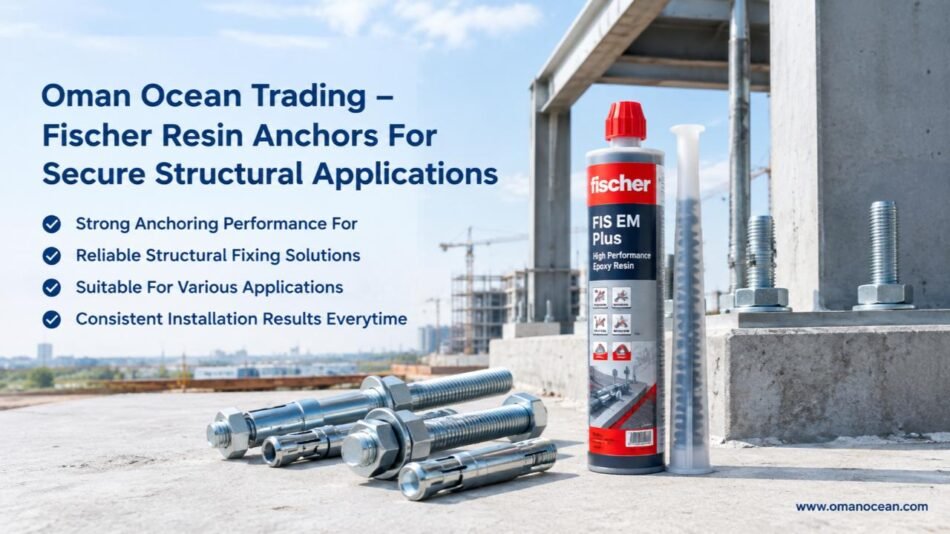
When you need to secure heavy loads into concrete or brickwork without worrying about structural failure, nothing beats the reliability of a Fischer Resin Anchor. Standard wall plugs and expansion bolts work fine for hanging mirrors or medium-weight shelves, but when massive forces come into play, traditional mechanical anchors can cause stress cracks in the base material. Chemical anchoring systems, on the other hand, create a completely stress-free bond that bonds directly with the surrounding substrate. Whether you are installing heavy machinery, securing steel beams, or setting up outdoor structural frameworks, turning to a Fischer Resin Anchor ensures your heavy-duty installations remain rock-solid for decades.
Understanding the Power of a Fischer Resin Anchor for High Load Fixes
Chemical fixing systems rely on dynamic two-part resins—usually composed of epoxy, vinyl ester, or polyester—mixed with a specific hardening agent. When injected into a clean borehole, the resin flows into all the microscopic pores and tiny irregularities of the surrounding stone, brick, or concrete. Once the threaded rod or rebar is inserted, the resin cures into a solid synthetic stone that essentially turns the fixing rod and the wall into a single, continuous unit. Unlike mechanical expansion anchors that rely on friction and outward pressure to stay in place, resin anchors exert zero expansion force on the base material. This means you can install them remarkably close to edges or space them tightly together without risking cracking or splitting the concrete.
Why Fischer Resin Anchor Solutions Outperform Mechanical Alternatives
Traditional expansion anchors have served builders well for decades, but they have major physical limits when faced with extreme weight, continuous vibration, or close-edge applications. When you tighten a mechanical bolt, it expands outward, placing intense stress on the surrounding concrete. High-performance chemical anchoring systems eliminate this risk entirely while providing several distinct benefits that mechanical fixings simply cannot match.
Distinct Advantages of Chemical Anchors
- Zero Expansion Stress: Because the resin seals without expanding outward, you can install anchors right near the edge of concrete slabs, brick corners, or neighboring studs without cracking the material.
- Complete Watertight Sealing: The liquid resin fills the entire drill hole, leaving no gaps. This seals out moisture, preventing water ingress, rust formation, and freeze-thaw damage inside the wall.
- Superior Load Capacity: By distributing weight evenly along the entire embedded length of the threaded stud, chemical anchors support significantly higher load limits than friction-based bolts.
- Substrate Versatility: Resin adaptability allows it to perform flawlessly across a broad spectrum of substrates, including cracked concrete, solid brick, hollow blocks, and natural stone.
Simple Installation Steps for Fischer Resin Anchor Systems
To achieve maximum load capacity with resin anchors, clean preparation is everything. Even the strongest chemical bond will fail if applied inside a dusty hole. The core technique involves a disciplined approach: drill, blow, brush, blow, and inject. Start by drilling a hole to the exact depth and diameter specified for your threaded rod. Next, thoroughly clean out all loose concrete dust using a manual blow pump and a dedicated steel wire brush. Repeating this cleaning process twice ensures the resin adheres directly to the inner walls of the concrete rather than a fine layer of dust. Once clean, inject the two-part resin using a specialized caulking tool, starting from the back of the hole to prevent air pockets. Finally, insert your threaded rod using a slow twisting motion, allowing the excess resin to bleed slightly at the surface to confirm a complete fill. Leave the fixture completely undisturbed until the full curing time listed on the cartridge has passed.
Critical Considerations for Fischer Resin Anchor Planning
Before picking up a drill, take time to evaluate the environment where your heavy fixing will live. Curing times vary significantly depending on the ambient temperature; cold weather slows down the chemical reaction, while high heat speeds it up dramatically. Additionally, consider whether your anchor will face continuous moisture, extreme thermal changes, or dynamic loads like running heavy motors or wind-exposed structures. Selecting the proper resin formulation—such as high-grade vinyl ester for damp conditions or heavy-duty epoxy for extreme weight—ensures your installation stays safe and stable over its entire lifespan.
Securing Your Next Project with Structural Confidence
Choosing the right anchoring technology can make or break a construction project where safety and stability are non-negotiable. Chemical anchoring provides an unmatched blend of structural strength, flexibility, and protection against weather and mechanical wear. For top-tier construction materials, industry-leading fixing solutions, and expert advice on choosing the perfect system for your structural needs, Oman Ocean Trading LLC stands ready as your trusted supply partner to keep your builds safe and solid.


