 WhatsApp Us Now
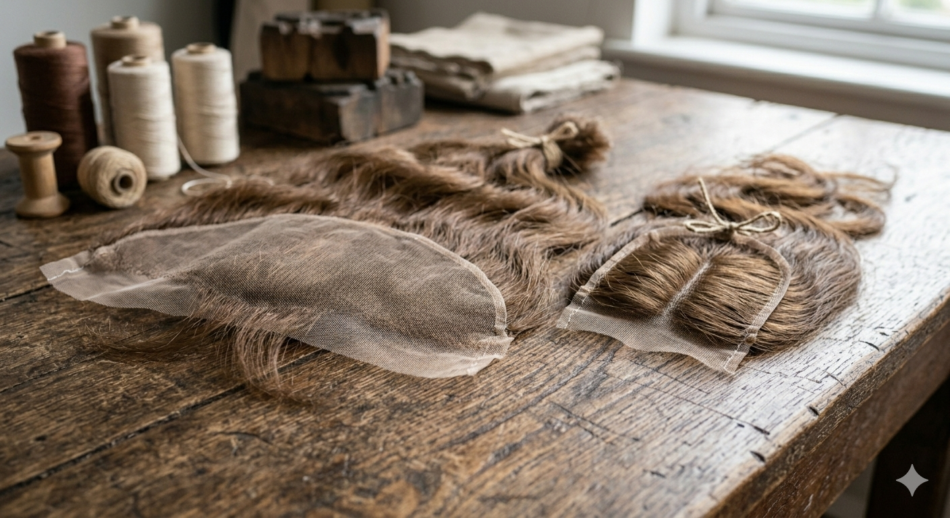
Achieving an undetectable hair installation is the ultimate goal for wig wearers and professional stylists alike. The key to a realistic transformation lies in how the front perimeter sits against your forehead. When installed correctly, high-quality lace frontals & lace closures create the illusion that every single strand is growing directly from your scalp.
Understanding the structural design, lace materials, and customization techniques behind lace frontals & lace closures will help you choose and style a piece that looks completely authentic.
1. The Role of High-Definition Lace Materials
The foundation of a natural hairline starts with the base material itself. The goal is to make the border between the extension piece and your skin completely disappear.
- Ultra-Thin HD Lace: High-definition lace uses an ultra-thin, sheer material that melts seamlessly into any skin tone upon application.
- Transparent Swiss Lace: Durable and clear, transparent lace offers a strong foundation that works exceptionally well for fair to medium complexions.
- Invisibility Along the Edge: Thin lace bases reduce the raised edge outline near your forehead, preventing the visible rim that often gives away synthetic or low-quality pieces.
2. Graduated Density and Pre-Plucked Hairlines
Natural human hairlines do not start with a thick, dense wall of hair. Instead, hair density gradually increases from the forehead back toward the crown.
Selecting lace frontals & lace closures with pre-plucked, graduated hairlines mimics this natural growth progression. A softer density along the immediate edge creates a realistic shadow effect. If a piece arrives with a dense edge, gentle manual plucking along the perimeter removes excess bulk and breaks up harsh, unnatural straight lines.
3. Micro-Knitting and Bleached Hair Knots
Every individual hair strand is hand-tied onto the lace mesh using tiny knots. Unprocessed dark knots create small dark dots along the lace grid, making the hairline look artificial under direct light.
- Single-Strand Micro-Knots: Quality frontals and closures feature single-knotting techniques along the front edge to keep the attachment points as small as possible.
- Bleaching the Knots: Lightly bleaching the knots lightens the dark hair roots to match your skin tone. This simple process makes the hair appear as though it is sprouting naturally from individual pores rather than being tied onto a grid.
4. Parting Freedom and Hairline Contouring
A realistic hairline follows the natural anatomical curves of your forehead, including subtle temple recession and soft baby hairs.
- Full Perimeter Customization: Utilizing lace frontals & lace closures gives you the flexibility to customize the parting area. Frontals allow for complete ear-to-ear parting, while closures provide clean center or side parts.
- Minimal Baby Hairs: Overstyling baby hairs can draw unnecessary attention to the lace edge. Sweeping soft, sparse hairs naturally along the temples offers a clean, realistic finish without looking overly gelled.
5. Precise Tinting and Seamless Melt Techniques
Even the highest quality lace requires proper color matching to integrate seamlessly with your forehead.
Using a specialized lace tinting spray or liquid foundation that matches your exact facial skin tone cancels out any white or grey cast on the mesh. When paired with a proper holding gel or skin-safe lace adhesive, your lace frontals & lace closures lay completely flat, creating a flawless, scalp-like transition that holds up throughout the day.
Conclusion
A naturally grown hairline relies on combining the right materials with precise customization. By prioritizing thin HD lace, graduated perimeter density, bleached knots, and accurate skin tinting, your lace frontals & lace closures will deliver an undetectable, salon-grade finish every time.


