 WhatsApp Us Now
Better systems are rarely created by technology or strategy alone. They develop when knowledge is applied thoughtfully, leadership provides direction, and innovation responds to real challenges. In education and healthcare, this relationship is particularly important. Both sectors depend on people who can understand complex environments, make informed decisions, and turn ideas into practical improvements.
The people working within these fields often influence far more than their immediate responsibilities. Their decisions can shape institutions, professional practices, learning environments, patient care, and the way organisations respond to change. This broader understanding of contribution is closely aligned with the recognition philosophy of LoopLynks Events.
Knowledge Creates the Foundation
Knowledge gives leaders the context needed to understand a problem before deciding how to address it.
In education, knowledge can influence curriculum development, communication, learning approaches, and institutional strategy. In healthcare, expertise can guide patient care, research, public health initiatives and the adoption of new technologies. Neither field can rely on assumptions when decisions affect people and systems.
LoopLynks’ Education & Development recognition reflects this wider role of knowledge. Their Education Awards recognise individuals, teams and organisations contributing to education through strategy, communication and innovation, with attention to measurable impact.
This is also where education leadership awards can take on a broader meaning. Recognition can highlight professionals whose contribution extends beyond their formal responsibilities and demonstrates how knowledge can be translated into meaningful institutional or educational progress.
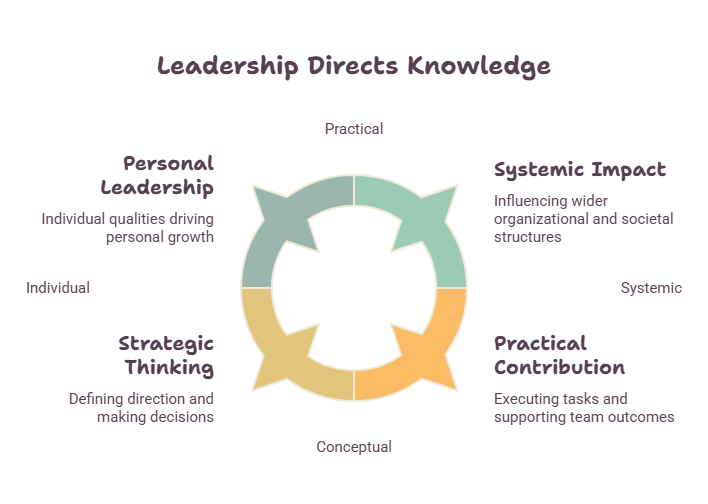
Leadership Gives Knowledge Direction
Knowledge becomes more valuable when someone is able to turn it into action.
Leadership involves making decisions, setting direction, and taking responsibility for outcomes. In education, this may involve aligning institutional vision with execution, improving engagement or creating opportunities for lifelong learning. In healthcare, leadership can involve maintaining quality of care, responding to complex challenges, supporting teams and influencing wider healthcare systems.
LoopLynks approaches leadership as a continuous journey rather than a position reached at the end of a career. Their recognition framework considers qualities such as leadership, integrity, innovation, influence and meaningful contribution.
The relevance of education leadership awards therefore extends beyond recognising seniority. They can provide a platform for acknowledging the thinking, commitment and practical contribution behind educational leadership.
Innovation Should Solve Something Real
Innovation is often associated with new technology, but meaningful innovation begins with a problem worth solving.
LoopLynks’ Technology & Innovation Awards reflect this practical perspective. Their focus is on work that has moved beyond an idea or pitch and into implementation. This includes products with users, deployed systems, tools handling real-world challenges, scalable platforms and AI systems integrated into workflows.
The same principle can be applied to education and healthcare.
An educational innovation matters when it addresses an actual challenge within learning or institutional development. A healthcare innovation matters when it contributes to better systems, services, or outcomes. The technology itself is only one part of the story. What matters is how it is developed, tested, and applied.
This connection between innovation and practical contribution is central to how LoopLynks frames recognition across its categories.
Better Systems Depend on Collaboration
Complex challenges rarely belong to one profession.
Education intersects with technology, communication, business and social development. Healthcare increasingly intersects with technology, research, public health, management and community wellbeing. The people working across these areas can bring different forms of expertise to the same problem.
LoopLynks Events creates opportunities for these perspectives to meet through its global recognition initiative, conferences and professional networking environment. Their events bring together C-level executives, business leaders, founders, industry experts, speakers, investors, and partners from different professional backgrounds.
This cross-industry environment matters because useful ideas often emerge when professionals encounter perspectives outside their immediate field.
The Healthcare Conference 2026, for example, is positioned around real cases and decisions, cross-disciplinary knowledge exchange, and leadership in context. Similarly, the Education Conference 2026 connects professionals with leaders, innovators and strategists across the education ecosystem.
Learning Must Continue Beyond Formal Training
Knowledge does not remain useful simply because it was acquired once.
Professional fields change, new challenges emerge, and established approaches require reassessment. Continuous learning allows professionals to examine new ideas, understand different perspectives, and refine how they approach their responsibilities.
This is particularly relevant to professionals exploring healthcare conferences in 2026. Conference environments can create opportunities for knowledge exchange around practical experiences, industry developments and leadership challenges.
LoopLynks’ approach to professional engagement similarly places value on meaningful conversations rather than simply bringing people into the same room. Their platform connects leaders and professionals around shared interests, experiences, and areas of expertise.
The value of these interactions can extend beyond a single session. A conversation about technology may lead to a new perspective on healthcare delivery. An education leader may encounter an approach to communication that can be applied within an institution. A business leader may discover a different way of approaching organisational change.
Recognition Connects Contribution With the Larger Picture
Recognition is often associated with the outcome, but understanding the journey behind that outcome can provide a different perspective.
LoopLynks’ recognition philosophy focuses on individuals and organisations whose vision, integrity, innovation and influence contribute to meaningful progress. Their award categories span education, healthcare, technology, finance, sustainability, marketing, media, social impact and other fields.
This creates a broader context for education leadership awards and professional recognition. An educator’s contribution can be considered alongside the wider leadership principles that apply across industries: thoughtful decision-making, consistency, innovation and influence.
The same approach applies to healthcare. Professionals participating in healthcare conferences in 2026 may encounter conversations about leadership, technology, care, systems and professional development that reinforce the connection between knowledge and action.
Building Systems That Can Move Forward
Knowledge provides understanding. Leadership determines direction. Innovation creates new possibilities. Collaboration brings different perspectives together.
When these elements work together, they can contribute to systems that are better equipped to respond to real challenges.
This is the wider context in which LoopLynks Events places its recognition and professional engagement initiatives. Their approach does not treat leadership as a fixed achievement. Instead, it recognises the continuous work involved in learning, adapting, contributing and influencing others.
Whether through education leadership awards, recognition across other professional categories, or conversations taking place through healthcare conferences in 2026, the focus remains connected to the people behind meaningful progress.
Better systems are ultimately built by people who understand their responsibility, apply what they know, and remain willing to improve how things work. That combination of knowledge, leadership and innovation is what gives professional contribution its lasting value.


