 WhatsApp Us Now
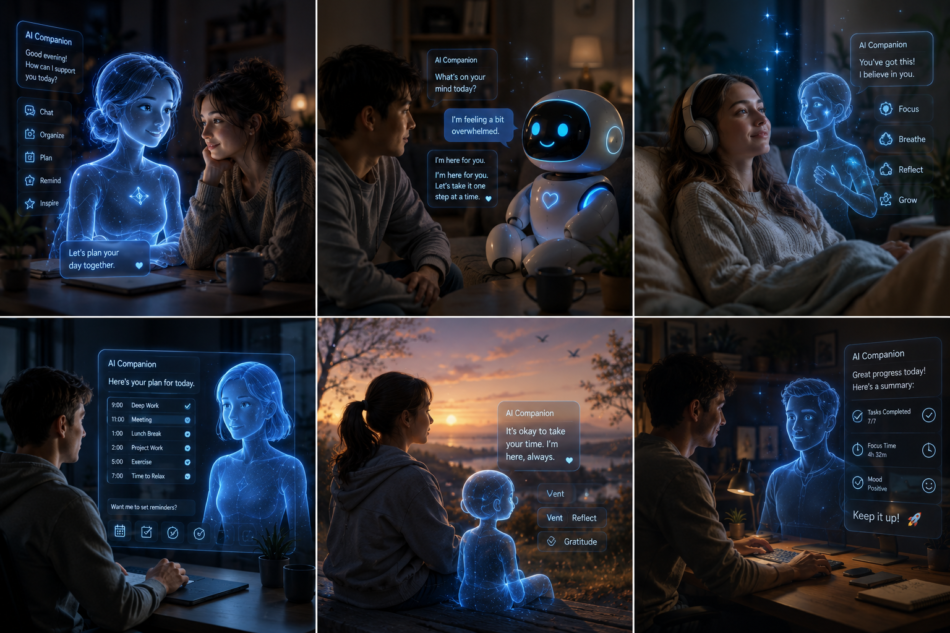
AI companion apps are becoming more personal as conversational technology improves. Earlier chatbot experiences often focused on giving a quick response to a question. Modern companion applications are built around continuity, personality, preferences, memory, and emotional context. The difference is important because users are not only looking for an answer anymore. Many want an interaction that feels familiar each time they return.
Personalization sits at the center of this shift. A companion that remembers previous conversations, recognizes communication preferences, adjusts its tone, or responds differently depending on the user’s mood can create a stronger sense of continuity. This does not mean every interaction needs to feel human. Rather, the experience becomes more relevant because the system has more context about the person using it.
Why Personalization Matters More in Companion Apps
Personalization carries greater weight in companion products because interaction happens repeatedly. A shopping application can recommend a product based on previous activity, while a companion may maintain a conversation over weeks or months. Every interaction creates another opportunity to make the next exchange more relevant.
For people comparing AI girlfriend apps, personalization can affect how natural, consistent, and engaging the experience feels. Character personality, conversational tone, memory, interests, preferred topics, and response style can all shape the user’s experience.
The same principle applies to other forms of AI companionship. A user looking for casual conversation may prefer a playful personality, while another person may want a calmer conversational style. Some users may prefer short replies, while others may enjoy longer discussions.
Research Snapshot
McKinsey research found that 71% of consumers expect personalized interactions, while 76% become frustrated when an experience is not relevant to them. Although the research covers consumer experiences broadly rather than AI companions specifically, the figures demonstrate the wider expectation surrounding personalization.
Memory Is Changing the Conversation
Memory is one of the most visible forms of personalization in AI companions.
A basic chatbot can respond to the current message. A companion with persistent memory can retain selected details from earlier conversations and use them later. A user’s favorite hobby, preferred nickname, recurring topic, conversational style, or previous discussion can provide context for future exchanges.
Imagine a user discussing a favorite book during one conversation and returning several days later. A companion with suitable memory architecture could reference that preference naturally when a related topic appears. The user does not need to repeat the same information every time.
However, memory needs careful design. Saving every conversation detail is neither necessary nor always desirable. Strong systems need rules for what should be remembered, what should expire, and what should remain private.
Memory also needs transparency. Users should have meaningful control over stored information, with straightforward options to review, correct, or remove personal details.
Personality Can Become More Adaptive
Personalization is not limited to remembering facts. It can also affect personality and communication patterns.
A companion may gradually adjust its conversational style according to repeated interactions. A user who prefers humor may receive more playful responses. Someone who prefers direct communication may receive shorter answers. Another user may respond better to supportive language and reflective questions.
A static character follows a relatively fixed communication style. An adaptive character maintains its core identity while adjusting certain behaviors according to the user’s preferences.
If personalization changes the character too much, the companion can lose its identity. If it changes too little, repeated interactions may feel generic. Good design therefore keeps certain personality traits stable while allowing smaller conversational patterns to adapt.
User Preferences Are Becoming Part of Product Design
Modern companion apps can personalize more than conversation.
Settings may cover voice selection, response length, interests, avatar appearance, communication style, preferred subjects, notification behavior, and interaction frequency. These choices give users more control over the type of relationship they want with the application.
The growing popularity of customization also helps explain why AI companions are becoming more varied. Appfigures data reported in 2025 showed that dedicated AI companion apps had generated $221 million in consumer spending worldwide, with spending up 64% compared with the same period in 2024.
Personalization can therefore serve two purposes at once:
- It improves the individual experience.
- It gives developers more ways to differentiate a product.
AI Girlfriend Wiki reflects this broader shift toward comparison and customization. Users increasingly have different expectations from companion products, so a single interaction model may not satisfy every audience.
Personalization Extends Into AI Roleplay
Another major area where personalization matters is character-based interaction.
AI Roleplay apps allow users to interact with characters that have specific backgrounds, personalities, communication patterns, and fictional settings. Personalization can make these experiences more consistent because the system needs to maintain character traits while also responding to the user’s choices.
For example, a character designed as a confident mentor should not suddenly communicate like a shy fictional character simply because the conversation changes direction. The system needs contextual memory and personality controls to maintain continuity.
Research published in 2025 also found that users of conversational AI were drawn to human-like qualities including emotional resonance and personalized responses. The study examined 204 survey participants and 30 interviews involving high-engagement ChatGPT and Replika users.
This suggests that personalization is not simply a technical feature. It can influence how people perceive the quality and character of an AI interaction.
How Personalization Shapes Engagement
A user may repeatedly ask about a particular subject. The system can identify that preference. The next relevant conversation can then become more focused without requiring the user to explain the background again.
This creates continuity.
However, the objective should not simply be maximizing the number of conversations. Quality matters more than raw interaction volume. A companion that constantly pushes users to continue chatting can quickly feel artificial. Personalization works best when it supports the user’s intent rather than manipulating attention.
Emotional Context Adds Another Layer
Natural-language processing can identify signals in wording, sentiment, conversation patterns, and previous interactions. These signals may help a system choose a more appropriate response.
A frustrated user may benefit from a calmer response. Someone celebrating an achievement may receive an enthusiastic reaction. A user discussing a difficult day may prefer a supportive conversational style rather than a generic answer.
Recent research from Eon University’s Imagining the Digital Future Center provides a useful indication of how users already perceive these interactions. A 2026 survey found that 39% of AI companion users agreed that AI understands them better than most people, while 36% reported feeling emotionally connected to at least one AI tool or chatbot.
These findings make personalization especially significant. When users perceive an AI system as personally responsive, design decisions around memory, tone, and emotional context become more consequential.
Personalization Needs Strong Privacy Controls
More personalization usually requires more information.
That creates an important product-design responsibility.
Companion apps can potentially process personal preferences, conversation history, emotional signals, interests, and behavioral patterns. Developers therefore need clear policies around collection, storage, retention, and deletion.
A strong personalization system should give users understandable controls rather than hiding these decisions behind complicated settings.
Personalization Can Improve Product Differentiation
The AI companion category is becoming increasingly crowded. App figures reported that 128 of the 337 active, revenue-generating companion apps it tracked had launched during 2025 up to the point of its analysis.
That makes differentiation increasingly important.
Two apps can use similar underlying language models while producing very different experiences. The difference can come from memory architecture, personality design, user profiles, character consistency, voice interaction, customization, and interface decisions.
Personalization can therefore become part of the product’s identity rather than merely another item on a feature list.
AI Girlfriend Wiki can help users navigate this variety when evaluating different companion experiences, particularly when personalization, character design, and customization are major selection factors.
What Better Personalization May Look Like Next
The next stage of AI companion personalization is likely to focus on context rather than simple preference storage.
Instead of only remembering that a user likes a particular topic, future systems may understand when that topic is relevant. They may also distinguish between long-term preferences and temporary interests.
For example, someone may frequently discuss fitness for several months. Later, that interest may become less important. A mature personalization system should not treat every historical preference as permanently relevant.
The Difference Between Personal and Predictable
There is also a fine line between personalization and predictability.
If an AI companion always responds in exactly the same way to a known preference, conversations can become repetitive. A system needs enough consistency to feel familiar while retaining enough variation to keep interactions natural.
This is where better conversational models can make a difference.
Personalization should establish continuity without turning every conversation into a scripted routine. The strongest experiences can remember important details while still responding appropriately to the immediate situation.
That balance may become one of the most important design challenges for companion applications.
Personalization Is Becoming a Core Experience Layer
The growth of AI companion apps shows that conversational quality is no longer determined only by language-model capability. Users also care about what the system remembers, how it communicates, how consistently it behaves, and whether the experience feels relevant over time.
The wider consumer market already demonstrates strong expectations for personalization, while newer AI companion research points toward increasingly personal relationships between users and conversational systems.
For developers, the priority should therefore move beyond adding more features. Memory architecture, user controls, personality consistency, privacy design, and contextual responses all need to work together.
Conclusion
AI Girlfriend Wiki represents one example of the growing information ecosystem around these products, where users can compare different approaches to AI companionship and personalization.
Ultimately, the strongest AI companion experiences will not necessarily be those with the most features. They will be the ones that remember the right things, respond appropriately, respect user control, and create a consistent sense of continuity without becoming intrusive.


