 WhatsApp Us Now
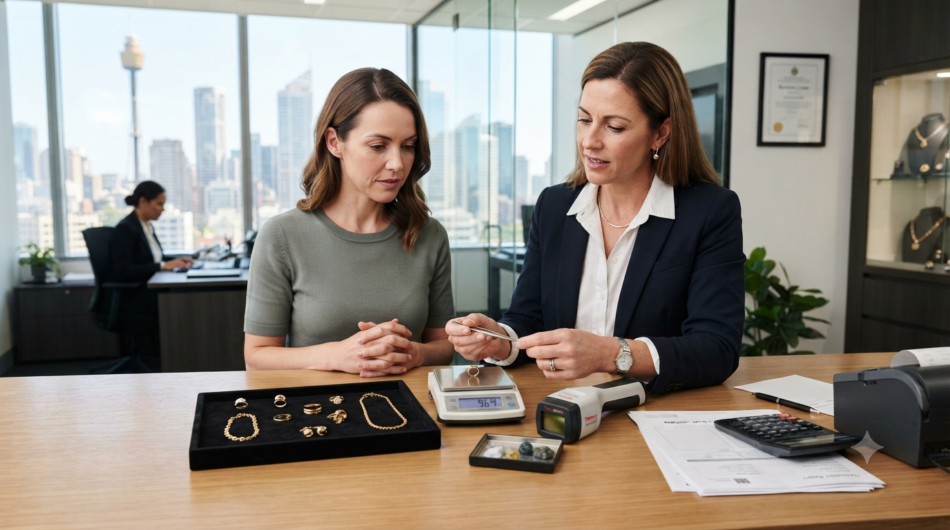
Selling gold can be a simple way to turn unwanted jewellery into cash. However, choosing the right Gold Buyer in Sydney is important. A professional-looking shop, website, or advertisement does not always prove that a buyer is trustworthy.
Sellers can lose money when a buyer gives a false weight reading, claims lower gold purity, adds hidden fees, or pressures them to sell quickly. Payment problems can also happen when terms are unclear.
Before you hand over your gold, take time to check the buyer’s business details, licence requirements, testing process, and payment terms. Gold purity is commonly measured in karats, with 24K representing pure gold and common jewellery grades including 10K, 14K, and 18K. Rules for gold and second-hand buyers can also vary depending on the location and type of business.
This guide explains the simple checks you can make before choosing a gold buyer.
Confirm the Gold Buyer Has the Right Licence
The first step is to check whether the buyer is operating legally and meets the requirements that apply to their business.
Search Using the Legal Business Name
Do not only search for the business brand name. Try to find the company’s full legal business name.
You may be able to check official records for information such as:
- Business registration
- Local business licences
- Second-hand dealer records
- Precious metal dealer requirements
- Pawn business licences, where relevant
It is important to understand that a business registration is not always the same as a special licence or permit required for a particular type of business.
When checking a record, look at:
- Business name
- Owner details, where publicly available
- Business address
- Licence or registration status
- Expiry date, if applicable
Be careful when details do not match. For example, the business website may show a different address or company name from official records.
Contact the Relevant Authority
If you are unsure about a buyer’s status, contact the relevant government or licensing authority directly.
Use the contact details listed on the official website rather than relying only on a phone number provided by the buyer.
You can ask questions such as:
- Is this business authorised to buy gold from the public?
- Does its registration cover this location?
- Is the business currently active?
- Are written receipts required for transactions?
Not every authority can share complaint details, but official records can still help you check whether the business information is correct.
Simple rule: If you cannot find an official record or confirm the business details, pause the sale until you have more information.
Check Mobile and Online Gold Buyers
Not every gold buyer operates from a permanent shop. Some businesses run pop-up events, hotel buying events, mobile services, or online gold-buying services.
These businesses may operate under different requirements.
Before selling, check whether the buyer has:
- A clear legal business identity
- A physical business address
- Proper records for transactions
- A clear process for identifying sellers
- Written terms and conditions
- A safe method for receiving and returning items
Never assume that a temporary event or online advertisement is automatically trustworthy.
Verify the Company’s Identity and Track Record
A legitimate business should have consistent information across different sources.
Match the Business Details
Compare the information you find on the buyer’s:
- Website
- Business records
- Phone number
- Physical address
- Social media profiles
- Licence or registration details
The information should make sense together.
Be careful if a buyer only uses a free email account, has no clear business address, or provides very little information about who owns or operates the company.
A trustworthy business should not make it difficult for you to understand who you are dealing with.
It can also be useful to check how long the company has been operating at its current location.
Read Reviews With Care
Online reviews can help, but a high star rating alone does not prove that a business is legitimate.
Look at reviews across several sources and pay attention to the details people share about their experience.
Watch for repeated complaints about:
- Offers changing after testing
- Missing jewellery
- Payment problems
- Poor communication
- Unclear weighing methods
- Pressure to sell quickly
For example, a buyer may have many positive reviews but several older reviews may mention that the original offer changed after the gold was tested. This does not automatically mean the business is dishonest, but it is a good reason to ask more questions and get another quote.
Also be careful with unusual review patterns, such as:
- Many reviews posted on the same day
- Very similar wording
- Generic comments with no details
- A sudden large number of five-star reviews
Look at the overall pattern rather than trusting one review.
Check for Complaints and Public Warnings
You can also search for the business name together with terms such as:
- Complaint
- Lawsuit
- Fine
- Fraud
- Consumer alert
One complaint does not prove that a business is a scam. Every business can have a disagreement with a customer.
However, repeated complaints about the same problem should be taken seriously.
Look for patterns rather than isolated comments.
Watch How the Buyer Weighs and Tests Your Gold
A reliable Gold Buyer in Sydney should be willing to explain how your gold is tested and valued.
You should understand what is happening before accepting an offer.
Stay Present During the Process
Try to stay near the weighing and testing area.
The buyer should clearly explain:
- The unit used on the scale
- The weight of your item
- The purity mark
- The testing method
- Whether stones or non-gold parts affect the weight
Common gold purity levels include:
- 10K: About 41.7% gold
- 14K: About 58.3% gold
- 18K: About 75% gold
- 22K: About 91.7% gold
- 24K: Nearly pure gold
Different items can also have different values. Solid gold, gold-plated jewellery, and gold-filled jewellery are not valued in the same way.
Be careful if a buyer:
- Hides the scale
- Refuses to explain the test
- Takes your items out of sight
- Mixes different items together
- Changes or rounds weights without explanation
A professional buyer should be able to answer reasonable questions about the process.
Compare the Offer With the Gold Price
The current gold market price can help you understand the value of your item. However, the spot price is not the same as the amount you will receive.
A buyer’s offer may account for:
- Gold purity
- Actual gold content
- Refining costs
- Testing costs
- Business expenses
- Dealer margins
For example, a 10-gram 18K item contains approximately 7.5 grams of pure gold. The buyer should be able to explain how the item’s purity and weight were used to calculate the offer.
Before selling, check the current gold price and compare offers from at least two or three buyers where possible.
This can help you understand whether one offer is significantly lower than others.
If you are considering selling gold jewellery Sydney, comparing the testing process and written offers can be just as important as comparing the final price.
Get an Independent Valuation for Valuable Items
Not every gold item should be sold only for its melt value.
Some items may have extra value because of their:
- Age
- Design
- Brand
- Rarity
- Gemstones
- Collector demand
For example, an antique piece may be worth more than the gold it contains. A rare coin may also have collector value. Valuable gemstones can have a separate value from the gold setting.
For expensive or unusual items, consider getting an independent appraisal before selling.
An independent professional who does not want to buy your item may provide a more neutral opinion.
Ask for clear information about:
- Metal value
- Stone value
- Brand value
- Age or historical value
- Overall resale value
This can help you avoid selling a valuable item only for its scrap gold price.
Review the Payment Terms Before Selling
Before agreeing to sell, make sure you understand exactly how and when you will be paid.
Ask for a Clear Written Offer
A written offer should clearly show important details, such as:
- Item description
- Weight
- Gold purity
- Price calculation
- Any fees
- Total payment
- Payment method
You should also understand whether the buyer can change the offer after taking possession of your gold.
Do not sign blank forms or documents you do not understand.
Take photos of your items before the appointment and keep copies of all paperwork.
Be Careful With Unsafe Payment Methods
Payment should be clear and easy to verify.
Be cautious about:
- Personal checks from unknown buyers
- Delayed payments without written terms
- Requests to pay a fee before receiving money
- Payments sent by an unrelated third party
- Payment screenshots without confirmation
- Unusual payment arrangements
A payment screenshot does not always mean that money has arrived in your account.
Before leaving, make sure you understand the payment method and confirm the transaction where possible.
Know When to Walk Away
One of the most important parts of selling gold is knowing when not to sell.
Walk away if the buyer:
- Pressures you to decide immediately
- Refuses to explain the process
- Will not provide a receipt
- Hides the scale
- Changes the offer without a clear reason
- Refuses reasonable questions
- Requests unnecessary personal information
- Says you should not compare other offers
A legitimate buyer should allow you time to ask questions and consider your options.
You can simply say:
“I need the business details, written offer, and time to compare prices before I decide to sell.”
You do not have to accept the first offer.
Use This Gold-Selling Checklist
Before visiting a buyer, complete these checks:
- Confirm the business identity
- Check relevant official records
- Match the business name and address
- Read reviews from different sources
- Look for repeated complaints
- Check the current gold price
- Photograph your items
- Separate items by purity and type
- Get a valuation for valuable pieces
- Tell someone where you are going
During the sale:
- Stay near the scale
- Watch the testing process
- Ask for each weight and purity result
- Keep valuable stones separate
- Compare the offer with another quote
- Read documents carefully
- Confirm payment terms
- Keep your receipt
Sell With Proof, Not Pressure
Choosing the right Gold Buyer in Sydney should involve more than simply accepting the highest advertised price.
Take time to check the business identity, understand the testing process, watch how your gold is weighed, and review the payment terms before handing over your items.
A legitimate buyer should welcome reasonable questions and provide clear information about how the final offer is calculated.
The safest gold sale is one where you can check the buyer’s business details, understand the valuation process, compare written offers, and confirm payment before giving up your gold.
If anything does not match or feels unclear, pause the sale. Taking a little extra time to check the buyer can help you make a more confident decision.


