 WhatsApp Us Now
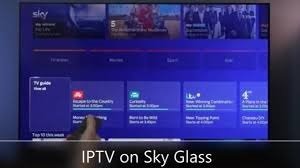
Choosing the right television setup has become more complicated than simply deciding which channels we want to watch. Modern viewers expect flexibility, reliable streaming, excellent picture quality, easy access to entertainment, and compatibility across different devices. Smart televisions have changed the way we consume content, while internet-based television has created even more possibilities for households that prefer flexible viewing.
For anyone considering Sky Glass IPTV UK, understanding how smart television technology and IPTV services work together is an important first step. The quality of the overall experience depends on several factors, including the television platform, internet connection, application compatibility, content availability, service reliability, and whether the provider has the necessary rights to distribute its programming.
IPTV stands for Internet Protocol Television. Unlike traditional broadcast methods, IPTV uses an internet connection to deliver television content. This can include live channels, video-on-demand programming, films, sports, documentaries, and other forms of digital entertainment. However, IPTV is a delivery technology rather than a guarantee of what content a particular provider can legally offer.
A well-planned setup can make home entertainment more convenient. On the other hand, choosing a service without checking compatibility, legality, technical requirements, and reliability can lead to buffering, poor picture quality, unexpected costs, or an application that does not work with the chosen television environment.
What Is Sky Glass IPTV UK?
Sky Glass IPTV UK generally describes the use of IPTV or internet-based television services alongside a Sky Glass television setup in the United Kingdom. Sky Glass is built around a connected-TV experience, which means internet connectivity plays an important role in accessing online entertainment.
IPTV itself delivers television programming through internet networks. Instead of receiving content exclusively through satellite, cable, or terrestrial broadcasts, the viewer receives a digital stream through an internet connection.
This distinction is worth understanding because not every IPTV service is the same. Some providers operate legitimate services with appropriate distribution agreements, while others may advertise content without clearly demonstrating that they have permission to distribute it.
When choosing an IPTV service, we should therefore look beyond the number of channels advertised. Content rights, reliability, compatibility, security, pricing, and customer support are much more meaningful indicators of a quality service.
How IPTV Works With a Smart Television
IPTV depends on several components working together. The service provider delivers the content through an internet network, while compatible software or hardware receives and displays the stream.
The basic process is straightforward:
- We connect the television or compatible streaming device to the internet.
- We access an authorized IPTV or streaming application.
- We sign into the relevant service.
- The application communicates with the provider’s servers.
- The selected content is delivered through the internet.
- The television decodes and displays the video and audio.
This process sounds simple, but several technical factors influence performance. Internet speed, network stability, server capacity, video bitrate, application optimization, and television hardware can all affect the final viewing experience.
Why Compatibility Should Be Checked First
One of the most important things we should determine before subscribing to an IPTV service is whether the service actually supports our intended setup.
Smart televisions use different operating environments. An application available on one platform may not be available on another. Even when an application can technically be installed, its features may vary between devices.
Before purchasing a subscription, we should check:
- Supported television platforms
- Official application availability
- Compatible streaming devices
- Login requirements
- Minimum internet requirements
- Supported video resolutions
- Application update support
- Customer service availability
This step can prevent unnecessary frustration. There is little value in purchasing a subscription if the service cannot be used conveniently on the equipment already available at home.
Understanding IPTV Content Legality
The legality of IPTV should always be considered carefully.
IPTV technology itself is legitimate. Many established broadcasters, streaming platforms, and television companies use internet protocols to deliver authorized programming. The important issue is whether a particular provider has the necessary rights to distribute the content it offers.
We should be cautious about services that make extraordinary promises, particularly when they offer large collections of premium channels at unusually low prices without clearly explaining their licensing arrangements.
A responsible approach is to choose services that provide transparent information about their content and distribution rights. This protects the viewer from unnecessary legal and account-related problems while also supporting legitimate content creators and distributors.
What Makes a Good IPTV Service?
A quality IPTV service should offer more than a long channel list. We should evaluate the entire experience.
Reliable Streaming
A good service should provide consistent playback under normal network conditions. Frequent interruptions can make even a large content library frustrating to use.
Good Video Quality
Picture quality should match the advertised specification. HD and 4K content can look excellent when the source, bitrate, network, and display are all suitable.
Simple Navigation
An intuitive interface makes it easier to find channels and programs. Complicated menus can quickly reduce the convenience of an otherwise capable service.
Strong Compatibility
The service should clearly state which devices and operating systems it supports.
Responsive Customer Support
Technical issues can occur with any internet service. Accessible customer support can make troubleshooting much easier.
Transparent Subscription Terms
Pricing, renewal conditions, cancellation procedures, and included features should be clearly explained before payment.
Internet Speed and IPTV Performance
Internet quality has a direct impact on streaming.
A connection may appear fast enough during a basic speed test but still experience interruptions during peak usage periods. This is because IPTV performance depends on more than raw download speed.
Network stability is particularly important for live television. A brief connection interruption can cause a stream to pause or buffer.
We can improve the network environment by keeping the router updated, positioning it appropriately, reducing unnecessary wireless interference, and using Ethernet when practical.
If the television is located close to the router, a wired connection can be particularly useful. Ethernet eliminates many of the wireless variables that can affect streaming.
How to Reduce IPTV Buffering
Buffering is one of the most common complaints associated with internet streaming. Fortunately, it can often be investigated systematically.
Test the Internet Connection
Run a connection test on another device. If multiple devices are experiencing slow performance, the broadband connection may be the underlying problem.
Restart the Router
Temporary router problems can sometimes cause unstable streaming. Restarting the router may restore normal performance.
Use a Wired Connection
If Wi-Fi is weak, Ethernet can provide a more stable connection between the router and television or streaming device.
Reduce Network Congestion
Large downloads, cloud backups, gaming, and multiple simultaneous streams can consume significant bandwidth.
Update the Application
Older applications may have compatibility or performance problems. Installing available updates can help.
Check the Provider
If other internet services work normally while one particular IPTV service repeatedly buffers, the problem may be associated with the provider rather than the household connection.
Understanding HD and 4K IPTV
Resolution is one of the most frequently advertised IPTV features, but it should not be considered the only measure of quality.
A 4K label does not automatically guarantee a superior picture. The source material, compression, bitrate, frame rate, network consistency, and television processing all contribute to what we actually see.
For example, heavily compressed high-resolution video can look worse than a well-encoded HD stream.
We should therefore consider consistent image quality rather than resolution claims alone.
For sports and other fast-moving content, frame rate is also important. Smooth motion can make a significant difference when watching football, racing, or other live events.
Sky Glass IPTV UK and Streaming Applications
Application availability is another major consideration.
Some IPTV services provide official applications designed for specific smart television environments. Others may support external streaming devices. We should always follow the provider’s legitimate installation instructions and avoid downloading unknown software from suspicious websites.
Unknown applications can introduce security risks. They may request unnecessary permissions, contain malicious software, or expose account information.
A safer approach is to use official application stores and trusted service providers whenever possible.
Choosing Between Built-In Apps and External Devices
A smart television may already provide access to numerous entertainment services. In some situations, this is enough for everyday viewing.
External streaming hardware can offer additional flexibility when a required application is unavailable on the television itself. However, adding another device also means another remote, power connection, software environment, and potential troubleshooting requirement.
We should therefore ask whether an external device genuinely solves a compatibility problem before purchasing one.
A simple setup is often easier to maintain.
Picture Settings That Can Improve Viewing
Even a high-quality stream can look disappointing if the television’s picture settings are poorly configured.
We can experiment with:
- Brightness
- Contrast
- Sharpness
- Motion settings
- Backlight levels
- Picture modes
- HDR settings where supported
The ideal configuration depends on the room and the type of content being watched. A bright living room may require different settings from a dark home cinema environment.
We should also avoid excessive sharpness because it can introduce artificial-looking edges and reduce natural image quality.
Sound Quality Matters Too
Television viewing is not only about the picture.
Dialogue clarity, music, effects, and overall volume balance can dramatically affect the entertainment experience. Built-in television speakers may be sufficient for casual viewing, while a soundbar or dedicated audio system can provide a more immersive experience.
If audio and video become noticeably out of sync, we should check the television’s audio settings, connected equipment, and application configuration.
Sometimes restarting the television and connected audio equipment is enough to resolve temporary synchronization problems.
Security Tips for IPTV Users
Internet-based television involves accounts, applications, and sometimes payment information. Security should therefore be treated as part of the setup process.
We should:
- Use strong, unique passwords.
- Avoid entering credentials into unknown applications.
- Keep television software updated.
- Download applications from trusted sources.
- Check subscription terms before paying.
- Avoid sharing account credentials unnecessarily.
- Monitor accounts for unusual activity.
We should also be cautious when a provider asks for excessive personal information that is not necessary for delivering the service.
How to Evaluate IPTV Pricing
Price is important, but the cheapest service is not necessarily the best value.
We should compare the complete package rather than focusing exclusively on the subscription cost.
Consider:
Content: Does the service actually provide the programming we watch?
Quality: Is the video quality consistent?
Reliability: Does live content play smoothly?
Compatibility: Can we use it on our preferred equipment?
Support: Is help available when technical issues occur?
Terms: Are renewal and cancellation conditions clear?
A moderately priced service with reliable performance and legitimate content can provide considerably more value than a very cheap service that frequently stops working.
Common Mistakes to Avoid
Several mistakes can make the IPTV experience more complicated than necessary.
Choosing Based Only on Channel Numbers
A huge channel list looks attractive, but quantity does not guarantee quality or reliability.
Ignoring Compatibility
Always confirm device compatibility before subscribing.
Assuming High Resolution Means High Quality
Video bitrate, source quality, and encoding matter just as much.
Blaming the Television for Every Buffering Problem
Buffering can originate from the internet connection, router, application, or provider.
Using Unofficial Applications
Unknown software can create security and privacy problems.
Ignoring Subscription Terms
We should understand renewal policies and cancellation conditions before providing payment information.
A Practical Checklist Before Choosing IPTV
Before subscribing, we can use the following checklist:
- Confirm television compatibility
- Check application availability
- Verify content legitimacy
- Review subscription pricing
- Check renewal conditions
- Look for customer support
- Evaluate streaming quality
- Test our broadband connection
- Consider Ethernet for stability
- Use secure account credentials
- Avoid suspicious applications
- Check whether HD or 4K content is genuinely supported
This approach allows us to make a more informed decision rather than choosing a service based on advertising alone.
Who Can Benefit From IPTV?
Internet-based television can appeal to households that value flexibility.
It may be useful for viewers who prefer:
- Live television through an internet connection
- On-demand programming
- Smart TV entertainment
- Flexible viewing schedules
- Centralized digital entertainment
- High-resolution streaming
- Multi-device access where legitimately supported
However, the right choice depends on individual viewing habits. Someone who only watches a few conventional channels may not need a complex IPTV setup, while a household that frequently uses online entertainment may appreciate the additional flexibility.
How the IPTV Experience Is Evolving
Television is increasingly becoming an internet-connected entertainment platform rather than a device used exclusively for traditional broadcasting.
Smart televisions now combine live programming, applications, streaming services, search features, recommendations, and connected devices. As broadband infrastructure improves, internet delivery is becoming increasingly important to the overall television ecosystem.
This makes it more important for viewers to understand the technology behind the services they use.
Rather than selecting an IPTV provider solely because it promises the largest possible library, we should focus on legitimate content, dependable delivery, device compatibility, security, and long-term usability.
Final Thoughts on Choosing Sky Glass IPTV UK
Choosing an IPTV service requires more consideration than simply finding a large channel package. The television, application, internet connection, provider, and content rights all contribute to the final experience.
When evaluating Sky Glass IPTV UK, compatibility should be checked before subscribing. We should also investigate the provider’s content rights, pricing structure, streaming reliability, customer support, and security practices.
A reliable internet connection is equally important. Even an excellent service can struggle when the home network is unstable. Using Ethernet where practical, keeping equipment updated, and reducing network congestion can improve consistency.
Most importantly, we should choose legitimate services that have the necessary rights to distribute their content. This creates a safer and more dependable entertainment environment.
The goal is not simply to access more channels. The goal is to create a smooth, secure, convenient, and enjoyable home entertainment experience that works reliably with the equipment we already use.
Conclusion
Internet-based television has created more flexibility for modern viewers, but choosing the right service requires careful evaluation. A good IPTV experience depends on much more than the number of channels advertised.
When considering Sky Glass IPTV UK, we should examine compatibility, legitimate content rights, streaming stability, picture quality, pricing, customer support, and security. We should also make sure our broadband connection and home network are capable of supporting the desired viewing quality.
With the right approach, a connected television can become a highly flexible entertainment hub. By selecting legitimate services, using compatible applications, maintaining a stable network, and understanding the technology involved, we can enjoy a more convenient and dependable television experience.
FAQs
1. Can we use IPTV with Sky Glass?
It depends on the IPTV service and the applications or devices it officially supports. We should verify compatibility with the specific television setup before purchasing a subscription.
2. Does IPTV require a fast internet connection?
IPTV requires a stable internet connection, and higher-quality streams generally require more bandwidth. Stability is especially important for live television because interruptions can cause buffering.
3. Why does IPTV buffer even when the internet seems fast?
Buffering can result from Wi-Fi problems, network congestion, router issues, application problems, provider-side capacity, or an unstable connection. Testing different services and using Ethernet can help identify the source.
4. Is IPTV legal in the UK?
IPTV technology is legal. However, individual providers must have the appropriate rights to distribute the copyrighted content they offer. We should choose authorized services.
5. Is 4K IPTV always better than HD IPTV?
Not necessarily. Resolution is only one part of picture quality. Bitrate, encoding, source material, frame rate, network stability, and television processing also affect how good the image looks.


