 WhatsApp Us Now
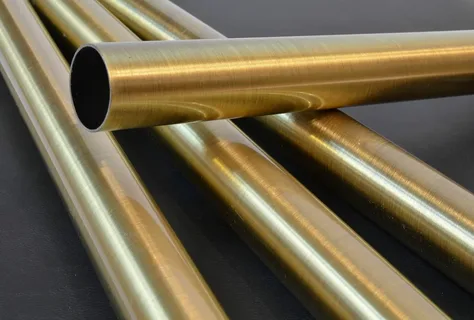
Brass pipes provide a durable metal piping solution for varied environments. These pipes resist corrosion and maintain mechanical strength under pressure. Engineers and contractors specify them for standard water lines and complex industrial fluid-handling systems. Machinability is a strong point for this material. Fabricators cut and thread the metal easily using standard shop equipment. This combination of workability and long-term performance keeps the material highly relevant across multiple manufacturing sectors. Reputable industrial suppliers stock various grades to meet distinct project demands.
What Are Brass Pipes?
Brass functions primarily as a copper-zinc alloy. Adjusting the specific ratio of copper to zinc alters the exact material properties. Higher copper content generally improves corrosion resistance in wet environments. Increased zinc levels add mechanical strength and hardness.
Comparing these to other common materials highlights their specific utility. Copper pipes bend more easily but lack the structural rigidity of brass. Stainless steel offers extreme chemical resistance but costs significantly more and requires specialised tooling to cut and thread. It delivers better rigidity than pure copper and better workability than stainless steel.
Key Properties of Brass Pipes
Several physical and mechanical characteristics dictate the widespread use of these pipes. The metal handles prolonged water exposure without degrading quickly. High mechanical strength ensures the pipe holds its shape under heavy system pressure.
Workers cut, thread, and join the pieces efficiently. The material also provides good thermal and electrical conductivity. This feature matters in specific heat transfer applications where temperature regulation is critical. Inside the pipe, a smooth internal surface supports efficient fluid flow. Friction remains low. Pumps require less energy to push liquids through the system.
Why Brass Pipes Are Used in Plumbing
Residential and commercial water supply systems rely heavily on this material. The metal resists corrosion and scaling in most municipal water conditions. Hard water deposits do not adhere easily to the inner walls.
Installers depend on reliable threaded and mechanical connections. The threads hold tight without stripping under high torque. Fittings, valves, and complex plumbing assemblies maintain their structural integrity perfectly. Plumbers prefer brass over plastic in high-temperature water lines or areas requiring heavy physical durability.
Benefits of Brass Pipes for Industrial Applications
Process systems require materials that can withstand mechanical stress under continuous operation. Industrial brass pipes meet these requirements. The metal handles high fluid flow rates and pressure spikes without expanding. Dimensional stability ensures that long pipe runs stay straight and secure in their mounting brackets, even under heavy plant vibration.
Machinability reduces downtime during urgent facility maintenance. Maintenance crews replace damaged sections quickly. Finding the right brass pipes for industrial equipment requires matching the exact alloy to the specific service environment. Plant engineers use these pipes to transport cooling water, compressed air, and specific fuel oils safely. The material compatibility covers many non-corrosive chemicals. Highly acidic fluids require different metals. Standard industrial fluids run perfectly through a brass piping system.
Brass Seamless Pipes vs Other Brass Pipe Types
Manufacturers produce pipes using either seamless or welded methods. Welded pipes start as flat metal sheets rolled into a cylinder and joined at a seam. Brass seamless pipes start as solid metal billets pushed through an extrusion die.
Engineers specify seamless construction for high-pressure fluid systems. The total lack of a seam removes the primary point of failure. Uniformity across the pipe circumference improves overall pressure-handling capabilities. Selecting between the two types depends entirely on the specific application. System pressure, operating temperature, fluid type, and required dimensions determine the final choice.
Applications of Industrial Brass Pipes
These pipes appear in different specific sectors across the industrial landscape. Plumbing and municipal water distribution remain the most visible applications globally. HVAC systems utilise metal for cooling water lines and specific refrigerant pathways.
Marine equipment relies on specialised marine-grade brass alloys to withstand severe saltwater corrosion. Heat exchangers utilise the benefits of the material’s natural thermal conductivity. Industrial machinery uses the pipes to move heavy lubricating oils. Hydraulic and pneumatic systems require a rigid structure to handle high-pressure limits safely. Fuel lines and standard fluid-handling equipment also incorporate brass components frequently.
How to Select the Right Brass Pipe
Choosing the correct pipe requires evaluating multiple engineering variables. Begin by selecting the alloy grade. The specific copper-to-zinc ratio must match the exact fluid handled. Calculate the required pipe dimensions and wall thickness based on total system volume and flow rate.
Operating pressure and temperature establish the absolute minimum mechanical requirements. Fluid compatibility determines long-term pipe survival. Consider the connection method early in the conceptual phase. Threaded, soldered, or mechanical joints dictate specific pipe end preparations. Always verify the actual manufacturing process. Plant managers must ensure the supplier provides material that fully meets the required industry standards.
Conclusion
Durability, corrosion resistance, and machinability make brass a highly practical choice for fluid transport. Standard plumbing networks and demanding industrial process lines both benefit from these stable material properties. Long-term reliable service depends entirely on proper initial specification. Engineers must match the specific brass grade and exact pipe dimensions strictly according to the operating conditions.


