 WhatsApp Us Now
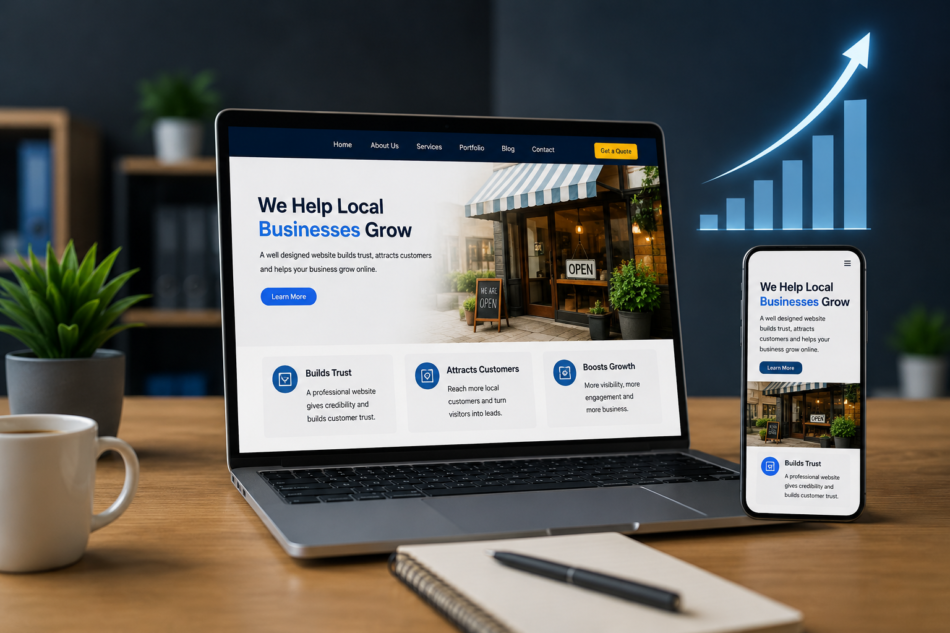
For many businesses, a website is often the first place a potential customer encounters a company. Before making an inquiry, requesting a quotation or visiting a premises, people commonly look online to understand what a business offers and whether it appears trustworthy. This makes thoughtful web design an important part of building a strong digital presence.
For businesses serving local customers, website design in Luton involves more than choosing attractive colours and adding a few pages. A successful website should communicate clearly, work smoothly across devices and make it easy for visitors to take the next step. It should also reflect the character of the business rather than looking like a generic template.
Why Your Website Matters to Local Customers
Local businesses operate in an environment where trust can have a significant influence on purchasing decisions. Customers want to know who they are dealing with, what services are available and whether the business understands their requirements.
A well planned website can answer these questions quickly. Clear service descriptions, genuine imagery, useful information and straightforward contact options can help visitors feel more confident.
The best websites are not designed purely for search engines. They are created around the needs of real people. This people’s first approach is important because visitors should be able to find useful information without having to navigate through unnecessary pages or complicated menus.
What Makes Effective Website Design?
Good website design in Luton should balance appearance, usability and functionality. A visually impressive website may attract attention, but it will struggle to perform if visitors cannot find what they need.
Several elements deserve particular attention.
Clear Navigation
Navigation should be simple and predictable. Visitors should be able to move between important sections without having to search for basic information.
A clear menu might include pages such as Home, About, Services, Portfolio, FAQs and Contact. The exact structure will depend on the business, but the principle remains the same: make important information easy to reach.
Mobile Friendly Layouts
A significant proportion of website visitors use smartphones and tablets. A website that looks good on a desktop but becomes difficult to use on a smaller screen can quickly frustrate potential customers.
Responsive design allows page layouts, images, buttons and text to adapt to different screen sizes. Forms should also be easy to complete from a mobile device.
Fast Loading Pages
People generally expect websites to respond quickly. Large images, unnecessary scripts and poorly optimised resources can contribute to slow loading times.
Performance should therefore be considered during the design and development process rather than treated as an afterthought. Compressing suitable images, reducing unnecessary elements and using efficient technology can help create a smoother experience.
Creating Trust Through Design
A professional appearance can influence how visitors perceive a business. However, trust does not come from polished graphics alone.
A trustworthy website should provide meaningful information about the organisation behind it. An About page can explain experience, values and areas of expertise, while testimonials and genuine project examples can give visitors additional context.
Businesses should avoid making exaggerated claims that cannot be supported. Instead, useful evidence should be presented wherever appropriate.
For website design in Luton, this means thinking carefully about what a local customer would want to know before making contact. Authentic photographs, clear service information and transparent business details can all contribute to a stronger experience.
Local Relevance Without Keyword Stuffing
Local SEO can help businesses become more visible to people searching for relevant services in their area. However, repeatedly inserting a location or target phrase into every paragraph rarely creates useful content.
Instead, local relevance can be established naturally. Businesses can discuss the communities they serve, explain their services, provide accurate location information and publish genuinely useful resources for their audience.
This approach creates content that has a purpose beyond ranking for a particular phrase.
Google’s search guidance also warns against creating content primarily to manipulate rankings. Useful, original material that satisfies visitors should remain the priority.
Working With an Experienced Web Design Team
Choosing the right web design partner can make the development process considerably easier. Before starting a project, a business should consider what it actually needs from its website.
A good initial discussion should cover the target audience, business objectives, key services, existing branding and expected customer journey. It is also useful to consider how the website will be maintained after launch.
Fast Ranking takes a practical approach to digital projects, considering both the user’s experience and the wider objectives of the business. The focus should not simply be on producing attractive pages, but on creating a website that communicates effectively and supports measurable business goals.
Content Should Have a Purpose
Design and content work best when they are developed together. A beautifully designed page with weak or unclear information will not provide much value to visitors.
Each important page should answer a particular question or fulfil a particular purpose. Service pages should explain what is offered, who it is for and what customers can expect. About pages should provide genuine background information. Contact pages should make it straightforward to get in touch.
Useful content can also support organic visibility over time. Guides, FAQs, project explanations and educational articles may help answer questions that potential customers are already asking.
The emphasis should always be on usefulness rather than producing pages simply to increase the number of indexed URLs.
Building for Long Term Success
A website should not be considered finished forever once it goes live. Businesses change, services develop and customer expectations evolve.
Regular reviews can identify outdated information, broken links, poor performing pages and opportunities for improvement. Analytics and Search Console data can also provide useful insight into how visitors discover and interact with the site.
This makes website design in Luton an ongoing process rather than a one off exercise. A website can gradually be improved as a business learns more about its customers and their behaviour.
Technical maintenance is equally important. Software updates, security checks, backups and performance monitoring can help protect the website and keep it functioning properly.
The Importance of User Experience
User experience brings many of these elements together. Visitors should not have to work hard to understand a website.
Consider a customer arriving on a service page for the first time. They should quickly understand what the business does, why the service may be relevant to them and what action they can take next.
Simple calls to action can help guide visitors without becoming intrusive. Buttons such as “Request a Quote”, “View Our Services” or “Get in Touch” are often more useful than vague messages.
Accessibility should also be considered. Readable typography, sensible colour contrast, descriptive image text and keyboard friendly navigation can make websites easier for a wider range of people to use.
Making Your Website Work Harder
A strong online presence is built from many small decisions rather than one particular design trend. The right structure, useful content, reliable functionality and consistent branding can work together to create a website that serves both customers and the business.
Fast Ranking recognises that every organisation has different objectives, which is why a website should be shaped around the audience and services it represents rather than following a one size fits all formula.
For businesses considering website design in Luton, the most valuable question is not simply whether a website looks modern. It is whether the website helps visitors find information, understand the business and confidently take the next step.
Final Thoughts
A successful business website should be useful before it attempts to be impressive. It needs to load efficiently, work across devices, communicate clearly and provide genuine information that helps visitors make informed decisions.
Effective website design in Luton combines visual presentation with usability, accessibility, technical performance and meaningful content. When these elements are planned together, a website can become much more than an online brochure.
The digital landscape will continue to change, but the fundamentals remain remarkably consistent: understand your audience, provide genuine value, communicate honestly and make the experience as straightforward as possible.
Fast Ranking can approach web projects with these principles in mind, helping businesses create digital experiences that are built around their users rather than simply following temporary design trends.


