 WhatsApp Us Now
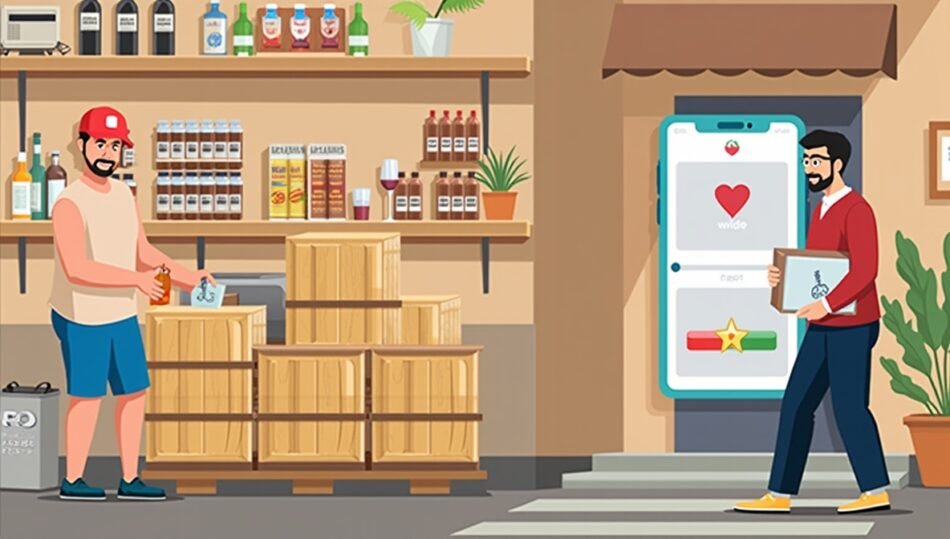
The alcohol retail industry is becoming increasingly digital. Customers who once visited a liquor store to browse products and make purchases can now discover beverages, compare prices, place orders, and track deliveries directly from their smartphones. This shift has created a significant opportunity for liquor retailers, distributors, entrepreneurs, and established brands to build convenient digital ordering experiences.
However, launching an alcohol delivery platform is about much more than creating an attractive mobile application. The right technology must support product discovery, secure payments, age verification, inventory management, delivery operations, compliance requirements, customer engagement, and business growth.
This is where choosing the right app development team becomes a strategic business decision.
An experienced development partner can turn an initial concept into a reliable digital platform, reduce development risks, improve the customer experience, and create a technical foundation that can scale as order volumes increase. On the other hand, an inexperienced team may produce an application that looks good but struggles with performance, security, integrations, or operational complexity.
Let’s explore how the right development team can accelerate your alcohol delivery business and what you should consider before choosing one.
Understanding the Complexity of an Alcohol Delivery Platform
At first glance, an alcohol delivery app may appear similar to any other food or grocery delivery application. Customers browse products, add items to a cart, pay, and receive their orders.
Behind this simple experience, however, there can be several interconnected systems.
An effective platform developed by Best alcohol delivery app development Services may need to connect customers with retailers, inventory systems, payment providers, delivery personnel, administrators, and potentially third-party verification services. The platform must also account for local laws and regulations governing alcohol sales and delivery, ensuring a secure, compliant, and seamless experience for both businesses and customers.
This means your development team needs to understand both technology and the business processes surrounding alcohol commerce.
A capable team can help identify these requirements before development begins. Instead of simply building features from a specification, experienced developers can evaluate your business model and recommend an architecture that supports your immediate requirements while leaving room for future expansion.
1. Turning Your Business Idea Into a Practical Product
Many businesses begin with a basic idea: customers should be able to order alcohol from their phones and receive it at home.
Turning that idea into a functioning product requires much more detailed planning.
A professional development team can help convert your concept into clearly defined user journeys, features, technical requirements, and development milestones. This may include determining whether your platform should operate as a single-store application, a multi-vendor marketplace, or a hybrid model.
For example, a multi-vendor platform may require:
- Customer mobile applications
- Vendor or retailer dashboards
- Delivery partner applications
- An administrative control panel
- Inventory synchronization
- Order management
- Payment integration
- Location and delivery tracking
- Age and identity verification workflows
- Analytics and reporting
Defining these components early prevents costly changes later in the project.
The development team can also help prioritize features for the first release. Instead of spending months building every possible feature, you can launch with a focused minimum viable product and introduce additional capabilities based on customer feedback.
This approach can help you enter the market faster and learn what your customers actually need.
2. Creating a Smooth Customer Experience
Convenience is one of the biggest reasons customers choose digital delivery services. If an application is slow, confusing, or difficult to navigate, users may abandon their orders before completing the purchase.
The right development team can create an experience that makes product discovery and ordering straightforward.
A well-designed alcohol delivery application might allow users to:
- Search products by name, brand, or category
- Filter beverages by price, type, size, or availability
- View detailed product information
- Save favorite products
- Add items to a cart quickly
- Select delivery preferences
- Complete secure payments
- Receive order updates
- Track deliveries
- Reorder previously purchased products
Personalization can further improve the experience. For example, the platform could recommend products based on previous purchases, browsing behavior, or popular items in the customer’s area.
Good UX is not simply about aesthetics. It can directly influence conversion rates, repeat purchases, and customer retention.
3. Building Strong Age-Verification Workflows
Alcohol delivery platforms have an important responsibility: ensuring that products are sold and delivered only to customers who meet applicable legal age requirements.
The exact rules vary by jurisdiction, so your development team should design verification workflows around the laws and licensing requirements applicable to your target market.
Depending on the business model and location, the application may need mechanisms for collecting or validating customer information, confirming eligibility, or supporting verification during delivery.
The important point is that compliance should not be treated as an afterthought.
An experienced development team can work with your legal and compliance advisers to incorporate appropriate verification processes into the customer journey without making the application unnecessarily difficult to use.
4. Integrating Secure Payment Systems
A successful delivery platform needs a payment experience that is fast, reliable, and secure.
Customers may expect multiple payment methods, while businesses need accurate transaction records, refunds, payment status updates, and reconciliation capabilities.
Your development team can integrate appropriate payment gateways and build the application’s payment architecture around your operational requirements.
Security should be considered throughout the process, including secure handling of customer information, authentication, access controls, encryption, and appropriate payment-security practices.
A strong payment experience can reduce checkout friction and help customers feel confident completing transactions through your platform.
5. Connecting Inventory With Real-Time Operations
One of the biggest challenges for delivery businesses is inventory accuracy.
Imagine a customer placing an order for a particular bottle only to discover that the product is unavailable. Repeated situations like this can quickly damage customer satisfaction.
An experienced development team can integrate your platform with inventory management systems or develop appropriate inventory functionality for your business model.
The system can help businesses monitor:
- Product availability
- Stock quantities
- Store-level inventory
- Product pricing
- Promotions
- Out-of-stock items
- Product substitutions
- Order fulfillment status
For multi-store or marketplace platforms, inventory synchronization becomes even more important because customers may be ordering from different retailers.
Reliable inventory information creates a better customer experience while also helping businesses reduce failed orders and unnecessary operational work.
6. Streamlining Delivery Management
Ordering is only half of the customer experience. The delivery process is equally important.
A strong platform should help businesses manage orders from confirmation through fulfillment and delivery.
Depending on the business model, delivery functionality may include:
- Driver assignment
- Delivery status updates
- Route information
- Location tracking
- Estimated delivery times
- Delivery confirmation
- Customer notifications
- Driver availability management
A dedicated delivery application can provide drivers with the information they need while allowing administrators to monitor active orders.
This creates better visibility across the entire delivery operation.
As order volumes increase, automated workflows can become particularly valuable. Instead of manually coordinating every delivery, the platform can support more efficient order assignment and status management.
7. Designing a Scalable Technology Architecture
A platform that handles 50 orders per day has very different technical requirements from one handling thousands of orders.
This is why scalability should be considered from the beginning.
The right development team can select an architecture that supports future growth. This may include cloud infrastructure, scalable databases, API-based integrations, caching strategies, monitoring systems, and modular application architecture.
The objective is not necessarily to build the most complicated system possible. Instead, the goal is to build a system that can grow without requiring a complete rebuild every time your business expands.
For example, you may initially operate in one city but eventually want to expand into multiple locations. A scalable platform can make it easier to introduce additional stores, delivery zones, product catalogs, and operational teams.
8. Improving Business Intelligence Through Analytics
Data can help you understand how customers interact with your platform and where your business is performing well or losing opportunities.
A capable development team can integrate analytics into the platform so that you can monitor meaningful business metrics.
These may include:
- Number of orders
- Average order value
- Customer acquisition
- Repeat purchase rates
- Product popularity
- Cart abandonment
- Delivery performance
- Revenue by location
- Promotional performance
- Customer retention
These insights can help management make informed decisions.
For instance, if analytics reveal that customers frequently search for a product that is unavailable, you may have an opportunity to improve inventory planning. If certain promotions consistently increase average order value, you can use similar strategies in future campaigns.
In this way, the application becomes more than an ordering tool. It becomes a source of actionable business intelligence.
9. Supporting Customer Retention
Acquiring a customer is only the beginning. Long-term profitability often depends on encouraging customers to return.
Your development team can incorporate retention-oriented features such as personalized recommendations, favorites, reorder functionality, loyalty programs, promotional notifications, and personalized offers.
Push notifications can also keep customers informed about order status, new products, promotions, and relevant offers.
However, customer communication should be thoughtfully designed. Excessive notifications can frustrate users, while relevant and timely communication can improve engagement.
The right development partner can help create the technical infrastructure required for these engagement strategies while leaving marketing teams control over campaigns and customer segments.
10. Strengthening Platform Security
Alcohol delivery platforms handle valuable business and customer information, making security a fundamental requirement.
The development process should include secure authentication, authorization controls, data protection, secure APIs, vulnerability management, logging, and appropriate security testing.
Administrative accounts deserve particular attention because unauthorized access to an administrative dashboard could expose sensitive information or allow malicious changes to products, orders, prices, or users.
Security should therefore be built into the architecture rather than added shortly before launch.
An experienced team can also establish development and testing practices designed to identify vulnerabilities before the platform reaches customers.
11. Helping You Launch Faster
Speed matters in competitive digital markets, but rushing development can create expensive problems.
The right development team can accelerate your launch by using structured development methodologies, reusable components, established integrations, automated testing, and clearly defined milestones.
A typical process may involve:
- Business and technical discovery
- Market and competitor analysis
- Feature prioritization
- UX/UI design
- Architecture planning
- Application development
- Integration development
- Quality assurance
- Security and performance testing
- Deployment
- Post-launch monitoring and improvements
This structured approach helps reduce uncertainty and gives stakeholders visibility into project progress.
12. Providing Long-Term Technical Support
Launching an application is not the end of development.
After launch, customers may discover usability issues, businesses may request new features, operating systems may change, and third-party services may introduce updates.
A reliable development partner can provide ongoing maintenance and support to keep the platform stable and competitive.
Post-launch services may include:
- Bug fixes
- Performance optimization
- Security updates
- New feature development
- Third-party integration updates
- Infrastructure monitoring
- Application updates
- Technical consultation
Long-term support is particularly valuable for a delivery platform because operational disruptions can directly affect orders and revenue.
How to Choose the Right Development Team
Selecting a development company requires more than comparing hourly rates.
Look for a partner that demonstrates experience with on-demand applications, marketplace platforms, payment integrations, location-based services, and scalable backend systems.
You should also evaluate the team’s communication process, development methodology, testing practices, security approach, post-launch support, and ability to understand your business objectives.
Ask potential partners questions such as:
- Have you developed similar on-demand platforms?
- How will you approach age-verification requirements?
- How will inventory synchronization work?
- What architecture do you recommend for future expansion?
- How will payment and customer data be protected?
- What testing process do you follow?
- What support will be available after launch?
- How will new features be added as the business grows?
A development partner should be willing to explain its recommendations clearly rather than simply promising a low development cost.
Final Thoughts
The success of an alcohol delivery business depends on much more than having a mobile application. Your platform needs to bring together customer experience, inventory, payments, delivery operations, security, compliance, analytics, and scalability.
That is why choosing the right app development team can have a direct impact on how quickly and effectively your business grows.
A capable technology partner can help transform an initial concept into a scalable platform, streamline operations, improve customer satisfaction, and provide the flexibility needed to adapt to changing market demands.
Whether you are launching a new alcohol delivery startup or taking an existing retail operation online, investing in the right development expertise can give your business a stronger technological foundation.
The best approach is to think beyond the initial launch. Choose a development team that understands your business goals, anticipates future requirements, and can continue supporting the platform as your customer base and operations expand.


