 WhatsApp Us Now
This significant expansion reflects the rapid adoption of electric vehicles (EVs), increasing investments in battery technology, and the growing need for efficient, reliable, and high-performance energy storage solutions.
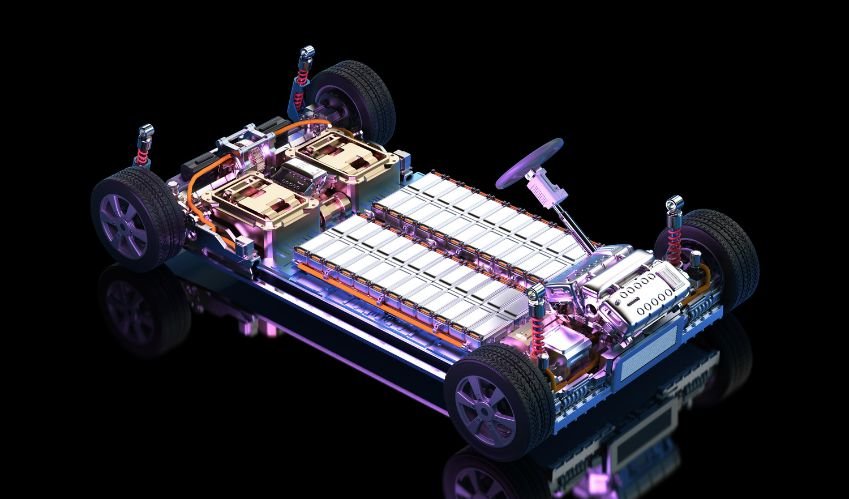
Electric vehicle batteries are a critical component of EVs because they determine key characteristics such as driving range, charging time, acceleration, vehicle performance, and overall operating efficiency. As consumers and businesses increasingly shift towards electric mobility, manufacturers are under pressure to develop batteries that provide higher energy density, faster charging, longer service life, improved safety, and competitive costs. The global electric vehicle battery market reached USD 76.72 Billion in 2025 and is projected to grow at a CAGR of 19.20% between 2026 and 2035, reaching approximately USD 444.29 Billion by 2035, according to Expert Market Research.
Rising Adoption of Electric Vehicles
The growing adoption of electric vehicles is one of the primary factors driving demand for high-performance batteries. Governments across various countries are encouraging the transition towards cleaner transportation through incentives, emission regulations, charging infrastructure development, and policies supporting electric mobility.
Consumers are also becoming more receptive to EVs as manufacturers introduce a wider range of electric cars, buses, commercial vehicles, and two-wheelers. Improvements in vehicle performance and battery capabilities are reducing some of the limitations historically associated with electric mobility.
As EV sales increase, the requirement for advanced battery systems is expected to grow proportionally. Automakers are therefore investing heavily in battery supply chains and establishing strategic partnerships with battery manufacturers to secure reliable access to critical technologies and materials.
Importance of Battery Performance
Battery performance directly influences the overall value proposition of an electric vehicle. A battery with higher energy density can store more energy within a given size and weight, potentially enabling longer driving ranges without significantly increasing vehicle weight.
Driving range remains an important consideration for consumers evaluating electric vehicles. Manufacturers are consequently focusing on battery chemistries and cell designs that can provide greater energy storage while maintaining safety and durability.
Charging speed is another important performance factor. Consumers increasingly expect EVs to provide convenient charging experiences comparable with conventional refuelling. Advances in battery materials, thermal management, charging infrastructure, and battery architecture are supporting the development of faster-charging systems.
Battery longevity is equally important. High-performance batteries need to maintain their capacity over numerous charging and discharging cycles. Improvements in cell chemistry and battery management systems are helping manufacturers extend battery life and improve long-term vehicle reliability.
Advancements in Battery Technology
Technological innovation is transforming the electric vehicle battery industry. Lithium-ion batteries currently represent a major technology for EV applications because of their relatively high energy density, established manufacturing infrastructure, and improving performance.
However, battery manufacturers and automotive companies are actively researching next-generation technologies. Solid-state batteries are receiving considerable attention because they have the potential to offer higher energy density, improved safety characteristics, and faster charging capabilities compared with conventional battery architectures.
Other areas of development include lithium iron phosphate (LFP), nickel-manganese-cobalt (NMC), sodium-ion, and other emerging chemistries. Each technology offers different advantages related to cost, energy density, safety, material availability, and lifecycle performance.
The diversification of battery technologies is enabling manufacturers to select solutions according to vehicle type and application. High-performance passenger cars may prioritise energy density and range, while commercial vehicles may place greater emphasis on durability, cost efficiency, and cycle life.
Demand for Faster Charging
The increasing demand for fast-charging capabilities is significantly influencing battery development. Long charging times can affect consumer convenience and remain an important consideration when purchasing an electric vehicle.
Battery manufacturers are therefore working to improve charging performance while managing heat generation and battery degradation. Advanced thermal management systems can help maintain appropriate battery temperatures during rapid charging and high-power operation.
Fast-charging infrastructure is developing alongside battery technology. The expansion of public charging networks, high-power charging stations, and charging facilities at workplaces, homes, and commercial locations is making electric vehicles more practical for a wider range of users.
The combination of improved battery charging capabilities and expanded infrastructure is expected to support continued EV adoption and consequently increase demand for high-performance batteries.
Focus on Battery Safety
Safety is a fundamental consideration in the development of electric vehicle batteries. Batteries contain large amounts of stored energy, requiring sophisticated systems to control temperature, voltage, current, and charging conditions.
Battery management systems play an important role in monitoring individual cells and maintaining safe operating conditions. Manufacturers are also investing in improved cell designs, separators, thermal management systems, and protective structures to minimise safety risks.
Research into alternative chemistries and solid-state battery technologies is partly driven by the need for improved safety. As electric vehicles become more widespread, battery safety standards and testing requirements are expected to become increasingly important across the automotive industry.
Role of Battery Management Systems
Battery management systems are becoming increasingly sophisticated as battery packs become more advanced. These systems monitor factors such as temperature, voltage, current, state of charge, and state of health.
Accurate battery monitoring allows manufacturers to optimise performance and prevent conditions that could accelerate degradation. Advanced systems can also support predictive maintenance and provide valuable information to vehicle manufacturers and users.
Artificial intelligence, data analytics, and connected vehicle technologies are creating additional opportunities for battery management. By analysing battery performance data, manufacturers can identify patterns, improve charging strategies, and optimise battery usage.
Growing Focus on Sustainability
Sustainability is another major factor influencing the development of electric vehicle batteries. Although EVs can help reduce emissions from road transportation, battery manufacturing involves the extraction and processing of materials such as lithium, nickel, cobalt, manganese, and other resources.
The industry is therefore increasingly focused on improving resource efficiency, developing alternative battery chemistries, and strengthening recycling systems. Battery recycling can help recover valuable materials and reduce dependence on newly extracted resources.
Second-life applications are also gaining attention. Batteries that are no longer suitable for demanding automotive applications may still retain sufficient capacity for stationary energy storage. Reusing EV batteries for grid storage, renewable energy systems, or backup power can extend their useful life and improve resource efficiency.
Expansion of Battery Manufacturing
The rapid growth of the EV market is encouraging significant investment in battery manufacturing capacity. Automakers, battery producers, technology companies, and governments are investing in large-scale production facilities to meet future demand.
Localising battery production can help manufacturers reduce supply-chain risks and improve access to critical components. It can also support the development of regional EV ecosystems involving battery materials, cell production, vehicle assembly, recycling, and charging infrastructure.
Advances in automated manufacturing are further improving battery production. Automated cell assembly, quality inspection, material handling, and testing systems can improve production consistency and efficiency while supporting large-scale manufacturing.
Challenges Facing the Battery Industry
Despite the strong growth outlook, the electric vehicle battery industry faces several challenges. Raw material availability and price fluctuations can influence battery costs and production planning. Supply-chain disruptions may also affect the availability of critical minerals and battery components.
Battery manufacturing requires substantial investment in production facilities, research, quality control, and recycling infrastructure. Smaller manufacturers may face difficulties competing with large companies that benefit from economies of scale.
Another challenge is the need to continuously improve battery performance while controlling costs. Consumers expect longer driving ranges, faster charging, greater durability, and improved safety without significant increases in vehicle prices.
Battery recycling and end-of-life management also require further development. As the number of EVs on the road increases, establishing efficient systems for collecting, transporting, recycling, and repurposing used batteries will become increasingly important.
Future Opportunities
The rapid expansion of electric mobility is creating substantial opportunities for battery manufacturers and technology developers. The projected growth of the global electric vehicle battery market from USD 76.72 Billion in 2025 to USD 444.29 Billion by 2035 highlights the scale of future demand.
Next-generation battery technologies represent one of the most promising areas of opportunity. Solid-state batteries, improved lithium-ion chemistries, sodium-ion batteries, and other emerging technologies could improve performance while addressing cost, safety, and resource-related challenges.
There are also opportunities in battery software, smart charging, thermal management, recycling, second-life applications, and battery analytics. Companies capable of integrating hardware and software solutions can provide greater value throughout the battery lifecycle.


