 WhatsApp Us Now
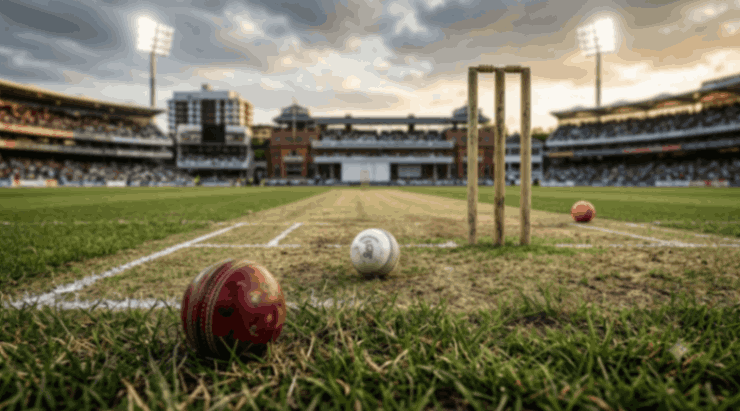
Cricket looks like one sport, but the ball in play changes everything about how a match unfolds. A bowler in a Test match and a bowler in a T20 game are not working with the same tool, and the difference goes far beyond color. For fans trying to understand which ball used in international cricket fits each format, this guide breaks down the materials, rules, and traits that separate one ball from another.
Why the Ball You Use Actually Matters
A cricket ball is not just a round object thrown at a batter. Its seam, shine, hardness, and even its color all shape how it moves through the air and off the pitch. A slightly worn ball behaves differently from a new one, and a ball built for a five-day Test has to hold up in ways a ball used for a three-hour T20 match never needs to. This is why commentators talk so much about the state of the ball, and why teams fight hard over decisions on when it can be changed.
Red, White and Pink: The Three Core Colours
Most fans first notice the sport’s balls by their color, and each one exists for a practical reason rather than tradition alone. Red white and pink cricket balls each serve a specific role tied to visibility, playing conditions, and the length of the match, and no two of them play exactly alike. The red ball is the oldest of the three and remains the standard for Test cricket. Its dark leather surface holds a shine well, which helps fast bowlers generate swing in the opening overs. Because Test matches run under natural daylight, visibility against a red ball has never been an issue. The white ball arrived once cricket started being played under floodlights and broadcast in color on television. A red ball becomes hard to see under artificial lighting and against a dark backdrop, so limited overs cricket adopted white balls for better visibility. However, a white ball tends to lose its shine faster and shows scuff marks more visibly than red leather, which changes how it behaves as an innings progresses. The pink ball is the newest addition, created specifically to solve a visibility problem that neither red nor white balls could fix. Pink balls are used in day-night Test matches, where play starts in daylight and finishes under floodlights. The pink coating includes extra layers of lacquer to help the ball stay visible in changing light, and this coating also affects how much movement bowlers get compared to a standard red ball.
How Format Rules Decide Which Ball Is Used
Match rules determine which ball takes the field, and this is one of the clearest examples of how the sport adapts equipment to playing conditions. Cricket balls used in different formats are not interchangeable, since each format has its own demands on durability, visibility, and playing time. Test cricket uses a red ball, and teams are allowed to request a new one after eighty overs if the current ball has lost its hardness or shape. One Day Internationals switched to white balls decades ago, and since 2011 many ODI matches actually use two new white balls, one from each end, to keep the ball harder for longer across fifty overs. T20 cricket also relies on a single white ball per innings, chosen for its visibility during evening matches and its ability to stay firm across a shorter, faster-paced game. Day-night Tests are the exception that brought pink balls into the picture, giving broadcasters and spectators a clear view of play once the sun goes down.
How the Coating Changes the Way a Ball Plays
Colour is not just cosmetic. Cricket ball color and performance are closely linked, because the dye and coating used on each ball affect how the leather ages and how the seam holds up over time. Red balls are treated with a wax-based polish that bowlers can maintain by shining one side against their clothing, which helps produce swing, especially in the first twenty to thirty overs of an innings. White balls use a different type of coating that resists staining from grass and pitch marks, but this coating also wears down faster, which is why white balls tend to lose their shape and shine more quickly than red ones during a long innings. Pink balls sit somewhere in between, built with a thicker lacquer layer that keeps the color vivid under lights but can also make the seam feel different to bowlers compared to a traditional red ball, particularly once dew sets into the outfield during the evening session.
What Makes a Professional Match Ball
Not every ball meets the standard required for top-level competition. Professional cricket match balls go through strict manufacturing checks covering weight, size, and stitching before they are approved for use in international fixtures. A regulation ball weighs between 155.9 and 163 grams and measures between 224 and 229 millimeters in circumference, and these figures are enforced by the sport’s governing bodies to keep matches fair and consistent across venues. Three manufacturers dominate the international game, each tied to a specific cricket board. Kookaburra balls are used across Australia, South Africa, and several other nations, known for a machine-stitched seam that flattens out faster than hand-stitched alternatives. Dukes balls are used in England and the West Indies, hand-stitched with a pronounced seam that holds up longer and often assists swing bowling deep into an innings. SG balls are manufactured in India and used for home Tests there, also hand-stitched and known for producing reverse swing in the later stages of a match. These differences are a major reason the same format can play out so differently depending on which country is hosting.
FAQs
What is the difference between a red and white cricket ball?
A red ball is used in Test cricket and holds its shine longer, which helps bowlers generate swing across a five-day match. A white ball is used in ODIs and T20s for better visibility under floodlights, but it loses shine and shape faster than a red ball.
Why is the pink ball used only in day-night Tests?
The pink ball was designed to remain visible both in daylight and under floodlights, which standard red or white balls cannot do equally well across a match that spans both conditions.
How many overs can a red ball last in a Test match?
Teams can request a new red ball once the current one has been used for eighty overs, provided it has lost its hardness or shape enough to affect play.
Do all countries use the same brand of cricket ball?
No. Kookaburra is used in Australia and South Africa, Dukes is used in England and the West Indies, and SG is used for home Tests in India, and each brand behaves differently once it wears down.
What is the official weight of a professional cricket ball?
A regulation cricket ball weighs between 155.9 and 163 grams, with a circumference of 224 to 229 millimeters, as set by the sport’s governing bodies for international play.


