 WhatsApp Us Now
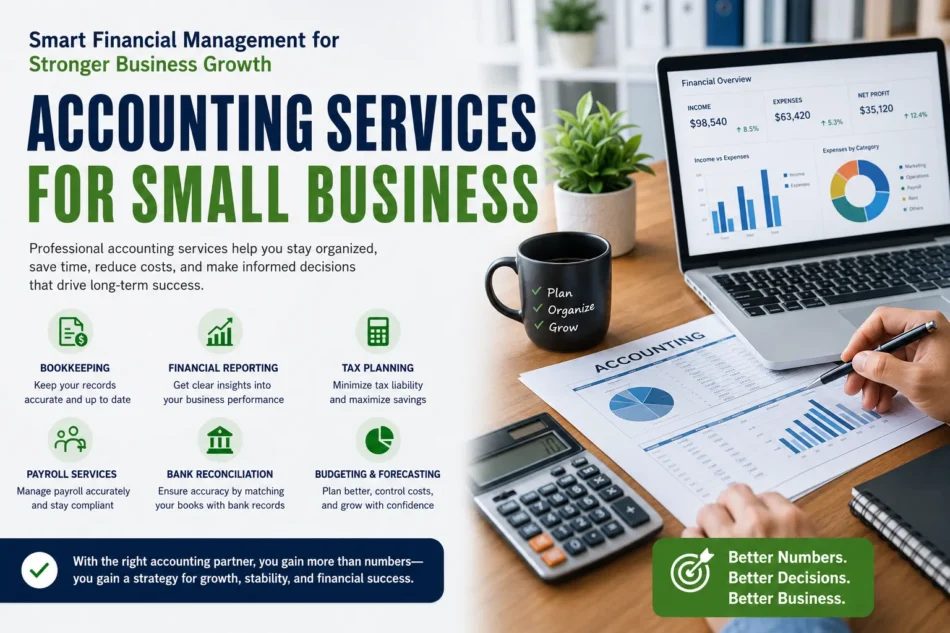
Managing a small business involves much more than selling products or delivering excellent services. Behind every successful company is a well-organized financial system that tracks income, monitors expenses, maintains accurate records, and supports informed business decisions. Yet many small business owners struggle to balance financial management with the daily demands of running their business.
Bookkeeping falls behind, invoices remain unpaid, expenses become difficult to track, and tax deadlines create unnecessary stress. Over time, these challenges can affect profitability, cash flow, and business growth.
This is where accounting services for small business become invaluable. Professional accounting goes far beyond preparing financial statements or filing tax returns. It provides business owners with accurate financial information, practical insights, and proactive strategies that help reduce costly mistakes and improve long-term financial performance.
Whether you’re launching a new business, expanding your operations, or simply looking for better financial control, investing in professional accounting services can save time, improve efficiency, and give you greater confidence in every financial decision.
In this guide, you’ll learn how accounting services support small businesses, the key services they include, and why they play a critical role in building a financially healthy and sustainable company.
Why Every Small Business Needs Professional Accounting Services
Many entrepreneurs initially manage their finances independently. While this may seem cost-effective during the early stages, financial responsibilities become more complex as the business grows.
Sales increase, payroll expands, vendor relationships multiply, and tax obligations become more demanding. Without accurate accounting, even profitable businesses can experience financial difficulties.
Professional accounting services help business owners:
- Maintain accurate financial records
- Improve cash flow management
- Reduce bookkeeping errors
- Prepare reliable financial reports
- Stay compliant with tax regulations
- Support strategic business planning
- Improve profitability
- Save valuable time
- Make data-driven business decisions
- Prepare for future growth
Rather than reacting to financial problems, businesses can identify opportunities early and plan with confidence.
What Are Accounting Services for Small Businesses?
Accounting services include a range of financial activities that help businesses organize, monitor, and improve their financial performance.
While services vary depending on business needs, they generally include bookkeeping, financial reporting, payroll support, tax planning, budgeting, and business advisory services.
Together, these services provide a complete picture of your company’s financial health.
Bookkeeping: The Foundation of Accurate Accounting
Every successful accounting system begins with accurate bookkeeping.
Bookkeeping involves recording daily financial transactions, including sales, purchases, expenses, payroll, and bank activity.
Typical bookkeeping responsibilities include:
- Recording income and expenses
- Bank reconciliation
- Credit card reconciliation
- Managing accounts payable
- Managing accounts receivable
- Expense categorization
- General ledger maintenance
- Invoice tracking
- Financial record organization
Accurate bookkeeping ensures that financial reports reflect the true condition of the business.
Without reliable bookkeeping, business decisions are often based on incomplete or inaccurate information.
Financial Reporting That Supports Better Decisions
Financial reports transform raw accounting data into meaningful business insights.
Instead of guessing how the business is performing, owners receive clear information about profitability, cash flow, and overall financial health.
Common financial reports include:
Income Statement
Also known as the Profit and Loss Statement, this report summarizes revenue, expenses, and net profit over a specific period.
It helps answer questions such as:
- Is the business profitable?
- Which expenses are increasing?
- Are operating costs under control?
Balance Sheet
The balance sheet provides a snapshot of the company’s financial position by showing:
- Assets
- Liabilities
- Owner’s equity
This report helps business owners evaluate financial stability and monitor long-term growth.
Cash Flow Statement
Cash flow is often more important than revenue alone.
The cash flow statement tracks how money moves into and out of the business.
It helps identify whether the company has enough cash to:
- Pay employees
- Cover operating expenses
- Purchase inventory
- Invest in growth opportunities
Healthy cash flow supports business stability and reduces financial stress.
Tax Planning and Tax Preparation
Taxes should never be treated as a once-a-year activity.
Professional accounting services include year-round tax planning that helps businesses reduce tax liability legally while remaining compliant with current tax regulations.
Services often include:
- Business tax preparation
- Quarterly estimated tax planning
- Tax deduction reviews
- Tax credit identification
- Year-end tax planning
- Financial record preparation
- IRS compliance support
Proactive planning often results in lower tax bills and fewer surprises during tax season.
Payroll Services That Keep Your Business Running Smoothly
Payroll involves much more than paying employees.
Businesses must calculate wages accurately, withhold appropriate taxes, process payroll on time, and maintain detailed payroll records.
Professional payroll services may include:
- Payroll processing
- Direct deposit management
- Payroll tax filings
- Employee compensation reporting
- Benefits administration support
- Payroll compliance monitoring
Reliable payroll management improves employee satisfaction while reducing compliance risks.
Cash Flow Management: The Lifeline of Every Small Business
Many businesses fail because of poor cash flow rather than lack of sales.
A company may appear profitable on paper while struggling to pay suppliers or employees due to delayed customer payments or poor financial planning.
Accounting professionals help improve cash flow by:
- Monitoring incoming revenue
- Tracking operating expenses
- Reviewing outstanding invoices
- Managing payment schedules
- Forecasting future cash needs
- Identifying unnecessary spending
Strong cash flow management provides greater financial flexibility and supports business growth.
Budgeting and Financial Forecasting
Growing businesses require more than historical financial reports.
They also need realistic financial projections that support future planning.
Professional accountants help prepare:
- Annual budgets
- Revenue forecasts
- Expense projections
- Cash flow forecasts
- Growth scenarios
- Investment planning
Forecasting allows businesses to prepare for seasonal changes, expansion opportunities, and unexpected financial challenges.
Business Advisory Services Beyond Traditional Accounting
Modern accounting firms do much more than maintain financial records.
Many also serve as trusted business advisors.
Using accurate financial information, accountants help owners make better strategic decisions regarding:
- Pricing strategies
- Cost control
- Profitability improvement
- Business expansion
- Equipment investments
- Financing decisions
- Operational efficiency
Instead of simply reporting financial results, accountants help improve them.
How Technology Has Changed Small Business Accounting
Today’s accounting services combine professional expertise with cloud-based technology.
Modern accounting software provides:
- Real-time financial reporting
- Secure cloud access
- Automated bank feeds
- Digital receipt management
- Automated invoice tracking
- Faster reconciliation
- Improved financial accuracy
Cloud accounting also allows business owners and accountants to collaborate more efficiently throughout the year.
Instead of waiting for monthly reports, businesses gain access to current financial information whenever they need it.
Signs Your Small Business Needs Professional Accounting Services
Many business owners don’t realize they need accounting support until financial challenges begin affecting daily operations.
Some common warning signs include:
- You’re spending too much time on bookkeeping instead of growing your business.
- Financial reports are inaccurate or outdated.
- Tax season feels stressful every year.
- Cash flow problems occur frequently.
- Business expenses are difficult to track.
- Payroll has become increasingly complicated.
- You don’t regularly review financial statements.
- You’re unsure whether your business is truly profitable.
- Business growth has made financial management more complex.
Recognizing these signs early allows you to strengthen your financial systems before small issues become major problems.
Common Accounting Mistakes Small Businesses Should Avoid
Even successful businesses can experience financial challenges when accounting processes are inconsistent or overlooked. While these mistakes may seem minor initially, they can affect profitability, cash flow, tax compliance, and long-term business growth.
Professional accounting services help identify and correct these issues before they become costly.
Delaying Bookkeeping
Many business owners postpone bookkeeping because they are busy managing daily operations. Unfortunately, weeks or months of unrecorded transactions make it difficult to understand the true financial position of the business.
Keeping financial records updated every month provides accurate reporting, simplifies tax preparation, and reduces the risk of costly errors.
Mixing Personal and Business Expenses
Using personal accounts for business purchases creates confusion and makes financial reporting less reliable.
Maintaining separate bank accounts and credit cards for business activities improves bookkeeping accuracy, simplifies audits, and provides a clearer view of business performance.
Ignoring Financial Reports
Financial statements should not be prepared solely for tax purposes.
Regularly reviewing reports such as the income statement, balance sheet, and cash flow statement helps business owners identify trends, monitor profitability, and make informed decisions before financial issues become serious.
Waiting Until Tax Season
Many businesses only contact their accountant shortly before tax deadlines.
Year-round accounting and proactive tax planning create more opportunities to identify deductions, organise financial records, estimate tax payments, and reduce unexpected tax liabilities.
Overlooking Cash Flow
Revenue alone does not determine financial success.
A business can generate strong sales while struggling to pay suppliers, employees, or operating expenses if cash flow is poorly managed.
Monitoring cash inflows and outflows every month helps maintain financial stability.
How Professional Accounting Services Improve Profitability
Accounting is not simply about recording transactions—it helps businesses become more profitable by providing meaningful financial insights.
Professional accountants analyse financial data to identify opportunities for improving efficiency and reducing unnecessary costs.
Some ways accounting services contribute to higher profitability include:
Identifying Unnecessary Expenses
Regular financial reviews help uncover subscriptions, operating costs, or recurring expenses that no longer add value to the business.
Reducing unnecessary spending directly improves profit margins.
Monitoring Profit Margins
Understanding which products or services generate the highest profits allows business owners to allocate resources more effectively.
Instead of focusing only on sales volume, businesses can concentrate on activities that produce sustainable profitability.
Improving Pricing Decisions
Financial analysis helps determine whether pricing reflects operating costs, overhead expenses, and desired profit margins.
Accurate costing ensures businesses remain competitive without sacrificing profitability.
Supporting Better Investment Decisions
Before purchasing equipment, hiring additional employees, or expanding operations, accounting professionals evaluate the financial impact of those decisions.
This reduces risk while supporting sustainable business growth.
Why Monthly Financial Reviews Matter
Many business owners only review financial information at year-end. By then, opportunities to improve performance may already have been missed.
Monthly financial reviews provide timely information that supports proactive decision-making.
Regular reviews help businesses:
- Monitor revenue trends
- Track operating expenses
- Analyse cash flow
- Compare actual performance against budgets
- Identify unusual transactions
- Monitor accounts receivable
- Review outstanding liabilities
- Evaluate business profitability
Monthly reporting enables business owners to address issues before they become larger financial problems.
Outsourced Accounting vs. In-House Accounting
As businesses grow, many owners consider whether to hire an internal accountant or outsource accounting services.
Both options have advantages, but outsourced accounting is often the more practical choice for many small businesses.
Outsourced Accounting
Outsourcing provides access to experienced accounting professionals without the expense of employing a full-time finance team.
Benefits include:
- Lower operating costs
- Access to specialised expertise
- Flexible service packages
- Current knowledge of accounting standards and tax regulations
- Reduced administrative responsibilities
- Scalable support as the business grows
In-House Accounting
Larger organisations with complex financial operations may benefit from dedicated internal accounting staff.
An in-house accountant works closely with management and handles daily financial activities within the organisation.
For many small businesses, however, outsourced accounting provides professional expertise while remaining cost-effective.
How to Choose the Right Accounting Services for Your Small Business
Selecting the right accounting partner is an important investment in your company’s future.
When evaluating accounting providers, consider the following factors.
Industry Experience
Choose professionals who understand businesses similar to yours.
Industry-specific knowledge often leads to more relevant financial advice and better planning strategies.
Comprehensive Services
Working with one provider for bookkeeping, accounting, payroll, tax planning, and financial reporting creates a more efficient financial management process.
Technology and Cloud Accounting
Modern accounting firms should use secure cloud-based accounting platforms that provide accurate, real-time financial information.
Technology improves efficiency, collaboration, and data security.
Communication and Responsiveness
Financial questions often require prompt answers.
A reliable accounting partner should communicate clearly, explain financial information in straightforward language, and provide timely support whenever needed.
Strategic Advice
The best accountants do more than prepare reports.
They help businesses improve profitability, strengthen financial performance, and plan confidently for future growth.
Best Practices for Strong Financial Management
Professional accounting services become even more valuable when combined with consistent financial habits.
Business owners should aim to:
- Maintain accurate bookkeeping throughout the year.
- Reconcile bank accounts every month.
- Review financial statements regularly.
- Track business expenses carefully.
- Monitor cash flow continuously.
- Prepare annual budgets and financial forecasts.
- Keep supporting financial documents organised.
- Separate personal and business finances.
- Review tax strategies before year-end.
- Consult accounting professionals before making major financial decisions.
Following these practices creates a strong financial foundation and supports sustainable business growth.
Conclusion
Professional accounting services for small business provide much more than accurate financial records. They give business owners the information, confidence, and strategic guidance needed to make better financial decisions every day.
From bookkeeping and payroll to tax planning, cash flow management, budgeting, and financial reporting, comprehensive accounting services help businesses improve efficiency, remain compliant, and build long-term profitability. Instead of reacting to financial problems after they occur, business owners can identify opportunities early and make informed decisions that support sustainable growth.
Whether you’re launching a new venture or managing an established company, investing in professional accounting services is one of the smartest decisions you can make. Reliable financial management saves time, reduces unnecessary stress, strengthens cash flow, and provides the insights needed to grow your business with confidence in an increasingly competitive marketplace.
Frequently Asked Questions
What are accounting services for small businesses?
Accounting services include bookkeeping, financial reporting, payroll processing, tax planning, tax preparation, budgeting, cash flow management, and financial advisory services that help businesses manage their finances effectively.
Why are accounting services important for small businesses?
Professional accounting services improve financial accuracy, support compliance, strengthen cash flow management, reduce tax-related stress, and provide valuable insights that help business owners make informed decisions.
How often should small businesses review their financial statements?
Most businesses should review financial statements every month. Monthly reviews help identify trends, monitor profitability, manage cash flow, and address potential financial issues before they become significant.
Is outsourced accounting better than hiring an in-house accountant?
For many small businesses, outsourced accounting offers access to experienced professionals at a lower cost than maintaining a full-time internal accounting department. The best choice depends on your business size, complexity, and financial needs.
Can accounting services help my business grow?
Yes. Accurate financial reporting, budgeting, tax planning, cash flow analysis, and strategic financial advice help businesses improve profitability, manage resources effectively, and make informed growth decisions.


