 WhatsApp Us Now
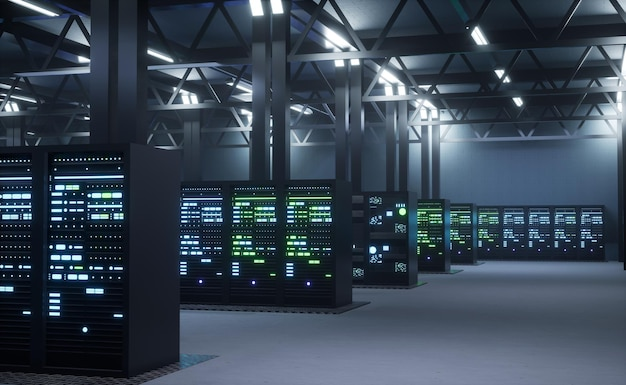
Artificial intelligence requires specialised infrastructure capable of processing large datasets, training complex models, and delivering automated services at speed. AI data centers combine high-performance processors, storage systems, networking equipment, cooling technologies, and dependable power infrastructure. Across Saudi Arabia, these facilities are becoming increasingly important as government entities, businesses, research organisations, and technology providers expand artificial intelligence and cloud-based operations.
A recent study by MarkNtel Advisors highlights that the Saudi Arabia AI data center industry was valued at USD 0.61 billion in 2025. It is projected to grow from USD 0.75 billion in 2026 to USD 2.58 billion by 2032, registering a CAGR of 22.86% during 2026–2032. Expansion reflects AI adoption, cloud computing, digital-government programmes, advanced data infrastructure, and growing demand for high-performance computing.
AI Workloads Require Specialised Computing
Traditional data centers support websites, databases, enterprise software, and communication platforms. AI-focused facilities must also perform highly parallel calculations used for training models and generating real-time outputs. These processes commonly rely on graphics processing units and other specialised accelerators that can handle multiple computational tasks simultaneously.
Compute infrastructure accounted for 48% of the Saudi Arabia AI data center landscape in 2026. This position reflects the importance of processors, servers, and supporting hardware capable of managing generative AI, machine learning, analytics, and automated decision-support workloads.
Vision 2030 Strengthens Digital Infrastructure
Saudi Arabia is developing digital capabilities as part of its broader economic transformation. Public investment and private partnerships are supporting cloud platforms, artificial intelligence, telecommunications, data centers, and advanced digital services.
The HUMAIN initiative under Saudi Vision 2030 is designed to build an integrated AI ecosystem covering advanced data centers, cloud computing, AI models, and related applications. Such initiatives connect physical computing capacity with software development, research, workforce skills, and commercial adoption.
Cloud Services Increase Local Capacity Requirements
Organisations across banking, healthcare, energy, retail, telecommunications, and government are moving applications and information into cloud environments. Local data centers can support lower latency, service continuity, regulatory compliance, and greater control over sensitive workloads.
Saudi Arabia’s national computing strategy has emphasised secure infrastructure and domestic data-center development. The Ministry of Communications and Information Technology’s national computing infrastructure framework identifies cloud expansion and additional data-center capacity as important components of the country’s digital development.
Generative AI Broadens Infrastructure Demand
Generative AI applications produce text, software code, images, audio, analytical responses, and automated recommendations. Operating these systems requires extensive processing power, fast data movement, and scalable storage. Demand can rise rapidly when large numbers of users interact with models simultaneously.
Saudi organisations are exploring these applications across customer service, public administration, financial analysis, healthcare, education, cybersecurity, and industrial operations. As adoption moves from experimentation to operational use, data centers must provide dependable capacity, secure access, and sufficient redundancy.
Power and Cooling Become Strategic Priorities
High-density AI processors generate substantial heat and consume more electricity than many conventional computing systems. Effective cooling is therefore necessary to maintain equipment reliability and prevent interruptions. Operators may use air cooling, liquid cooling, direct-to-chip systems, or combinations designed for different computing densities.
The International Energy Agency states that electricity consumption from data centers reached 415 terawatt-hours in 2024. Its analysis of energy demand from AI indicates that global data-center electricity requirements are increasing as AI workloads expand. Saudi facilities must consequently coordinate computing growth with power availability, cooling efficiency, and resource management.
Skills Support Reliable Operations
AI data centers require professionals with expertise in electrical systems, cloud platforms, cybersecurity, networking, cooling, software operations, and specialised computing hardware. Facility growth must therefore be accompanied by technical education and professional training.
Skills are also required beyond physical operations. Organisations need cloud architects, AI engineers, data specialists, governance professionals, and security teams capable of deploying applications responsibly. Coordinated workforce development can help ensure that newly installed computing capacity translates into dependable services and useful applications.
Security and Resilience Remain Essential
AI facilities may store sensitive government, business, financial, and personal information. Security programmes must cover physical access, identity management, network protection, encryption, vulnerability monitoring, and incident response.
Data centers also require backup power, redundant connectivity, disaster-recovery planning, and continuous monitoring. These controls help protect service availability when equipment fails, networks are interrupted, or cyber incidents occur.
Advanced Infrastructure Shapes Future Growth
Saudi Arabia AI data centers are becoming closely connected with cloud adoption, generative AI, digital government, research, and economic diversification. Their development will depend on more than increasing server capacity.
Future progress will require reliable power, efficient cooling, advanced processors, secure networks, skilled professionals, and strong operational governance. As Saudi Arabia builds an integrated AI ecosystem, data centers will remain an essential foundation for scalable computing, domestic innovation, and resilient digital services.


