 WhatsApp Us Now
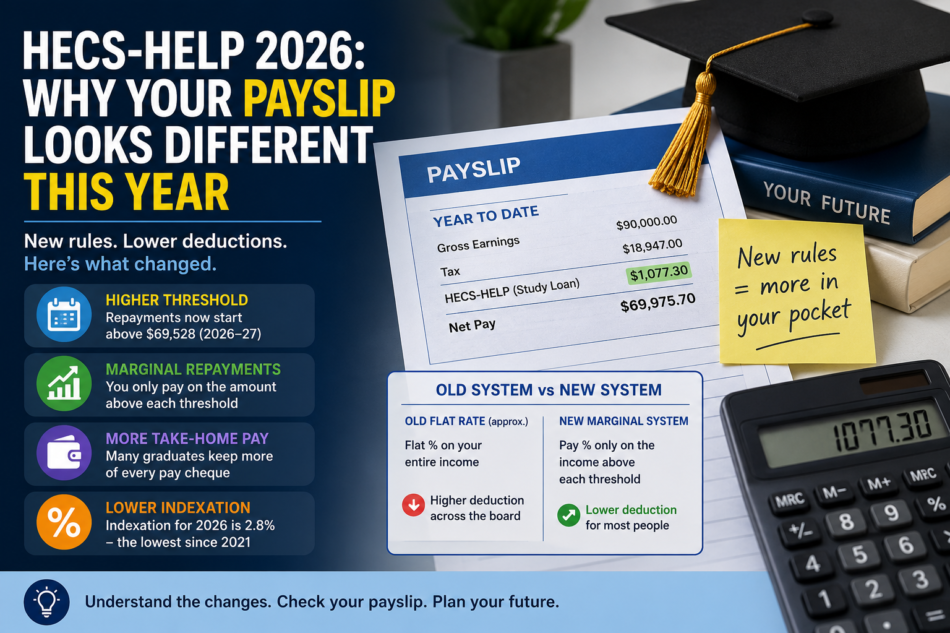
The biggest benefit of the 2026 HECS-HELP reforms isn’t just a smaller student debt or lower indexation. It’s the chance to take greater control of your finances.
For years, many graduates treated HECS repayments as a fixed expense they couldn’t influence. The latest reforms have changed that mindset. With a lower annual indexation rate, updated repayment thresholds, and a marginal repayment system, Australians now have more flexibility than they did only a few years ago. The challenge is knowing how to use it.
Start by Understanding Your Real Cash Flow
Many graduates focus only on their annual salary without paying enough attention to what actually reaches their bank account.
The new repayment system leaves more take-home pay for many workers because repayments are now calculated progressively instead of applying one rate across an entire income once a threshold is crossed. For people earning moderate salaries, this can mean hundreds of dollars remaining in their accounts each year.
Rather than viewing this as unexpected spending money, think of it as a budgeting opportunity.
The first step is comparing your current payslip with last year’s. Knowing exactly how much extra cash you’re receiving each month gives you a realistic starting point for planning.
Give Every Dollar a Purpose
Money without a plan rarely stays in your account for long.
One practical approach is dividing your additional cash flow into clear priorities. A portion can strengthen your emergency savings, another can reduce existing debt, while the remainder covers rising living costs without relying on credit cards.
This method works because it removes guesswork. Instead of wondering where the money disappeared, you’ve already decided where it belongs.
It’s similar to organising groceries before putting them away. Everything has a place, making it much easier to avoid waste.
Don’t Ignore the Annual Indexation Date
One date deserves a permanent place in every HECS borrower’s calendar: 1 June.
Although indexation has fallen to 2.8% in 2026, it still applies to any remaining balance before that date. Graduates considering voluntary repayments should understand that payments made before indexation reduce the balance that receives the annual adjustment. Waiting until afterwards means the opportunity has already passed for that financial year.
That doesn’t mean everyone should rush to pay off HECS. It simply means timing matters if voluntary repayments are part of your financial strategy.
Balance Student Debt With Other Financial Goals
HECS-HELP should never be viewed in isolation.
If you carry high-interest credit card debt, eliminating that balance may provide greater financial benefits than making extra HECS repayments. Likewise, someone planning to buy a home may choose to strengthen their savings while gradually reducing their student debt over time.
Every financial decision involves trade-offs.
The new repayment rules simply give borrowers more flexibility to choose the strategy that fits their circumstances rather than feeling locked into one approach.
Managing study alongside financial planning isn’t always easy. Many university students use academic support platforms such as Expertsmind.com to stay on top of coursework, allowing them to dedicate more time to budgeting, career planning, and other important financial decisions.
Review Your Budget Every Financial Year
One common mistake is creating a budget once and forgetting about it.
HECS repayment thresholds change, salaries increase, living expenses shift, and personal goals evolve. A budget that worked twelve months ago may no longer reflect your current situation.
Taking thirty minutes each year to review your income, repayments, savings goals, and outstanding HECS balance can reveal opportunities you might otherwise miss.
The latest reforms have already shown how quickly government policy can change. Staying informed helps ensure your financial decisions remain based on current rules rather than outdated assumptions.
Small Decisions Build Long-Term Results
The 2026 HECS-HELP reforms have created better conditions for Australian graduates, but they don’t guarantee financial success on their own. Lower repayments and reduced indexation simply provide more room to make smart choices.
Whether that extra cash becomes an emergency fund, contributes to a future home deposit, or helps reduce your student debt depends entirely on the decisions you make today.
A successful budget isn’t about earning the highest salary. It’s about making every dollar work toward the future you want, and the updated HECS-HELP system gives many graduates a better chance to do exactly that.
Related reading: Students interested in broader education policy changes may also find this article useful: “Why Immigration Advisers Are Recommending a ‘Travel Only If Necessary’ Approach for F-1 Students.


