 WhatsApp Us Now
Rising utility costs have encouraged many homeowners to explore solar panels, battery storage, energy-efficient appliances and unconventional DIY electricity projects. One product appearing in these searches is the Energy Revolution System, a digital guide promoted as a way to build a compact, Tesla-inspired energy device using relatively accessible materials.
The idea is naturally appealing. A small home-built system that could reduce dependence on the electrical grid sounds useful, especially for households dealing with high monthly bills or concerns about power outages.
However, an attractive concept is not the same as independently verified performance. Before purchasing the guide, homeowners should understand what it appears to offer, what Nikola Tesla’s bifilar coil patent actually covered and which marketing claims require additional evidence.
This review examines the product without assuming that every positive or negative claim found online is accurate.
Quick Answer: Is the Energy Revolution System Legit?
The Energy Revolution System appears to be marketed primarily as a set of DIY instructions rather than a professionally installed or independently certified home power system.
Its underlying inspiration—a bifilar electromagnetic coil—is connected to a real Nikola Tesla patent. However, the existence of that patent does not establish that a small DIY coil can generate enough usable electricity to power household appliances or significantly reduce a utility bill.
The guide may interest hobbyists who enjoy experimental electronics, but homeowners should not treat it as a guaranteed replacement for grid electricity, solar power or a certified backup generator. Any purchase decision should depend on transparent technical specifications, realistic output measurements, safety guidance and a clear refund policy.
Key Takeaways
- The product is presented as a digital DIY energy guide, not a complete residential power installation.
- Nikola Tesla did patent a particular coil arrangement in 1894.
- The patent focused on changing electrical characteristics such as self-induction and capacitance; it did not claim that the coil creates unlimited energy.
- A coil can store, transfer or transform energy, but it cannot create energy from nothing.
- Claims about powering major appliances should be supported by measurable voltage, current, wattage and runtime data.
- Homeowners should prioritize electrical safety and avoid connecting experimental equipment directly to household wiring.
- Established efficiency upgrades remain more predictable ways to reduce electricity consumption.
What Is the Energy Revolution System?
The Energy Revolution System is promoted as an instructional program that explains how to assemble a small electrical device inspired by Nikola Tesla’s bifilar coil design.
According to the product’s general marketing description, users receive guidance on sourcing materials, constructing the device and using it as part of a home energy strategy. The appeal is based on affordability, accessibility and the possibility of reducing reliance on traditional electricity providers.
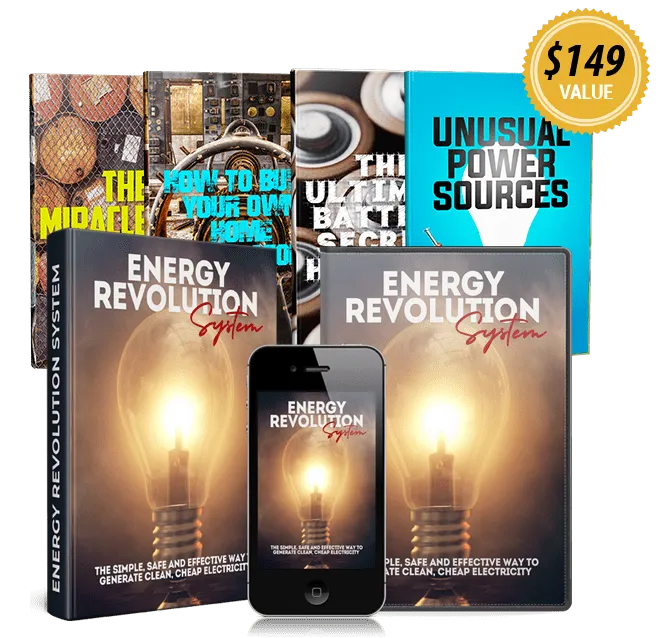
It is important to distinguish between an educational construction guide and a certified electrical product. A digital manual does not automatically provide:
- Tested power-output guarantees
- Electrical certification
- Professional installation
- Compatibility with household circuits
- Approval from a local utility or electrical authority
- A complete off-grid power solution
Buyers should therefore evaluate it as a DIY information product unless the seller provides clear evidence showing otherwise.
How Is the System Supposed to Work?
The Tesla Bifilar Coil Connection
The Energy Revolution System is commonly associated with Nikola Tesla’s bifilar coil concept.
Tesla’s U.S. Patent 512,340, titled “Coil for Electro-Magnets,” described a winding arrangement in which adjacent turns were connected to create a greater electrical potential difference between them. The design increased the coil’s internal capacitance and was intended to help neutralize self-induction in certain electrical applications.
That is a genuine electrical concept. However, it is frequently misunderstood in alternative-energy marketing.
What the Historical Patent Actually Describes
Tesla’s patent explains a particular way to arrange coil windings. It does not describe a self-powered residential generator, nor does it state that the coil produces more total energy than it receives.
A bifilar coil may behave differently from an ordinary coil because of its capacitance, inductance and winding configuration. Those characteristics may be useful in experiments, resonant circuits or electromagnetic applications.
Nevertheless, the law of conservation of energy still applies. Energy can be stored, transferred and converted, but it cannot simply be created by the coil. The U.S. Energy Information Administration similarly explains energy in terms of changing it from one form into another so it can perform work.
For a device to deliver usable electricity continuously, it must receive energy from somewhere—for example:
- Mechanical motion
- Solar radiation
- Wind
- Flowing water
- Fuel
- A charged battery
- Grid electricity
- Another measurable external source
The coil alone is not an energy source.
What Buyers Appear to Receive
The Energy Revolution System is generally positioned as a downloadable instructional package. Depending on the current seller offer, it may include construction directions, diagrams, a parts list and supporting educational material.
Because digital offers can change, prospective customers should verify the current package directly on the Energy Revolution System information page before purchasing.
Look for specific answers to the following questions:
- Is the product a PDF, video course or physical kit?
- Are components included?
- What tools are required?
- What is the measured continuous power output?
- Has the device been tested under load?
- Which appliances can it safely operate?
- Is professional electrical experience required?
- Is there a written refund policy?
- Are customer support contact details available?
- Does the guide explain grounding, fuses and overload protection?
A trustworthy technical offer should provide more than general statements about energy freedom.
Potential Advantages of the Energy Revolution System
The product may still offer value for the right type of buyer.
Educational Value
Building a coil-based project may help users learn about voltage, current, resistance, capacitance, inductance and electromagnetic fields.
Hands-On DIY Experience
People who enjoy assembling circuits may appreciate following a structured project rather than designing everything independently.
Relatively Accessible Concept
A digital guide may cost less than a professionally installed solar or battery system. However, lower initial cost does not mean the systems provide equivalent output or reliability.
Greater Awareness of Energy Consumption
Researching alternative power often encourages homeowners to measure appliance consumption, inspect utility bills and identify unnecessary energy waste.
These are reasonable benefits, but they should not be confused with proof that the finished device will power a home.
Important Limitations and Concerns
Electricity Still Requires an Energy Source
Any device that supplies electrical power must obtain that energy from a measurable source. A system that appears to produce energy without an adequate input should be evaluated carefully.
Ask the seller to identify:
- The input-energy source
- Input voltage and current
- Output voltage and current
- Continuous wattage
- Peak wattage
- Conversion losses
- Test duration
- Equipment used for measurement
Output voltage alone is not enough. A device may show a high voltage while providing very little current, making it unsuitable for meaningful household loads.
Results May Depend on Construction and Testing
DIY performance can vary because of wire thickness, winding accuracy, insulation, connections, component tolerances and measurement methods.
Even when a prototype produces some electrical output, that does not necessarily mean it can operate refrigerators, pumps, air conditioners or heating equipment.
For context:
Electrical power in watts is calculated by multiplying voltage by current.
A demonstration showing a meter reading or briefly illuminating a small light does not prove that a device can deliver stable household power over several hours.
Electrical Safety Must Come First
Experimental electrical equipment can create risks such as electric shock, overheating, damaged appliances, battery fires and short circuits.
Users should never connect a homemade device directly to household wiring unless it has been evaluated and installed by a qualified professional in accordance with applicable electrical requirements.
Basic safety considerations include:
- Proper wire insulation
- Fuses or circuit breakers
- Grounding
- Ventilation
- Enclosures around live components
- Correct battery protection
- Avoiding overloaded wires
- Keeping the system away from moisture
- Disconnecting power before adjustments
Beginners should limit projects to low-voltage experiments and seek professional guidance before scaling them.
Energy Revolution System Scam Concerns
People searching for Energy Revolution System reviews often also search for “Energy Revolution System scam.” That does not automatically mean the product is fraudulent. It usually means potential buyers are uncertain about its claims, seller transparency or real-world results.
The Federal Trade Commission advises consumers to be cautious when energy-related offers promise dramatic savings, imply official affiliations or pressure buyers to act quickly. It recommends examining the total cost, verifying claims and avoiding decisions based only on promises of large utility savings.
Warning signs worth checking include:
- Claims of unlimited or free electricity
- Guaranteed elimination of utility bills
- No measurable performance specifications
- No explanation of the input-energy source
- Anonymous seller information
- Countdown timers that repeatedly reset
- Testimonials without supporting details
- No accessible terms or refund conditions
- Photos that do not show the functioning device
- Claims that established physics does not apply
A legitimate seller should be willing to state clearly that results vary and that a DIY experimental device may not replace conventional electricity.
Energy Revolution System Compared With Proven Options
| Option | Main Purpose | Predictability | Typical Complexity | Important Limitation |
|---|---|---|---|---|
| Energy Revolution System | DIY learning and experimentation | Unclear without independent testing | Moderate | Output claims require verification |
| Home energy audit | Finds sources of wasted energy | High | Low to moderate | Does not generate electricity |
| LED lighting | Reduces lighting consumption | High | Low | Savings depend on existing bulbs |
| Weather sealing | Reduces heating and cooling losses | High | Low | Works best when leaks are present |
| Efficient appliances | Reduces appliance consumption | High | Low | Requires replacement cost |
| Rooftop solar | Generates electricity from sunlight | Generally measurable | High | Cost, roof and sunlight conditions |
| Battery backup | Stores electricity for later use | High when properly sized | High | Does not generate energy itself |
| Certified generator | Provides emergency power | High | Moderate | Requires fuel and safe ventilation |
The Department of Energy recommends beginning with an understanding of how a home currently uses electricity. It highlights energy assessments, insulation, air sealing, efficient equipment and behavior changes as practical ways to reduce energy use and costs.
Who Might Find the Guide Useful?
The Energy Revolution System may be most suitable for:
- Electronics hobbyists
- DIY learners
- People interested in Tesla-related coil designs
- Users comfortable working with low-voltage circuits
- Buyers who view it as an experiment rather than guaranteed home power
- People willing to verify every performance claim independently
For these users, the educational process may be the main value.
Who Should Avoid It?
The guide may not be appropriate for:
- Anyone expecting guaranteed free electricity
- Homeowners seeking a certified whole-home system
- People unfamiliar with basic electrical safety
- Users planning to connect it directly to household wiring
- Buyers expecting immediate, predictable savings
- Anyone unable to verify the refund and support terms
- People who need dependable emergency medical or safety-related power
For reliable backup power, consult a qualified electrician or energy professional.
How to Evaluate the System Before Buying
Use this checklist before making a decision.
1. Request Measurable Output Data
Look for continuous wattage, not just voltage. Ask whether the output was independently tested while powering a real load.
2. Identify the Energy Input
Determine exactly where the system receives its energy. Avoid vague explanations involving “ambient,” “radiant” or “magnetic” energy unless they include reproducible measurements.
3. Study the Refund Terms
Check the refund period, procedure, exclusions and responsible payment processor.
4. Confirm What Is Included
Find out whether you receive only instructions or a complete component kit.
5. Calculate the Total Project Cost
Include wire, magnets, batteries, tools, meters, inverters, replacement parts and safety equipment.
6. Review the Safety Instructions
The guide should discuss insulation, grounding, overload protection and safe testing.
7. Separate Education From Performance
A guide can contain interesting instructions without proving that the completed project will reduce a household utility bill.
Practical Ways to Lower Electricity Bills
Homeowners do not need to depend on an experimental system alone. Combine curiosity about alternative energy with proven efficiency improvements.
Start by examining where your home consumes the most electricity. Heating, cooling, water heating and large appliances are often more important than small electronic devices.
Practical steps include:
- Seal drafts around doors and windows.
- Clean or replace heating and cooling filters.
- Use LED lighting.
- Turn off unused lights and equipment.
- Use programmable temperature controls.
- Wash suitable laundry in cooler water.
- Reduce unnecessary standby power.
- Maintain refrigerators and air conditioners.
- Compare efficient models before replacing appliances.
- Consider a professional home energy assessment.
For a broader step-by-step approach, see this guide to reducing electricity bills at home naturally.
The Department of Energy also notes that reducing unnecessary electricity use can lower costs while improving comfort and reducing wasted energy.
Frequently Asked Questions
Does the Energy Revolution System really work?
It may function as a DIY coil or electrical experiment if assembled correctly. However, whether it can deliver meaningful household power depends on verified input and output measurements. Public marketing claims should not replace independent testing.
Is the Energy Revolution System a scam?
There is not enough reliable evidence in the reviewed sources to make a definitive accusation. The more useful question is whether the seller provides transparent specifications, realistic claims, support and a clear refund policy.
Can a bifilar coil generate free electricity?
A bifilar coil can influence capacitance, inductance and electromagnetic behavior, but it is not itself a source of unlimited energy. Any usable output must be traced to an input-energy source.
Can the system power a refrigerator?
Do not assume that it can. Refrigerators require continuous power and additional startup power for the compressor. The seller would need to provide tested wattage, startup capacity and runtime data.
Is the system suitable for beginners?
It may be suitable as a low-voltage educational project. Beginners should avoid high-voltage work, battery modifications or connections to household circuits without professional supervision.
Will it eliminate my electricity bill?
No responsible review can guarantee that result. Utility savings depend on actual output, household consumption, local electricity prices and whether the device operates safely and consistently.
Is Nikola Tesla’s bifilar patent real?
Yes. U.S. Patent 512,340 was granted to Nikola Tesla in 1894 for a coil arrangement intended to increase capacitance and address self-induction.
What should I check before ordering?
Confirm the current price, included materials, power specifications, safety information, seller contact details and refund terms on the official sales page.
Final Verdict
The Energy Revolution System is best approached as an experimental DIY guide rather than a proven replacement for residential electricity.
Its Tesla connection is based on a genuine bifilar coil patent, but that historical design should not be interpreted as proof of unlimited, self-generating or whole-home power. The most important issue is not whether a coil can be built. It is whether the completed system produces stable, measurable and useful electrical output from a clearly identified energy source.
For hobbyists, the project may provide an interesting introduction to electromagnetic coils and basic electrical concepts. For homeowners mainly interested in reducing monthly bills, energy assessments, insulation, efficient appliances, responsible energy habits and properly designed renewable systems offer more predictable paths.
Before purchasing, review the current Energy Revolution System offer, examine its technical details carefully and avoid relying on savings claims that are not supported by reproducible measurements.
References and Further Reading
Google Patents — Nikola Tesla’s “Coil for Electro-Magnets,” US512340A
U.S. Department of Energy — Reducing Electricity Use and Costs
U.S. Department of Energy — Energy Saver


