 WhatsApp Us Now
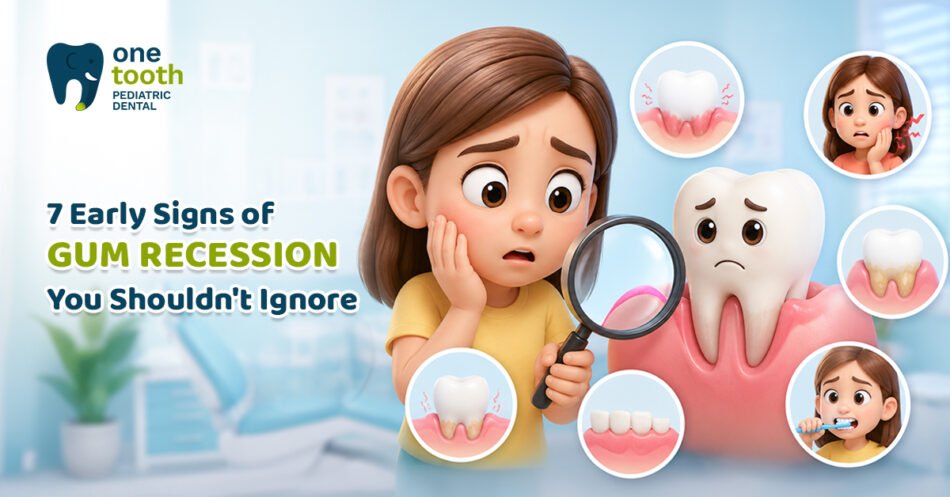
Gum recession happens when the gum tissue pulls away from its normal position around a tooth, exposing more of the tooth or, in some cases, part of the root. This can make a tooth appear longer, cause sensitivity, and create areas along the gumline that are more difficult to keep clean.
In children and teens, signs of gum recession are often linked to brushing too hard, plaque buildup, crowded teeth, or bite pressure — things that are easy to miss until a closer look reveals that the gum tissue has already begun to pull back.
One Tooth Pediatric Dental in Annapolis catches these changes early — through preventive exams, cleanings, and honest conversations with parents about what to watch for at home.
What Is Gum Recession?
Gum recession happens when the gums pull back from the teeth and surrounding tissue. This can expose parts of the tooth or its root. Some effects of gum recession include discomfort, plaque buildup, and a groove at the tooth-gum line. It can also make teeth appear longer and increase the risk of root inflammation.
What Are the 7 Early Signs of Gum Recession?
Gum recession often happens quietly, so signs can easily be missed at the beginning. Recognizing these changes early gives parents a chance to have the area evaluated before the recession progresses.
The following are the early signs of Gum recession:
- Longer-looking teeth: The appearance of longer teeth can be due to the pulling back of gum tissue, exposing the roots.
- Increased tooth sensitivity: Children may avoid cold drinks or ice cream or resist brushing near an affected tooth because of sensitivity.
- Bleeding During Brushing or Flossing: Bleeding during brushing or flossing may indicate inflammation around the gums.
- Gumline Changes: Redness, swelling, or tenderness may indicate inflammation or irritation around the gums.
- Notches or grooves near the gumline: Small grooves or notches where the tooth meets the gum may be associated with brushing trauma, bite forces, or other factors.
- Bad breath: The odor lasting all the time can be an indicator of bacterial buildup between the teeth and gums.
- Recession Around One Tooth: Gum recession affecting a single tooth may be related to its position, crowding, brushing habits, or other local factors.
The presence of any changes to the appearance of the gumline should be examined, especially when sensitivity, bleeding, or pain are involved.
What Are the Consequences of Not Treating Gum Recession?
If gum recession progresses, exposed tooth surfaces may become more sensitive, harder to keep clean, and more vulnerable to decay.
The following are the consequences of not treating gum recession:
- Increased Tooth Sensitivity: Tooth roots become more sensitive to hot, cold, or sweet foods because of a partial loss of dental covering (gums).
- Plaque Buildup: Receded areas can create surfaces that are more difficult to clean thoroughly, allowing plaque to accumulate along the gumline.
- Gum Inflammation: Plaque can cause irritation and inflammation of the gums.
- Higher Root Cavity Risk: Exposed tooth roots are more vulnerable to decay.
- Food Trapping: Recessed areas become a hiding place for food particles.
- More Involved Treatment: Progressive recession may eventually require additional treatment to protect the exposed tooth surface and surrounding gum tissue.
Problems in the gums that are left untreated can influence comfort, brushing patterns, the risk of caries, and the long-term stability of the gums.
How Can Parents Help Reduce the Risk of Gum Disease in Children?
A few simple habits are the key to healthy gums. Parents can help children learn to practice good oral hygiene. These habits help protect the gums and support long-term oral health.
Some helpful habits for protecting a child’s gum health include:
- Use a Toothbrush with Soft Bristles: A soft brush is effective at cleaning and is kind to sensitive gums.
- Brush Gently: Light pressure is enough to remove plaque without unnecessarily irritating the gums.
- Floss Between Touching Teeth: Floss helps remove plaque and food from areas a toothbrush cannot effectively reach.
- Regular Dental Visits: Routine dental visits allow the dentist to monitor the gums, evaluate areas of recession, and provide professional cleaning when needed.
- Limit Frequent Sugary Snacks: Limiting frequent sugar exposure helps reduce cavity risk, particularly when tooth surfaces near the gumline are exposed.
- Monitor Brushing: Parents should continue helping or supervising brushing until the child can consistently clean all tooth surfaces gently and thoroughly.
As children develop the coordination and consistency to brush effectively, parents can gradually transition from hands-on help to supervision.
What Are the Best Tips to Prevent Cavities When Gums Recede?
When gums recede, portions of the tooth that were previously protected by gum tissue may become exposed. This can have a significant impact on a child’s oral health. Preventive care is important and needs to be consistent.
Here are some of the tips to prevent cavities with receding gums:
- Select Fluoride Toothpaste: Fluoride strengthens and repairs weak areas of a tooth.
- Water After Meals: Water helps to rinse away food particles and lessen the exposure to acid after eating.
- Reduce Snacking: Frequent snacking, especially on sugary or carbohydrate-rich foods, creates repeated acid exposure that can increase cavity risk.
- Floss Daily: Flossing helps get rid of plaque between teeth and around the gumline.
- Regular Check-ups: Regular check-ups will help a dentist keep a close eye on gum recession and pinpoint problems as early as possible.
- Follow Professional Advice: If a child requires fluoride, has a change in brushing, or dietary changes, a pediatric dentist can make recommendations.
What Treatments for Gum Recession May Be Recommended?
Treatment for gum recession depends on the cause and how much tissue has been affected. Early management may involve improving brushing technique, controlling plaque and inflammation, addressing habits or bite-related factors, and using fluoride or desensitizing products when exposed areas are sensitive. More significant or progressive recession may require evaluation by a dental specialist, and in selected cases, gum grafting or other periodontal treatment may be considered.
The main goals are to prevent progression, reduce sensitivity, improve cleaning access, and protect exposed tooth surfaces.
How Does One Tooth Pediatric Dental Support Gum Health in Annapolis?
One Tooth Pediatric Dental supports healthy gums through preventive exams, professional cleanings, brushing and flossing guidance, fluoride recommendations, and cavity-risk assessment. The goal is to help kids build good hygiene habits without fear or anxiety.
For families looking for a best pediatric dentist near Annapolis, early evaluation can help determine why the gumline is changing and whether the area simply needs monitoring or additional care. Dr. Akshay Kolluri and his team at One Tooth Pediatric Dental help parents understand gum issues, control plaque, and learn effective brushing methods. They also advise them when a more detailed check-up is needed.
Concerned about Signs of Gum Recession in your child? Schedule a gentle gum health evaluation today with One Tooth Pediatric Dental in Annapolis.


