 WhatsApp Us Now
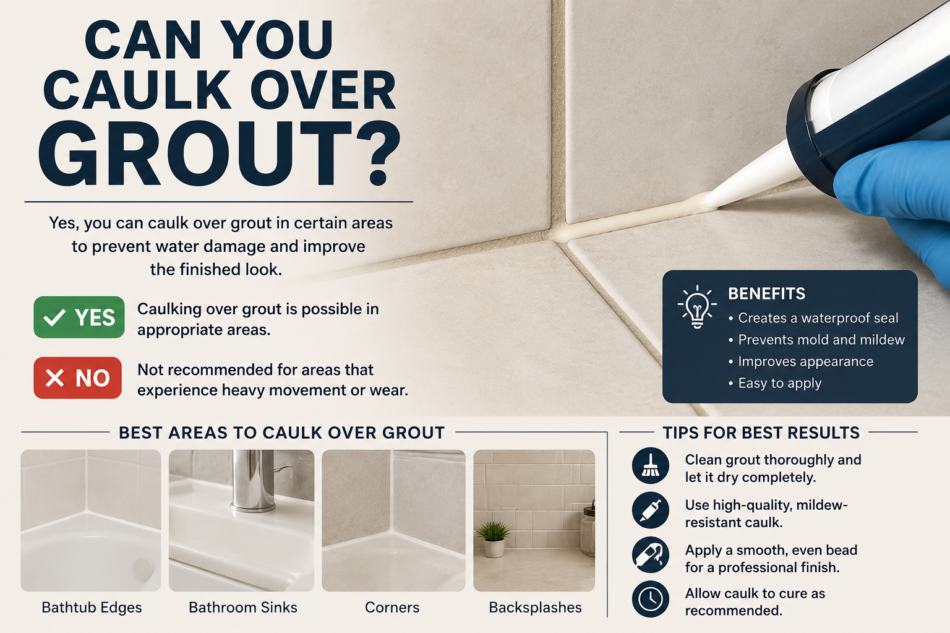
If you have tiles in your bathroom, kitchen, or shower, you’ve probably dealt with grout lines at some point. Over time, grout can crack, discolor, or start to look worn out. This leads many homeowners to ask a common question: can you caulk over grout?
The short answer is yes—you can apply caulk over grout in certain situations. However, it’s not always the best solution. Understanding when to use caulk and when to stick with grout is important if you want a long-lasting and clean finish.
In this guide, we’ll explain when caulking over grout works, when it doesn’t, and how to do it properly. We’ll also look at the difference between grout vs caulk so you know which material is right for your project.
Understanding the Difference: Grout vs Caulk
Before deciding whether you should caulk over grout, it’s important to understand the difference between the two materials.
What Is Grout?
Grout is a cement-based material used to fill the spaces between tiles. Its main purpose is to hold tiles in place and create a finished look.
Grout is strong and durable, but it is also rigid. This means it doesn’t move well when surfaces expand or shift.
Common places where grout is used include:
- Floor tiles
- Wall tiles
- Kitchen backsplashes
- Shower tile joints
However, because grout is stiff, it can crack in areas where there is movement or vibration.
What Is Caulk?
Caulk is a flexible sealant used to fill gaps and prevent water from getting behind surfaces. Unlike grout, caulk can expand and contract as materials move.
You’ll often find caulk used in areas like:
- Corners of showers
- Around bathtubs
- Between countertops and backsplashes
- Where tile meets another surface
When comparing caulk vs grout, the biggest difference is flexibility. Caulk bends and moves, while grout stays hard and fixed.
Can You Caulk Over Grout?
Yes, you can caulk over grout, but it depends on the condition of the grout and the location.
Many homeowners use caulk over grout when:
- Grout has small cracks
- The area needs extra waterproofing
- Movement is causing grout to fail
However, caulking directly over damaged or dirty grout isn’t always the best approach. If the grout underneath is crumbling or loose, the caulk may not stick well and could peel off later.
In most cases, it’s better to clean or repair the grout first before applying caulk.
When Caulking Over Grout Makes Sense
There are a few situations where applying caulk over grout can actually help improve durability and prevent leaks.
1. Inside Corners of Tile Walls
Corners are areas where two surfaces meet and often move slightly over time. Because grout is rigid, it can crack in these joints.
Applying caulk over grout in corners can provide flexibility and help prevent future cracks.
2. Where Tile Meets Another Surface
Places where tile meets a bathtub, sink, or countertop should usually be sealed with caulk rather than grout.
If grout is already present there, adding caulk over it can improve waterproofing and protect the joint.
3. Minor Hairline Cracks
If grout has very small cracks but is still solid, caulk can sometimes seal the gap and stop moisture from entering.
This can extend the life of your tile installation without requiring a full regrouting job.
When You Should Not Caulk Over Grout
While caulking over grout can work in some situations, there are times when it’s better to avoid it.
Severely Damaged Grout
If grout is crumbling, missing, or loose, caulking over it won’t fix the problem. The caulk will not have a stable surface to stick to.
In this case, removing the old grout and replacing it is the better solution.
Dirty or Moldy Grout
If grout is covered with dirt, soap scum, or mold, caulk may not adhere properly.
Before applying caulk, you should always clean the surface thoroughly using a good grout cleaner.
Large Gaps
Caulk is designed for small gaps and joints. If the space between tiles is too large, grout or a different filler may be required.
How to Caulk Over Grout the Right Way
If you decide that caulking over grout is the right solution, following the correct steps will help you get better results.
Step 1: Clean the Grout
Start by cleaning the grout lines carefully. Dirt and residue can prevent the caulk from sticking properly.
Use a strong grout cleaner and scrub the area with a brush. After cleaning, rinse with water and allow the surface to dry completely.
Step 2: Inspect the Grout
Check the grout to make sure it is solid and firmly attached. If you see loose pieces or deep cracks, repair them before adding caulk.
Step 3: Choose the Right Caulk
For bathrooms and kitchens, silicone or silicone-blend caulk is usually the best choice because it resists water and mold.
Many products are also color-matched to tile grout, which helps the repair blend in.
Step 4: Apply the Caulk
Cut the tip of the caulk tube at a small angle and apply a thin bead along the grout line or joint.
Try to keep the bead smooth and consistent.
Step 5: Smooth the Caulk
Use a finger, caulk tool, or damp cloth to smooth the bead and press it into the gap.
This helps create a tight seal and a clean appearance.
Step 6: Let It Cure
Most caulks need at least 24 hours to cure fully. Avoid getting the area wet during this time.
Grout vs Caulk: Which One Should You Use?
Understanding grout vs caulk can help you avoid common tile problems in the future.
Use Grout When:
- Filling gaps between tiles on flat surfaces
- Installing tile floors
- Finishing backsplash installations
- Securing tile edges in stable areas
Use Caulk When:
- Sealing corners
- Filling joints where two materials meet
- Waterproofing around tubs and sinks
- Preventing cracks in flexible areas
Looking at caulk vs grout, each material has a specific purpose. Using them in the right place will improve durability and reduce maintenance.
Tips for Maintaining Tile Grout
Even if you decide to caulk over grout, proper maintenance can help keep your tile surfaces looking great.
Here are a few helpful tips:
- Clean grout regularly with a quality grout cleaner
- Seal grout periodically to protect it from moisture
- Fix small cracks early before they grow larger
- Avoid harsh chemicals that weaken grout
Regular care can extend the life of both grout and caulk.
Final Thoughts
So, can you caulk over grout? In many cases, the answer is yes—but it depends on the condition of the grout and the location of the joint.
Caulking over grout can help seal small cracks, improve waterproofing, and add flexibility to areas where grout tends to fail. However, it should never be used as a shortcut to cover severely damaged or dirty grout.
Understanding the difference between grout vs caulk and caulk vs grout will help you choose the right material for your tile project. By cleaning surfaces properly, using a reliable grout cleaner, and applying caulk carefully, you can achieve a clean and long-lasting result.
If the grout is in good condition, a simple caulk application might be all you need to refresh your tile surfaces and protect them from moisture for years to come.


