 WhatsApp Us Now

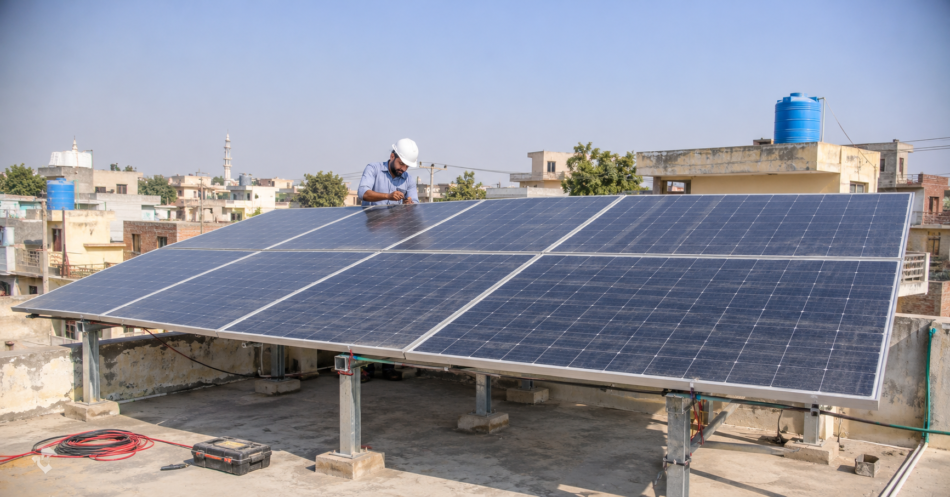
With electricity tariffs climbing and load-shedding still a reality in many cities, solar power has moved from a luxury to a practical household decision across Pakistan. Among all system sizes, the 5kW solar system has become the favourite for medium-sized homes and small businesses. But the question every buyer asks first is the same: how much does it actually cost?
In this guide, we break down the 5kW solar system price in Pakistan, what drives it up or down, what you get for your money, and how long it takes to earn that money back. Prices below are market estimates and change often, so always confirm with written quotes before you buy.
What Is a 5kW Solar System and What Can It Run?
A 5kW system is rated to produce up to five kilowatts of power at peak sunlight. In practice, Pakistan receives roughly 5 to 6.5 peak sun hours a day, so a well-installed system typically generates around 20 to 25 units of electricity per day, or roughly 600 to 750 units a month, depending on season, panel quality, and shading.
That is enough to run a typical home with:
- One or two 1.5-ton inverter air conditioners during daytime hours
- A refrigerator and deep freezer
- Ceiling fans, LED lights, and a water pump
- A washing machine, television, and chargers
For homes of roughly 10 to 15 marla, or a small shop or office, a 5kW system is often the sweet spot between cost and coverage.
5kW Solar System Price in Pakistan: The Current Range
There is no single price, because quotes depend heavily on the type of system and the brands used. Based on recent market reports, here is the realistic picture:
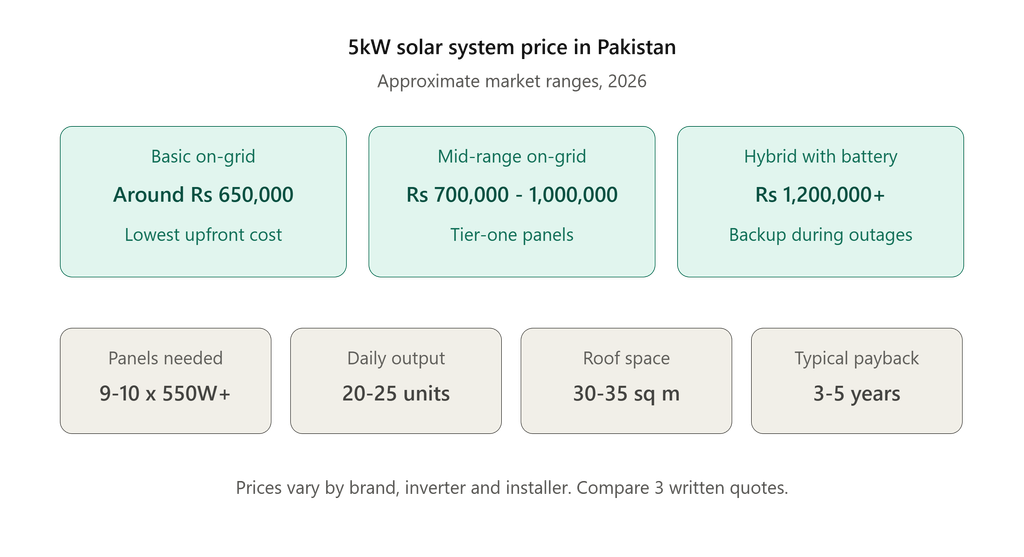
- Budget on-grid systems: Around Rs 650,000 has been reported by market sources as the price of a basic 5kW on-grid system, after a rise of about Rs 150,000 earlier this year.
- Mid-range on-grid systems: Many installers quote between Rs 700,000 and Rs 1,000,000 for tier-one panels, a quality inverter, and net metering paperwork.
- Hybrid systems with batteries: These can reach Rs 1,200,000 or more, depending on battery capacity and brand.
It is also common for two quotes for the identical system size in the same city to differ by Rs 150,000 to Rs 250,000. That gap usually comes from component brands, mounting structure quality, cabling, and the installer’s margin.
Cost Breakdown: Where Your Money Goes
Understanding the components helps you judge whether a quote is fair.
Solar panels. Panels are usually the largest single cost. A 5kW system needs about nine or ten modern 550W–600W panels, or roughly fifteen older 300W panels. Tier-one brands such as Longi, Jinko, Canadian Solar, and JA Solar cost more per watt but offer better efficiency and warranties, often 25 years of performance coverage.
Inverter. The inverter converts DC power from the panels into usable AC power. On-grid inverters are cheaper, while hybrid inverters that manage batteries cost noticeably more. Inverter quality matters because it is the component most likely to fail first.
Batteries (hybrid and off-grid only). Lithium batteries cost more upfront than lead-acid but last longer, need less maintenance, and handle deeper discharge. Batteries can add several hundred thousand rupees to the total.
Mounting structure and cabling. Galvanised or aluminium structures and properly rated DC and AC cables are not glamorous, but cheap versions rust, loosen, or overheat. This is a common area where low quotes cut corners.
Installation and net metering. Labour, protection devices, earthing, and net metering application support make up the rest. Installation costs vary by city and roof type.
On-Grid vs Hybrid vs Off-Grid: Which Is Right for You?
On-grid systems connect directly to the national grid. They are the cheapest option and, with net metering, let you export surplus electricity to your distribution company and offset your bill. The downside is that they shut down during a grid outage for safety reasons.
Hybrid systems combine panels, a hybrid inverter, and batteries while staying connected to the grid. They give you backup power during outages and let you use stored energy at night, but cost significantly more.
Off-grid systems run entirely on solar and batteries. They suit remote areas without reliable grid access but require larger battery banks and careful load planning.
For most urban homes with a grid connection, an on-grid system with net metering offers the fastest return. If outages are frequent in your area, a hybrid system may be worth the extra investment.
Factors That Affect the 5kW Solar System Price
- Panel brand and technology: Tier-one, monocrystalline N-type or mono PERC panels cost more but perform better.
- Inverter type and brand: Hybrid and premium brands carry higher prices.
- Battery choice: Lithium versus lead-acid is often the biggest swing factor.
- Taxes and import duties: Government budget decisions on solar equipment can move prices quickly, as buyers saw when budget uncertainty pushed rates up earlier this year.
- Exchange rate: Most components are imported, so rupee movement affects costs.
- Installer reputation and warranty: Established companies charge more but offer service you can rely on.
- Roof conditions: Tilted, high, or complex roofs raise structure and labour costs.
How Much Can You Save? A Simple Example
Suppose your system produces about 600 units a month. If you pay an effective rate of around Rs 45 per unit, that is roughly Rs 27,000 in monthly savings. Some industry guides cite monthly savings between Rs 15,000 and Rs 25,000 for typical households, depending on consumption and tariff slabs.
At a system cost of Rs 800,000, those savings would pay the system back in about three to four years. Because panels are commonly warrantied for 25 years, the remaining years are essentially free electricity. Your own numbers will differ, so use your last twelve electricity bills as the starting point.
Smart Tips Before You Buy
- Get at least three written quotes that list exact brands, wattage, panel count, inverter model, and warranty terms.
- Check the warranty in writing: Product warranty and performance warranty are different things.
- Ask about net metering support: A good installer handles the documentation with your distribution company.
- Avoid unrealistically cheap offers: Substituting lower-grade panels or thin cables is a common way to cut a price.
- Consider timing: Demand often softens in winter, which can make installers more flexible on pricing.
- Plan your loads: If you run heavy appliances in the evening, ask whether batteries or a bigger system make sense.
- Verify the installer: Look for completed projects, customer references, and after-sales service in your city.
Common Mistakes to Avoid
Many buyers focus only on the headline price and ignore component quality. Others oversize or undersize the system without checking their consumption. Skipping proper earthing and surge protection is another costly mistake, particularly in areas with frequent voltage fluctuations. Finally, don’t forget regular maintenance: cleaning panels every few weeks keeps output high, especially in dusty regions. If you want expert guidance on sizing and installation, a trusted local provider such as Atiq Traders Industrial Power Solution can help you compare options based on your actual load.
Final Thoughts
The 5kW solar system price in Pakistan generally ranges from about Rs 650,000 for basic on-grid setups to Rs 1,200,000 or more for hybrid systems with batteries. The right choice depends on your electricity usage, budget, and how much backup you need. With strong sunshine, rising grid tariffs, and payback periods of only a few years, a well-chosen 5kW system remains one of the most practical home investments available today. Do your homework, compare quotes carefully, and prioritise quality over the lowest price.
Frequently Asked Questions
How many panels are needed for a 5kW system?
About nine to ten panels of 550W–600W, or around fifteen panels of 300W.
Can a 5kW system run two ACs?
Yes, usually one or two inverter ACs in daytime, along with other household loads, though battery backup for AC at night requires a much larger battery bank.
How much roof space is required?
Roughly 30 to 35 square metres (about 320 to 380 square feet), depending on panel size.
Is net metering worth it?
For most grid-connected homes, yes, since exported units offset your bill. Check current net metering rules with your distribution company, as policies can change.
How long do solar panels last?
Quality panels typically carry 25-year performance warranties, while inverters usually last 8 to 12 years.


