 WhatsApp Us Now
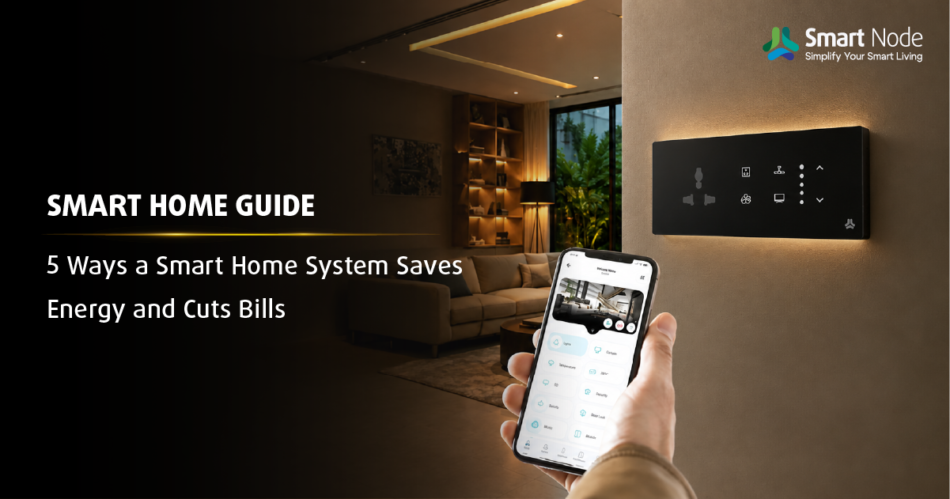
Electricity bills keep climbing every year, and most of us don’t even realist how much energy gets wasted at home. Lights left on in empty rooms, the AC running full blast while you are at work, or old appliances quietly draining power in the background it all adds up. This is where a smart home system comes in handy. It doesn’t just make your home look modern; it actually helps you use less power and save real money every month.
Let’s look at five simple ways this technology works in your favor.
1. Smart Lighting That Turns Off When You Forget
One of the easiest ways to waste electricity is by leaving lights on. It happens to everyone you step out of a room and forget to flip the switch. A home automation system fixes this problem automatically. With motion sensors and scheduling, lights switch off on their own when no one is around and come back on only when needed.
You can also set lighting scenes for different times of the day. For example, dimmer lights in the evening and brighter ones during work hours. This small change alone can lower your lighting costs by a noticeable margin over a year, since lights are no longer running when nobody’s using them.
2. Smarter Temperature Control for AC and Heating
Heating and cooling usually take up the biggest chunk of a household energy bill. Traditional thermostats don’t adjust unless someone manually changes them, which means the AC often keeps running even when the house is empty.
Smart temperature control changes this. It learns your daily routine and adjusts automatically cooling down before you get home and easing off when the house is empty. Some systems even sync with weather updates to fine-tune settings throughout the day. Over time, this kind of automated adjustment can meaningfully cut down cooling and heating costs without you having to think about it.
3. Scheduling and Scene Control Cuts Down Idle Power Use
A lot of household appliances draw power even when you are not actively using them this is often called “phantom load.” Televisions, chargers, and other devices left plugged in can quietly add to your bill month after month.
With scheduling and scene-based control, you can group multiple devices together and set them to switch off automatically at certain times, like late at night or when everyone leaves for work. Instead of checking every switch by hand, one command or a per-set scene handles it all. This is one of the simplest but most effective habits a smart home encourages, and it’s something you barely have to think about once it’s set up.
4. Real-Time Energy Monitoring Helps You Spot Waste
You can’t fix what you can’t see. One of the biggest advantages of home automation is the ability to track your energy usage in real time through a mobile app. You get a clear picture of which devices are using the most power and at what times.
This kind of visibility often surprises people many find that a specific appliance or habit is quietly pushing their bill higher than expected. Once you know where the energy is going, it becomes much easier to make small adjustments and bring the number down.
5. Remote Access Means Nothing Runs Unnecessarily
Ever left home and wondered if you switched off the geyser or the AC? With a connected system, you don’t have to guess. You can check and control your devices from anywhere using your smartphone.
This is especially useful when plans change unexpectedly like leaving for a trip and realizing halfway that something was left running. Instead of appliances working for hours with no one home, you simply turn them off remotely. It’s a small feature, but it prevents a lot of unnecessary energy waste that would otherwise go unnoticed.
Final Thoughts
Saving energy does not have to mean giving up comfort. A well-designed smart home system handles the small, repetitive tasks turning off lights, adjusting temperature, monitoring usage so you don’t have to think about them constantly. Over months and years, these small automated actions add up to real savings on your electricity bills.
If you are considering making the shift, look for a reliable provider with proven experience in home automation, solid after-sales support, and a track record of real installations. Smart Node, for example, has over a decade of experience and thousands of automated homes to its name, which makes it a useful benchmark to compare other options against. It’s a practical upgrade that pays for itself over time, both in convenience and in lower monthly bills.


