 WhatsApp Us Now

Many B2B outbound programs stall because teams launch before targeting, data, and email setup are ready.
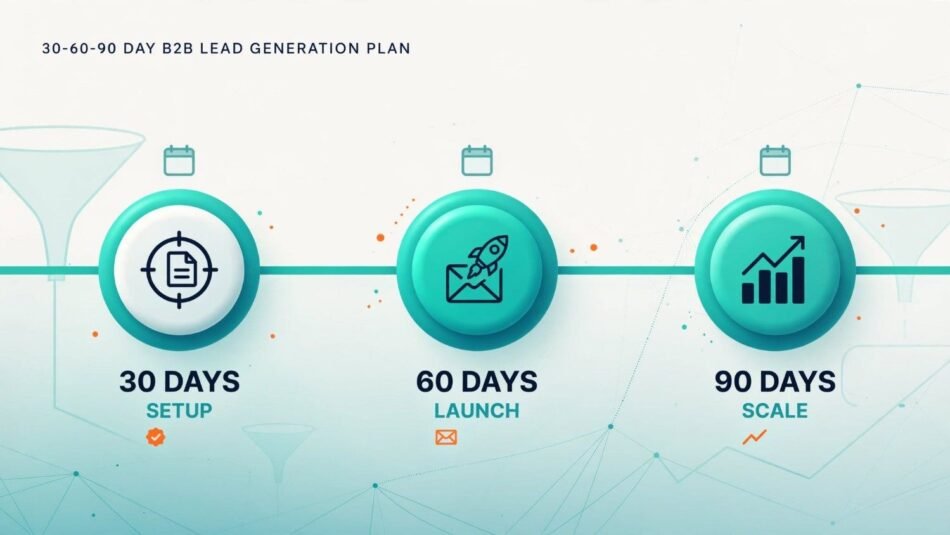
A 30-60-90 day B2B lead generation plan reduces this risk. Build the base in days 1-30, launch outreach in days 31-60, and scale proven segments in days 61-90.
This guide covers each phase, the metrics to track, realistic costs, and how to choose a partner.
What Is a 30-60-90 Day B2B Lead Generation Plan?
A 30-60-90 day B2B lead generation plan is a three-phase rollout. It sets up targeting and data in the first month, launches outreach in the second, and optimizes for pipeline in the third.
Each phase has set deliverables and checkpoints. Progress is measured against milestones instead of guesses.
Why Do B2B Teams Use a Phased Plan Instead of Launching at Once?
Phasing protects sender reputation, data quality, and budget. Launching all channels at once hides what works and can damage email domains.
A phased plan tests one variable at a time. Teams learn which segments, messages, and channels produce qualified meetings before scaling spend. This structured approach to B2B Lead Generation also builds process maturity.
Who Should Use This Plan?
Founders, SaaS companies, CMOs, and sales leaders in the USA, UAE, Europe, Australia, and India can use it, especially when pipeline is unpredictable.
It fits teams building outbound from scratch, replacing an underperforming agency, or adding an SDR function before a full in-house hire.
What Should You Do in the First 30 Days?
The first 30 days build the foundation. Define the ICP, clean and verify contact data, set up sending domains, agree on lead qualification rules, and document data handling.
No volume outreach should start until deliverability and targeting checks pass in a small test send.
How Do You Build an ICP-Driven Targeting Model?
Start with your best existing customers. Note shared traits: industry, company size, region, tech stack, and buying triggers.
Turn those traits into scored criteria, then rank accounts as tier 1, 2, or 3. Tiering decides who gets personalized outreach and who gets lighter sequences.
What Does Data Hygiene Involve Before Launch?
Data hygiene means verifying email addresses, removing duplicates, checking job titles against the ICP, and suppressing existing customers and opt-outs.
It also covers data handling rules: where contacts came from, how long they are stored, and how opt-outs are honored under laws such as GDPR and CAN-SPAM.
How Do You Prepare Email Infrastructure and Deliverability?
Use separate sending domains, then configure SPF, DKIM, and DMARC authentication. Warm each mailbox gradually over two to four weeks and keep daily volume low at first.
Google’s sender guidelines also expect easy unsubscribe and low spam complaint rates for bulk senders.
How Do You Set Lead Qualification Rules in Week Four?
Agree in writing on what counts as a qualified lead before outreach starts. Common criteria include ICP fit, decision-making authority, a stated problem, and a timeline.
Written rules stop disputes between marketing and sales. They also keep pipeline reports consistent across the team.
What Should You Do in Days 31-60?
Days 31-60 launch controlled outreach. Send small email batches to tier 1 and tier 2 accounts, add LinkedIn or calling where suitable, track replies, and book qualified appointments.
Test two or three messages per segment. Review results weekly instead of waiting until the end of the month.
How Should You Structure Your First Outreach Sequences?
A starter sequence has four to six touches over two to three weeks, mixing email with one or two other channels.
Each message should carry one idea and one clear ask. Personalize the opening line using a real trigger, such as a hiring post, funding news, or a product launch.
How Does AI Support Outreach Without Hurting Quality?
AI speeds up research, draft writing, reply classification, and send-time testing. Humans should still approve targeting, messaging, and qualification decisions.
Unreviewed AI copy often reads generic and can raise spam complaints. Treat AI as a drafting and analysis tool, not an autopilot.
How Do SDR Services and Appointment Setting Fit In?
SDRs handle replies, follow-ups, and calls, then book meetings for account executives. Appointment setting is the booking step inside that work.
Teams choose between an in-house SDR, an outsourced SDR service, or a hybrid. Most teams compare cost per qualified meeting before choosing.
How Do You Track Replies and Book Qualified Meetings?
Tag every reply as interested, not now, wrong person, or opt-out, then respond within one business day.
Book meetings only when the prospect meets the agreed qualification rules. Log each meeting source in the CRM so revenue operations (RevOps) can trace pipeline back to the campaign.
What Should You Do in Days 61-90?
Days 61-90 are for optimization and scale. Keep the segments and messages that produce qualified meetings, pause the rest, and expand into lookalike accounts.
Report on meetings held, opportunities created, and cost per qualified meeting. Leadership can then decide the next quarter’s budget.
Which Metrics Show the Plan Is Working?
Track five metrics: positive reply rate, qualified meetings booked, meetings held, opportunities created, and cost per qualified meeting.
Open rate alone is unreliable because of privacy features in email apps. Pipeline created is the strongest signal, but allow for your normal sales-cycle length before judging revenue.
How Do You Scale Without Losing Quality?
Add volume in small steps, such as 20 to 30 percent at a time, while watching bounce rate, spam complaints, and reply quality.
If any metric worsens, pause and fix it before adding more. Scale by adding new segments and mailboxes, not by sending more emails to the same contacts.
How Do the Three Phases Compare?
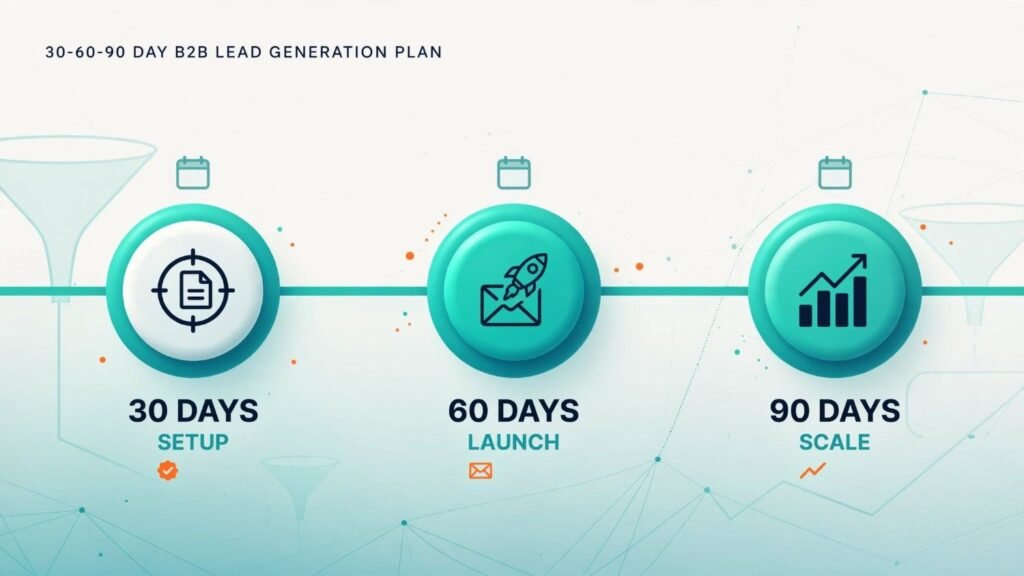
Phase one builds data, targeting, and infrastructure. Phase two tests outreach and books meetings. Phase three optimizes and scales.
Effort shifts from setup to learning to growth. Use the summary below as a quick reference.
- Days 1-30 (Setup): The output is an approved ICP, a verified list, and written qualification rules. The main risk is rushing to launch.
- Days 31-60 (Launch): The output is live sequences, replies, and booked meetings. The main risk is sending too much too soon.
- Days 61-90 (Scale): The output is proven segments and pipeline reporting. The main risk is scaling before quality holds.
What Does the Plan Look Like in a Real Scenario?
Consider a SaaS company selling to HR teams at 200-1,000 employee firms. Month one defines the ICP and verifies 3,000 contacts.
Month two tests three messages on 600 contacts. Month three scales the best message. This is an illustrative scenario, not a client result.
What Does This Plan Cost and What Results Are Realistic?
Costs depend on contact volume, channels, and whether you use an in-house team or an agency. Results vary by market and offer, so no provider can honestly guarantee meetings.
Expect the first 30 days to produce setup assets. Meaningful pipeline signals are more likely in days 60-90.
How Does Outsourcing Compare With Building In-House?
In-house teams give tighter control but need hiring, tools, and training time. Outsourcing gives faster startup and ready processes but needs clear reporting and handoff rules.
Hybrid setups, where outbound is outsourced and strategy and closing stay internal, are also common.
How Do You Choose a Partner for This Plan?
Shortlist partners that explain their process, show real reporting samples, and state limitations openly. Compare at least three before deciding.
Ask about data sources, opt-out handling, and who owns the mailboxes. Strong providers set milestones for each phase instead of promising guaranteed leads.
The Global Associates is a B2B lead generation company specializing in AI-powered outbound engines for predictable pipeline growth.
Does Location Matter When Choosing a B2B Lead Generation Agency?
Not necessarily. Location helps with time zones and in-person meetings, but outbound work is done remotely.
Whether you search for a B2B lead generation agency near me or look globally, judge on process, references, and reporting. Hyderabad-based teams serve buyers in the USA, UAE, Europe, and Australia.
What Compliance and Security Checks Should You Request?
Ask how the provider handles data: sources, storage, retention, and opt-outs. Request a written compliance framework covering GDPR and CAN-SPAM where relevant.
Providers with ISO/IEC 27001 for information security management should show the certification scope, expiry date, and issuing accredited certification body.
ISO 9001 covers a quality management system. Accreditation under IAF MLA helps certificates gain recognition across countries. Certified companies follow an audit cycle with a yearly surveillance audit.
What Mistakes Derail a 30-60-90 Day Plan?
Common mistakes are launching before the ICP is clear, buying unverified lists, sending too much too soon, judging results at day 30, and skipping sales alignment.
Each one wastes budget or damages sender reputation. Phase checkpoints and early agreement on qualification rules help avoid most of them.
What Is the Best Next Step?
Start by documenting your ICP, qualification rules, and data handling this week. Then run phase one before spending on volume.
If you want an outside team, request a phase-by-phase plan with milestones. If you search for a lead generation company near me, compare process and reporting before location.
Next step: Request a 30-60-90 day plan review from The Global Associates.
FAQs
How Long Does It Take to See Results From B2B Lead Generation?
Early signals such as replies and booked meetings often appear within the first 30 to 60 days of live outreach. Closed revenue depends on your sales cycle, which can take months in enterprise B2B.
Judge the first 90 days on qualified meetings and pipeline created, not closed deals.
How Many Contacts Do You Need to Start?
There is no fixed number. Many teams start with a few hundred verified contacts per segment so they can test messages cleanly.
Quality matters more than size. A smaller list that matches your ICP and has verified emails usually teaches more than a large unverified one.
What Is the Difference Between Lead Generation and Appointment Setting?
Lead generation finds and engages potential buyers across channels. Appointment setting is the narrower step of getting a qualified prospect to agree to a meeting with sales.
Most outbound programs include both. Lead qualification rules decide which replies become booked appointments.
Can AI Replace SDRs?
AI can automate research, drafting, and reply sorting, but it does not replace judgment in conversations, objection handling, or qualification.
Pairing AI with human SDRs usually works better than full automation. The right balance depends on deal size, sales cycle, and how much personalization your buyers expect.
How Do I Find B2B Appointment Setting Services Near Me?
Search by service type and target market. Then shortlist providers that show their process, sample reports, and references.
Location matters less than workflow, since outreach runs remotely. Confirm time-zone overlap for handoffs, and ask how booked meetings are verified before they reach your sales team.
Is Cold Email Still Allowed for B2B Outreach?
Cold B2B email is permitted in many regions if you follow local rules, but requirements differ. The US CAN-SPAM Act requires accurate sender details and a working opt-out.
The EU and UK add consent and legitimate-interest rules. Check local law or consult a lawyer before launching in each region.


