 WhatsApp Us Now

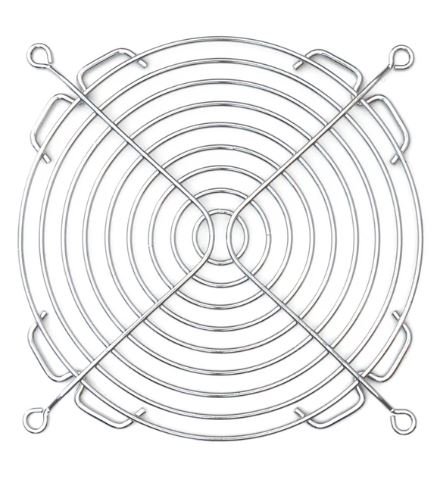
Industrial fans play an essential role in maintaining airflow, regulating temperatures, and protecting equipment from overheating. They are commonly used in electronic enclosures, industrial machinery, ventilation systems, and commercial equipment. However, an exposed fan can create safety risks and leave rotating blades vulnerable to accidental contact or damage. Installing suitable wire fan guards helps address these concerns while allowing air to circulate through the system.
Wire fan guards are protective components designed to cover fan openings without unnecessarily obstructing airflow. Their open-wire construction provides a practical balance between protection, ventilation, and accessibility. Choosing the right guard can help manufacturers and maintenance professionals improve equipment safety and maintain dependable cooling performance.
What Are Wire Fan Guards?
Wire fan guards are protective covers manufactured from formed metal wire. They are installed over fan openings to reduce the risk of fingers, tools, cables, and other objects coming into contact with rotating fan blades.
Unlike solid covers, wire guards contain open spaces that allow air to pass through the fan assembly. This makes them suitable for applications where continuous airflow is necessary for cooling electrical components, machinery, and enclosed systems.
These guards are available in different diameters, wire configurations, and mounting arrangements. Selecting a suitable option depends on the fan dimensions, installation requirements, operating environment, and required level of protection.
For equipment manufacturers, wire fan guards are useful components that can be incorporated into new product designs. Maintenance teams can also use compatible guards when servicing existing ventilation and cooling equipment.
Why Are Wire Fan Guards Important?
Improved Operational Safety
Rotating fan blades can present a hazard when installed in accessible locations. A properly fitted wire guard creates a protective barrier between the blades and nearby personnel or objects.
This is particularly important in industrial environments where operators regularly work around machinery, electrical cabinets, and ventilation equipment. The appropriate guard should be selected according to the equipment design and applicable safety requirements.
Protection Against Foreign Objects
Dust, loose wires, small tools, and other objects can enter an exposed fan assembly. Depending on their size and position, these objects may interfere with the blades or damage the fan.
A wire guard helps reduce the likelihood of larger foreign objects entering the fan opening. However, it should not be considered a complete dust filter because its primary purpose is physical protection rather than fine-particle removal.
Better Airflow Management
Industrial cooling systems require sufficient airflow to remove unwanted heat. A wire guard allows air to pass through its open structure while providing protection around the fan.
The actual airflow performance depends on the guard design, wire spacing, fan characteristics, and surrounding installation. Selecting a guard with an appropriate open area can help minimize unnecessary airflow restriction.
Greater Equipment Durability
A suitable guard can help protect fan blades from accidental impacts and contact with nearby objects. This can be useful in manufacturing facilities, control cabinets, and equipment exposed to regular maintenance activities.
Although a guard cannot eliminate every risk of damage, it adds a practical layer of protection to the overall fan assembly.
Common Applications of Wire Fan Guards
Wire fan guards are used in many applications where ventilation and component protection are both important.
Electrical enclosures: Control panels and electrical cabinets frequently use fans to remove heat generated by power supplies, controllers, and other electrical components. A wire guard helps protect the fan opening.
Industrial machinery: Manufacturing equipment may require continuous ventilation to maintain suitable operating temperatures. Guards help protect exposed fans in accessible locations.
Electronic cooling systems: Servers, power electronics, communication equipment, and industrial electronics can use guarded fans to support thermal management.
HVAC equipment: Ventilation and air-moving systems may incorporate wire guards to reduce accidental contact with rotating fan blades.
Commercial equipment: Appliances, display systems, and specialized machinery may use protective guards as part of their ventilation assemblies.
In every application, the guard must be compatible with the fan size and the equipment’s intended operating conditions.
How to Choose the Right Wire Fan Guard
Selecting the correct guard involves more than matching its general appearance to the fan.
1. Confirm the Fan Diameter
Begin by checking the fan’s specified size. The 162mm wire fan guard collection is relevant when the equipment requires a compatible guard for a fan of that size.
Before ordering, verify the manufacturer’s dimensional specifications, mounting pattern, and required clearance. Do not assume that the nominal fan diameter always equals the guard’s outside dimensions.
2. Review the Mounting Requirements
Different fan assemblies use different mounting arrangements. Check the available mounting holes, fasteners, panel thickness, and installation space before choosing a guard.
A correctly fitted guard should remain securely attached during normal operation and maintenance.
3. Evaluate the Operating Environment
Consider whether the fan operates in a clean office, a manufacturing facility, or an environment with moisture, vibration, or airborne contaminants.
Material selection and corrosion resistance become particularly important when equipment is exposed to demanding environmental conditions. Verify that the selected guard is suitable for the intended application.
4. Consider Airflow Requirements
The guard should provide the necessary protection without creating excessive resistance to airflow.
Review the fan manufacturer’s recommendations and consider the entire airflow path, including filters, ducts, grilles, and nearby components. A guard alone does not determine the cooling performance of the system.
5. Check Safety and Maintenance Needs
Consider how frequently the equipment is inspected and whether technicians need access to the fan assembly.
A suitable design should provide the necessary protection while allowing planned maintenance procedures to be completed safely. Always disconnect power before servicing a fan and follow the equipment manufacturer’s instructions.
Wire Fan Guards and Fan Filters: Understanding the Difference
Wire fan guards and fan filters serve different purposes.
A wire fan guard primarily protects against physical contact and larger objects. It generally has an open structure designed to permit airflow.
A fan filter is designed to capture dust and other airborne particles before they enter equipment. Filters can help protect sensitive components, but they also introduce airflow resistance and require appropriate maintenance.
Some cooling systems benefit from using both components. In these installations, the guard provides physical protection while the filter helps manage contamination. The arrangement should be designed to meet the equipment’s cooling and cleanliness requirements.
Installation and Maintenance Best Practices
Before installation, inspect the guard for deformation, corrosion, or damaged mounting points. Confirm that the selected guard matches the fan assembly and that all fasteners are suitable.
During installation, ensure the guard does not touch the rotating blades or interfere with the fan motor. Check that the assembly remains stable and that cables cannot become trapped against the fan.
Routine maintenance should include checking the guard’s mounting points and removing accumulated debris where necessary. In dusty environments, inspections may need to be more frequent.
If a guard becomes bent or loose, evaluate whether it can be safely restored or should be replaced. Never operate equipment with a damaged guard that could contact moving components.
Choose Suitable Wire Fan Guards for Your Equipment
Selecting the right protective components helps manufacturers and maintenance professionals build safer, more dependable cooling systems. Wire fan guards provide a practical solution for protecting fan openings while preserving an open path for airflow.
Explore the wire fan guards collection at GardTec Online to review available options for your equipment requirements.
Whether you are designing a new industrial enclosure or replacing a component during maintenance, confirm the dimensions, mounting arrangement, environmental suitability, and airflow needs before ordering. A carefully selected fan guard can contribute to a well-designed cooling assembly and reliable equipment operation.


