 WhatsApp Us Now
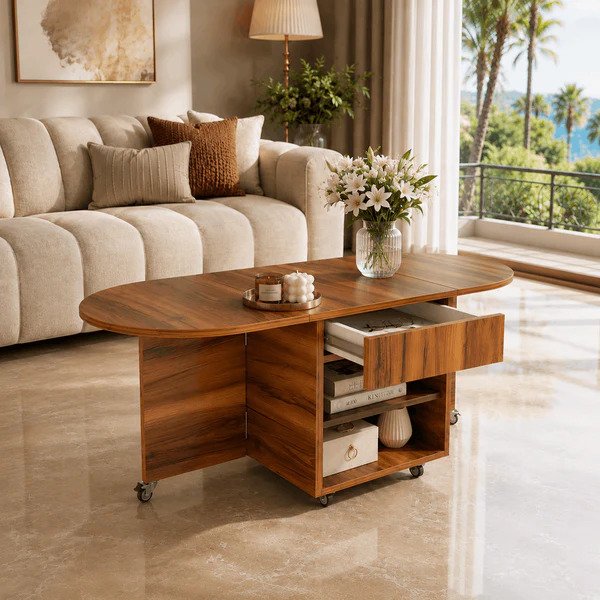
A living room needs furniture that combines usefulness, comfort, and organization. While sofas and chairs provide the main seating, a coffee table brings the seating arrangement together and creates a practical central surface. It can be used for placing drinks, books, remote controls, decorative items, snacks, and everyday essentials.
Choosing the right coffee table for the living room can also help make better use of available floor space. Depending on the room size and furniture arrangement, a suitable table can improve movement, provide additional storage, and create a balanced appearance.
What Makes a Coffee Table Important?
A wooden coffee table is more than a decorative piece placed in front of a sofa. It serves several practical purposes in a living room. From providing an accessible surface to helping organize frequently used items, it can make the seating area more convenient.
The table also helps define the central area of the room. Without one, a sofa arrangement can sometimes feel incomplete or leave too much unused space between seating pieces.
1. Provides a Convenient Surface
One of the primary functions of a coffee table is to provide an easily accessible surface. Instead of placing a cup, book, phone, or remote on the sofa, users can keep these items within comfortable reach on the table.
A stable tabletop is particularly useful when family members or guests spend extended periods in the seating area. It can also provide a convenient place for serving snacks and beverages when entertaining visitors.
2. Helps Organize the Living Room
A well-designed coffee table can reduce clutter by giving everyday objects a designated location. Remote controls, magazines, books, coasters, and small accessories can be arranged neatly instead of being scattered across sofas or other surfaces.
Some tables also include drawers, shelves, or lower compartments. These storage options can be useful when the living room has limited cabinet or shelf space.
3. Complements the Seating Arrangement
A coffee table helps connect the sofa, chairs, and other seating furniture into a single arrangement. Its size and shape should correspond with the available space and the dimensions of the surrounding furniture.
For example, a rectangular table can work well with a long sofa, while a round or oval design may be more suitable for compact seating arrangements where smooth movement around the table is important.
4. Makes Everyday Activities Easier
Living rooms are often used for multiple activities, such as reading, watching television, having refreshments, working casually, or spending time with guests. A coffee table provides a central surface that can support many of these activities.
A wooden coffee table can be particularly practical because wood offers a sturdy surface and can work with various types of living-room furniture. However, the finish and maintenance requirements should be considered before choosing a particular model.
5. Adds Useful Storage
Not every coffee table is designed only with a tabletop. Storage-focused models may include open shelves, drawers, cabinets, or compartments underneath.
These features can help keep frequently used items accessible without leaving them visible throughout the room. If storage is a priority, measure the available space and consider what items you need to keep inside the table before making a purchase.
6. Helps Utilize Available Floor Space
Large living rooms can sometimes have unused space in the middle of the seating arrangement. A suitably sized table can make that area more functional.
At the same time, choosing a table that is too large can restrict movement. There should be enough clearance between the table and surrounding seating so people can comfortably walk around and sit down.
7. Offers a Durable Everyday Surface
The durability of a coffee table depends on its material, construction, finish, and maintenance. A sturdy table can handle regular use, but it should still be treated according to the manufacturer’s care instructions.
For a wooden table, using coasters, cleaning spills promptly, and avoiding prolonged exposure to moisture can help protect the surface. Heavy objects should also be placed according to the product’s recommended weight capacity.
How to Choose the Right Coffee Table for Living Room
Before purchasing, consider the size and layout of the living room. Measure the available area and compare it with the table’s dimensions. The table should be proportionate to the sofa and should not make the walking area difficult to access.
Height is another important factor. A table that is significantly higher or lower than the sofa seat may be less convenient for everyday use.
Think about storage requirements as well. If you need space for books, remotes, or other items, a model with shelves or drawers may be more practical than a simple tabletop design.
Material is also important. A wooden coffee table can provide a solid surface and may suit interiors where a natural material is preferred. Other options include glass, metal, engineered wood, and combinations of different materials.
Common Mistakes to Avoid
One common mistake is choosing a table without measuring the room. A visually attractive table may still be inconvenient if it occupies too much space.
Another issue is ignoring the table’s maintenance requirements. Different materials need different cleaning methods, so check the manufacturer’s instructions.
Avoid placing sharp or unstable objects where they can easily fall. If children or pets regularly use the room, consider rounded edges and stable construction when selecting furniture.
Conclusion
A coffee table can make a living room more functional by providing a convenient surface, supporting organization, adding storage, and connecting the seating arrangement. The right coffee table for living room should suit the available space, furniture dimensions, storage requirements, and everyday usage.
Whether you prefer a compact table or a storage-focused design, consider measurements, construction, material, and maintenance before buying. A well-selected wooden coffee table can be a practical addition when you want a durable central surface that fits naturally into the seating area.
FAQs
1. How big should a coffee table be for a living room?
The ideal size depends on the sofa, seating arrangement, and available floor space. Measure the area before buying and make sure there is sufficient clearance around the table for comfortable movement.
2. What should I keep on a coffee table?
Common items include coasters, books, magazines, remote controls, snacks, beverages, and small decorative objects. Avoid overcrowding the surface so that it remains useful for everyday activities.
3. Is a wooden coffee table easy to maintain?
A wooden coffee table can be relatively easy to maintain when cared for according to the manufacturer’s instructions. Clean spills promptly, use suitable cleaning products, and protect the surface from prolonged moisture and excessive heat.
4. Should a coffee table be higher than the sofa?
A coffee table is generally most convenient when its height is close to the sofa seat height. The exact choice depends on the furniture design and how you intend to use the table.
5. What type of coffee table is best for a small living room?
Compact rectangular, round, or oval tables can work well in smaller rooms. Models with built-in storage can provide additional functionality without requiring separate storage furniture.
6. How much space should be left around a coffee table?
Leave enough space between the table and surrounding seating for people to move comfortably. The exact clearance depends on the room layout, but measuring the walking path before purchasing can help prevent an overcrowded arrangement.


