 WhatsApp Us Now
Introduction
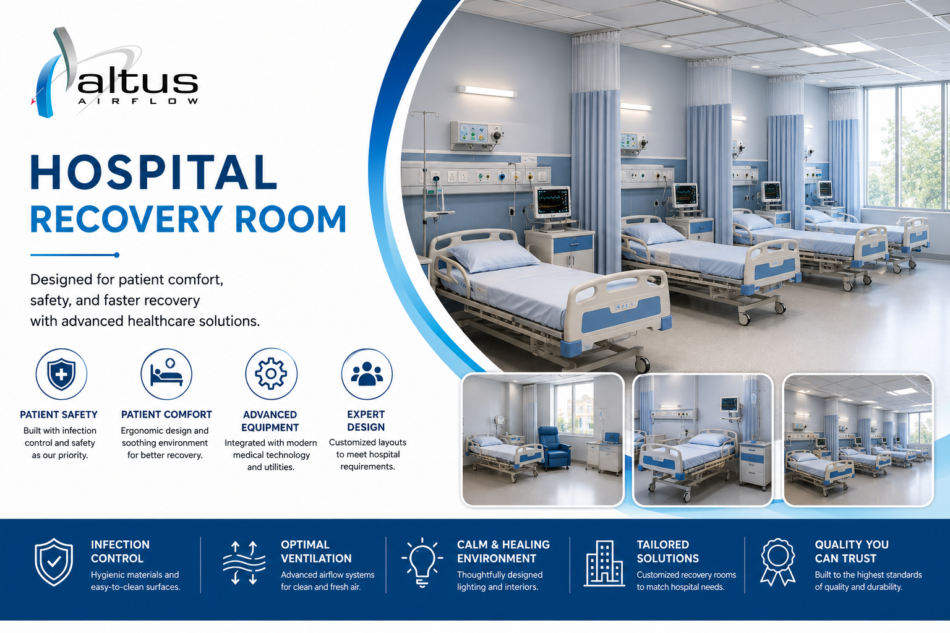
A Hospital Recovery Room is equipped with a wide range of medical devices that help healthcare professionals monitor patients and provide immediate care after surgery, anesthesia, or medical procedures. During the recovery period, patients require continuous observation to ensure stable vital signs, effective pain management, and timely treatment if complications arise. Essential devices support respiratory care, medication delivery, emergency response, and patient monitoring, allowing hospitals to provide safe and efficient post-operative care in a controlled environment.
Multi-Parameter Patient Monitors
Patient monitoring systems are among the most important devices in recovery areas.
Multi-parameter monitors continuously measure heart rate, blood pressure, oxygen saturation, respiratory rate, ECG, and body temperature. Healthcare professionals use this information to monitor patient recovery and quickly detect any changes.
Continuous monitoring improves patient safety and supports prompt medical intervention.
Ventilators
Some patients require respiratory support after surgery.
Ventilators assist patients who have difficulty breathing independently after anesthesia or complex surgical procedures. These devices provide controlled airflow based on the patient’s condition.
Ventilators help maintain stable respiratory function during recovery.
Oxygen Delivery Devices
Oxygen support is essential for many recovering patients.
A Hospital Recovery Room includes oxygen outlets, oxygen masks, nasal cannulas, flow meters, and oxygen regulators to provide respiratory support whenever required.
These devices help maintain healthy oxygen levels and improve patient stability.
Infusion Pumps
Infusion pumps provide accurate delivery of fluids and medications.
They administer intravenous fluids, antibiotics, pain medications, and other prescribed treatments at controlled rates. Precise medication delivery helps improve treatment effectiveness.
Infusion pumps support safe and efficient patient care.
Syringe Pumps
Syringe pumps are designed for highly accurate medication administration.
These devices deliver small doses of medication at controlled rates, making them suitable for patients requiring careful drug management.
Precise medication delivery contributes to improved treatment outcomes.
Suction Units
Suction devices help maintain clear airways.
These units remove secretions and fluids that may obstruct breathing after surgery or during emergency situations.
Quick access to suction equipment improves respiratory care and patient safety.
ECG Machines
ECG machines monitor the electrical activity of the heart.
Healthcare professionals use these devices to identify abnormal heart rhythms and evaluate cardiac function during the recovery period.
Continuous cardiac monitoring supports early detection of complications.
Defibrillators
Defibrillators are essential emergency devices in recovery rooms.
These devices deliver controlled electrical shocks when required to restore normal heart rhythm during cardiac emergencies.
Immediate availability of defibrillators improves emergency preparedness.
Crash Carts
Crash carts provide quick access to emergency medical supplies.
They are equipped with emergency medications, airway management devices, resuscitation equipment, intravenous supplies, and other critical care tools.
Crash carts enable rapid response during life-threatening situations.
Medical Gas Systems
Medical gas infrastructure supports several recovery procedures.
Recovery rooms include oxygen pipelines, vacuum systems, compressed air outlets, medical gas terminal units, and alarm systems to ensure continuous availability of essential gases.
Reliable medical gas systems support respiratory therapy and emergency care.
Patient Warming Devices
Maintaining body temperature is important after surgery.
Patient warming devices help prevent heat loss, improve comfort, and maintain stable body temperature during recovery.
Temperature management supports better post-operative outcomes.
Nurse Call Systems
Communication devices improve patient care.
Nurse call systems allow patients to request assistance quickly and help healthcare professionals respond without delay.
Fast communication improves patient safety and care coordination.
Backup Power Systems
Medical devices require uninterrupted electrical support.
Recovery rooms include UPS units, emergency lighting, medical-grade electrical outlets, grounding systems, and backup power solutions to ensure equipment remains operational during power interruptions.
Reliable power infrastructure supports continuous patient monitoring.
Conclusion
Recovery care depends on advanced medical devices such as patient monitors, ventilators, oxygen delivery systems, infusion pumps, syringe pumps, suction units, ECG machines, defibrillators, crash carts, medical gas systems, warming devices, communication systems, and reliable power infrastructure. Together, these devices help healthcare professionals provide safe, efficient, and high-quality care for patients during the critical recovery period.
FAQs
1. Which devices are essential in a Hospital Recovery Room?
A Hospital Recovery Room includes multi-parameter monitors, ventilators, oxygen delivery devices, infusion pumps, syringe pumps, suction units, ECG machines, defibrillators, crash carts, medical gas systems, patient warming devices, and nurse call systems.
2. Why are patient monitors important in recovery rooms?
Patient monitors continuously track vital signs and help healthcare professionals detect complications early.
3. What is the purpose of infusion pumps?
Infusion pumps provide accurate administration of medications and intravenous fluids during patient recovery.
4. Why are defibrillators kept in recovery rooms?
Defibrillators allow healthcare teams to respond immediately during cardiac emergencies by restoring normal heart rhythm when necessary.
5. How do medical gas systems support recovery care?
Medical gas systems provide oxygen, vacuum, and compressed air required for respiratory support and emergency medical treatment.
Read Our Previous Blog———–>What treatment is provided in a Patient Recovery Room?


