 WhatsApp Us Now
The moment we hear of a blocked artery, the immediate thought is a stent. In some cases, medication and lifestyle changes are enough to treat the condition. Even when the blockage has significantly reduced blood flow and an angioplasty procedure can’t be avoided, a stent is not always required. So, the question remains: when is a stent needed? The answer is not as straightforward and depends on several factors, including where the blockage is, how severe the blockage is, whether the blockage is causing the heart attack symptoms, and the individual’s heart health history.
What Is A Coronary Stent
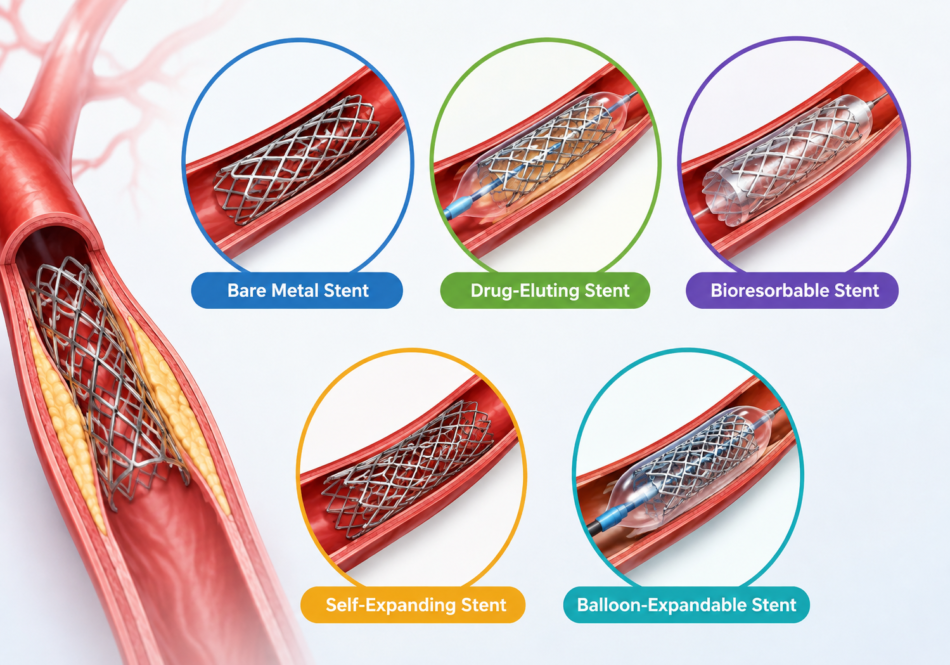
A Coronary stent is a small mesh tube, a metal scaffolding, that is placed at the narrowed or blocked spot inside the artery during the angioplasty procedure to help keep it open and reduce the risk of restenosis (re-narrowing of the artery)
Why a Stents Is Placed in the Heart
To understand why a stent is placed in the heart, we must know that over time, fatty deposits called plaque get deposited inside our heart arteries. As the opening of our arteries becomes narrower, blood does not reach the heart muscle efficiently. In time, this condition manifests in chest pain, especially during physical activity. In more serious cases, it also results in a heart attack.
A stent is a small scaffold that, when placed inside the artery, keeps the blood flow smooth. It is to note that not every blockage automatically means stent placement. The cardiologist considers various factors and uses several assessment tools before deciding if the metal implant is really needed.
When Is A Coronary Stent Needed
One of the most certain situations when a coronary stent is needed is a heart attack situation. A stent placement is also favoured when a person has persistent chest pain, angina, even after getting appropriate medical treatment. A stent becomes necessary when there’s significant narrowing of the artery and the reduced blood flow continues to cause symptoms; in such cases, opening of the artery may not be enough. To minimise the chances of restenosis, a stent might be required.
How Many Stents Can Be Put in a Heart!?
In simple words, there is no straight answer to this question. There is no single number that applies to every patient. The number of stents required depends on several factors: the location and complexity of the blockages, the patient’s overall health, and the size of the arteries.
Types Of Stents
- Drug-eluting Stent:
These metal mesh stents are coated with medicine that keeps the arteries open.
- Bare Metal Stent:
As the name suggests, these metal alloy stents are often made of nickel-titanium alloy, cobalt-chromium, or stainless steel and do not have any medicine coated on them.
- Biodegradable Stent:
These new types of coronary stents gradually dissolve in the arteries and leave no implants in the body.
- Polyester Fabric and Metal Stent:
Commonly known as a graft, these metal mesh stents are covered with fabric and are used to re-strengthen narrowed areas in the bigger arteries.
Benefits Of Stents
- Stents improve the blood flow
A stent opens the artery and allows regular flow of the oxygen-rich blood to the heart through the narrowed or blocked spot, minimising the chances of a heart attack.
- Stents improve symptoms of various heart diseases
The moment the heart gets a proper supply of blood, the symptoms of heart diseases, including chest pain and chest tightness, also improve.
- Stents prevent restenosis
Post-procedure, in the absence of a drug-coated stent, scar tissue grows around the treated area that gradually narrows the artery again. A suitable drug-coated stent, however, can minimise the chances of that, keeping the artery open and regulating the optimal blood flow.
- Minimally invasive procedure
The modern angioplasty does not require large incisions; instead, through a very small, almost painless incision, a catheter is inserted inside the body to guide the stent to the narrowed spot in the artery. The minimally invasive procedure results in shorter hospital stays, faster recovery, and better outcomes.
Stents Are Not A Replacement for a Heart-Healthy Lifestyle
It is crucial to understand the health considerations and stents thoroughly. Stents aren’t meant to replace a heart-healthy lifestyle, but they certainly give you a second chance to fix the damaged heart. The decision to place a stent is made in a timely and personalised evaluation, considering all factors affecting the patient’s heart health. After all, the cardiologist’s goal is to restore healthy blood flow to the heart, choosing the safest and most effective treatment option.


