 WhatsApp Us Now
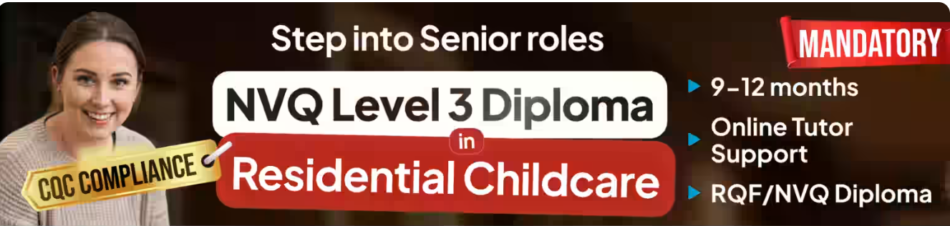
If you are interested in building a career supporting children and young people in residential care, you may have come across the Level 3 Diploma in Residential Childcare. This qualification is designed to develop the practical knowledge, understanding, and professional skills needed to work effectively in residential childcare settings. It can be a valuable choice for people who want to progress into roles where they support children’s development, wellbeing, safety, and day-to-day needs.
What Is the Level 3 Diploma in Residential Childcare?
The Level 3 Diploma in Residential Childcare is a vocational qualification focused on working with children and young people in residential care environments. It covers important areas such as safeguarding, communication, child development, health and wellbeing, person-centred support, and professional practice.
Unlike a purely academic course, a vocational qualification is designed around the knowledge and skills required in the workplace. Learners develop an understanding of how to support children and young people while recognising their individual needs, circumstances, rights, and experiences.
The qualification can be particularly relevant to people already working in residential childcare who want to develop their skills and gain a recognised qualification. It may also support individuals looking to progress into the sector and build a long-term career in childcare and social care.
What Does the Qualification Cover?
Residential childcare professionals have a wide range of responsibilities, so the qualification covers several areas of professional practice. Depending on the qualification pathway and specific programme, learners can develop knowledge in areas such as:
- Safeguarding children and young people
- Supporting health and wellbeing
- Promoting positive relationships
- Understanding child and young person development
- Effective communication
- Supporting positive behaviour
- Equality, diversity, and inclusion
- Maintaining a safe residential environment
- Working with families, colleagues, and other professionals
- Promoting children’s rights and participation
- Supporting emotional wellbeing and resilience
- Professional responsibilities within residential childcare
These areas help learners understand how their decisions and actions can influence the experiences and outcomes of children living in residential settings.
Why Is Safeguarding Important in Residential Childcare?
Safeguarding is one of the most important responsibilities within residential childcare. Children and young people living in care may have experienced difficult or traumatic circumstances, which means professionals need to understand how to recognise concerns and respond appropriately.
A Level 3 qualification can help learners understand safeguarding responsibilities, professional boundaries, reporting procedures, risk awareness, and the importance of creating a safe environment.
Good safeguarding practice is not only about responding to concerns. It also involves building trusting relationships, listening to children, respecting their views, maintaining appropriate boundaries, and promoting their overall wellbeing.
Who Can Benefit from This Qualification?
The Level 3 Diploma in Residential Childcare can be suitable for people at different stages of their careers. It may benefit existing residential childcare workers who want to strengthen their professional knowledge and work towards career progression.
It can also be useful for individuals considering roles in children’s homes, residential care services, supported accommodation, or other environments where children and young people require structured support.
People who enjoy working with children, communicating with young people, supporting development, and making a positive difference to individuals’ lives may find residential childcare a rewarding career area.
Entry requirements can vary depending on the specific qualification and training provider, so prospective learners should always check the requirements before enrolling.
How Is a Level 3 Residential Childcare Qualification Assessed?
Assessment for vocational residential childcare qualifications generally focuses on demonstrating knowledge and competence. Depending on the programme, assessment may include written assignments, workplace observations, professional discussions, reflective activities, or evidence collected from workplace practice.
This approach allows learners to demonstrate not only what they know but also how they apply their knowledge in real childcare situations.
For people already working in residential childcare, workplace-based assessment can be particularly useful because learning can be connected directly to everyday responsibilities.
What Career Opportunities Can It Support?
Completing a Level 3 residential childcare qualification can support progression into a range of roles within children’s social care and residential services. Potential career pathways may include residential childcare worker, senior residential childcare worker, support worker, or other roles involving the care and development of children and young people.
Career progression will depend on experience, employer requirements, additional training, and the specific role being pursued. Some learners may also choose to progress to higher-level qualifications in leadership, management, or health and social care.
For those interested in leadership, further study can help develop skills in supervising teams, managing services, supporting staff development, and maintaining quality standards.
Why Choose Professional Training with Access Skills?
Choosing the right training provider is an important part of working towards a recognised childcare qualification. Access Skills provides health and social care training throughout England, with a range of qualifications designed to support learners at different stages of their careers.
Its wider course portfolio includes Level 2 Adult Social Care, Level 3 Adult Care, Level 3 Residential Childcare, Level 4 Adult Care, and Level 5 qualifications in leadership and management for adult care and residential childcare.
The organisation also provides care training courses and specialist qualifications covering areas such as mental health, autism, dementia care, and end-of-life care. Flexible learning options and funding or instalment plans may be available for eligible learners and courses.
Is the Level 3 Diploma in Residential Childcare Worth It?
For people who want to develop a career in residential childcare, a Level 3 qualification can provide valuable professional knowledge and help demonstrate commitment to the sector. It can strengthen understanding of safeguarding, child development, communication, wellbeing, and workplace responsibilities.
The qualification may also provide a foundation for future career development. With relevant experience and additional training, learners can work towards more senior responsibilities or progress into further qualifications.
Final Thoughts
The Level 3 Diploma in Residential Childcare is a vocational qualification designed to help learners develop the knowledge and skills required to support children and young people in residential care environments. From safeguarding and communication to wellbeing and professional practice, it covers areas that are important for delivering safe and effective care.
If you are considering a career in residential childcare or already work with children and want to strengthen your qualifications, exploring the available Level 3 training options can be a useful next step. Access Skills offers a range of health and social care qualifications and training opportunities to help learners develop their knowledge and progress professionally.


