WhatsApp Us Now
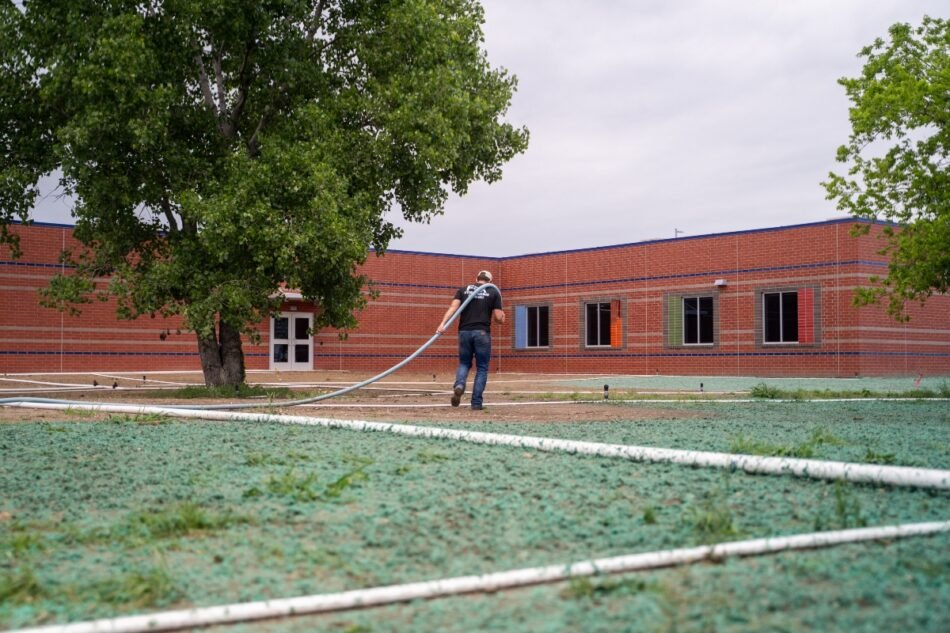
Establishing healthy turf across a commercial property requires more than simply spreading seed over bare soil and waiting for rain. Large developments often involve compacted ground, exposed slopes, construction traffic, drainage challenges, and strict landscaping deadlines. Commercial hydroseeding services provide an efficient method for covering substantial areas with a carefully prepared mixture of seed, mulch, water, fertilizer, and soil-supporting materials. However, understanding the timeline is just as important as understanding the application itself. From initial site preparation through germination, early growth, and mature turf development, every stage contributes to the final appearance and durability of the landscape.
What Is Commercial Hydroseeding and Why Does Timing Matter?
Commercial hydroseeding is a planting technique in which grass seed and other materials are mixed into a slurry before being sprayed across prepared soil. The slurry commonly contains seed, water, fiber mulch, fertilizer, and, when appropriate, tackifiers or soil amendments designed to support establishment. Unlike conventional broadcasting, the mixture can be distributed efficiently across large areas and uneven terrain with specialized equipment. The mulch helps hold moisture around the seed and provides temporary protection from wind and surface erosion. Because successful establishment depends on several environmental and maintenance factors, understanding the timeline helps property managers plan irrigation, access, mowing, and other landscape activities.
The timeline does not begin when the hydroseeding equipment arrives at the property. Proper commercial work starts with evaluating the soil, grading, drainage, sunlight, existing vegetation, and intended use of the site. Compacted construction soil may need to be loosened, while poor soil may require amendments before seed is applied. Contractors also need to select grass varieties that are suitable for the regional climate and the property’s conditions. In North Texas, seasonal temperatures, rainfall patterns, soil characteristics, and periods of heat can all influence how quickly turf develops. Careful planning before application can therefore make a significant difference in both establishment speed and long-term turf quality.
Stage One: Site Preparation Before Slurry Application
Site preparation is one of the most important stages in the entire hydroseeding process because seeds cannot compensate for severely unsuitable growing conditions. Contractors typically begin by removing construction debris, excessive vegetation, rocks, and other materials that could interfere with seed-to-soil contact. Grading may be necessary to create a stable surface and direct water away from structures or toward planned drainage areas. Areas suffering from compaction can require mechanical loosening so developing roots have access to air, moisture, and nutrients. When soil testing identifies deficiencies or unsuitable conditions, amendments may be incorporated before the final seedbed is prepared.
A properly prepared surface should provide enough loose soil for seed contact while remaining stable enough to resist excessive runoff. This is particularly important on commercial sites where large exposed areas can be vulnerable to heavy rainfall before vegetation becomes established. Slopes and drainage channels may require additional erosion-control planning depending on their characteristics. The contractor should also consider irrigation access because newly seeded turf generally needs consistent moisture during the early stages of development. Once preparation is complete, the property is ready for the hydroseeding crew to apply the selected slurry.
Stage Two: Slurry Preparation and Application
The actual hydroseeding application can move relatively quickly compared with the time required for the turf to mature. The contractor loads the hydroseeding tank with water and combines it with the selected seed, mulch, fertilizer, and other project-specific ingredients. The mixture is continuously agitated to keep the components distributed throughout the slurry. Specialized hoses or spray equipment are then used to apply the mixture evenly across the prepared ground. Application rates and coverage are adjusted according to the seed blend, soil conditions, terrain, and requirements established during project planning.
For properties in North Texas, the timing of application deserves particular attention because weather conditions can change rapidly. Extremely hot, dry periods can increase irrigation demands, while intense rainfall immediately after application may create runoff or disturb freshly applied material. A knowledgeable contractor considers short-term weather conditions when scheduling the work rather than treating every day as equally suitable. Hydromulch North Texas projects may also involve customized mulch and seed combinations intended to support vegetation under regional growing conditions. Once the slurry has been applied, the next priority is protecting the area and maintaining sufficient moisture for germination.
Stage Three: The First Days After Hydroseeding
The first several days following application are critical because the seed needs adequate moisture to begin the germination process. The mulch layer helps retain moisture, but it does not eliminate the need for proper irrigation. Newly hydroseeded areas generally need controlled and consistent watering rather than occasional heavy watering that causes puddling or runoff. Irrigation schedules should be adjusted according to temperature, rainfall, soil type, slope, and the specific seed mixture. Property managers should also limit unnecessary foot and vehicle traffic across the treated area while the soil remains vulnerable.
During this early period, the surface may not appear to change dramatically, which can make some property owners wonder whether the process is working. Germination speed varies considerably depending on grass species, soil temperature, moisture, weather, and seed quality. Some varieties may begin showing visible growth relatively quickly, while others require more time before noticeable shoots appear. The absence of immediate green coverage does not necessarily indicate a problem. Instead, contractors and property managers should focus on maintaining appropriate moisture and watching for erosion, standing water, unusually dry areas, or other conditions that could interfere with establishment.
Stage Four: Germination and Early Turf Development
As germination progresses, small grass shoots begin emerging across the treated area. At this point, consistent irrigation remains essential because young roots are still shallow and cannot access moisture deep within the soil profile. Uneven watering can produce inconsistent growth, creating thin areas that may eventually require corrective seeding. Weather can also influence development, with moderate growing conditions generally supporting more predictable progress than periods of extreme heat, cold, or drought. Regular observation during this stage allows property managers to identify irrigation problems before they become larger turf issues.
The developing grass gradually begins forming a stronger root system and increasing its leaf coverage. Although the property may start looking greener, the turf is not necessarily mature enough to withstand heavy traffic or aggressive mowing. Commercial properties should maintain appropriate restrictions around newly established areas, particularly near construction zones, entrances, parking areas, and pedestrian routes. The exact establishment period varies according to the grass species and local conditions, so contractors should provide maintenance recommendations based on the actual project. Patience during this stage is important because rushing mowing, traffic, or other activities can weaken young turf.
Stage Five: First Mowing and Transition Toward Mature Turf
The first mowing should generally occur only after the grass has established enough growth to tolerate the process without being damaged. Mowing too early can disturb developing plants, while allowing grass to become excessively tall can create other management problems. The appropriate mowing height depends on the selected turf species and the landscape’s intended use. Equipment should be maintained properly, and mowing should be avoided when soil is excessively wet because heavy machinery can create compaction or rutting. Once regular mowing begins, the landscape gradually transitions from establishment care to a more conventional commercial turf maintenance program.
As turf density improves, irrigation practices can also be adjusted to encourage deeper root development rather than constant shallow moisture. Fertilization may be introduced according to soil conditions and the needs of the selected grass, but applications should be based on responsible turf-management practices rather than assumptions. Weed pressure should also be monitored because newly developing turf can compete poorly with aggressive weeds. Over time, consistent mowing, irrigation, nutrition, and soil management help the grass become more resilient. This stage is where the initial quality of the hydroseeding work begins to show its long-term value.
How Long Does It Take to Reach Mature Turf?
There is no universal number of days between hydroseeding and mature turf because establishment depends on several variables. Grass species, planting season, soil temperature, irrigation, rainfall, sunlight, soil quality, and maintenance practices all influence the timeline. Some commercial sites may show substantial green coverage within a few weeks under favorable conditions, while achieving dense, durable turf can take considerably longer. North Texas weather can add another layer of variability because high summer temperatures and periods of limited rainfall may increase water requirements. A professional contractor should provide a realistic project-specific timeline rather than guaranteeing an identical result for every property.
Mature turf should be judged by more than its color or surface appearance. A landscape may look green while still developing the root strength and density necessary to handle regular commercial use. A well-established turf area should demonstrate consistent coverage, healthy growth, adequate rooting, and the ability to tolerate normal mowing and environmental conditions. High-traffic commercial properties may need additional time before they are ready for unrestricted use. Property owners should therefore coordinate landscaping milestones with contractors, developers, and facility managers to avoid placing excessive stress on immature turf.
Getting the Best Results From Commercial Hydroseeding Services
The success of commercial hydroseeding services depends on the entire project rather than the spraying stage alone. Choosing suitable seed, preparing the soil correctly, applying the slurry at an appropriate rate, and providing sufficient post-application care all contribute to successful establishment. Property owners should ask contractors about their experience with similar commercial projects, their approach to soil preparation, and their recommendations for local conditions. It is also useful to request a clear maintenance plan covering irrigation, mowing, fertilization, traffic restrictions, and potential problem areas. A detailed approach demonstrates that the contractor understands turf establishment as a process rather than a single-day service.
For businesses and developers in North Texas, selecting a contractor familiar with regional growing conditions can be especially valuable. A local provider should understand how seasonal temperature changes, rainfall patterns, soil conditions, and water availability can affect turf establishment. When comparing companies, look for evidence of relevant commercial experience rather than relying solely on a low initial estimate. Ask for a written proposal that explains the materials, preparation work, application method, expected timeline, and post-installation responsibilities. With realistic expectations and consistent maintenance, hydroseeding can provide an efficient foundation for attractive, functional, and durable commercial turf.
Final Thoughts
The journey from freshly applied slurry to mature commercial turf involves several interconnected stages, and each one deserves appropriate attention. Site preparation establishes the foundation, slurry application distributes the seed and protective materials, and early irrigation supports germination. As the grass develops, careful mowing, watering, nutrition, and traffic management help strengthen the root system and increase turf density. Weather and seasonal conditions can accelerate or slow the process, making flexibility an important part of commercial landscape planning. Understanding these stages allows property owners and managers to make better decisions and avoid unrealistic expectations about how quickly a newly seeded landscape will mature.
A successful hydroseeding project is ultimately measured by the health and usability of the established turf, not simply by how quickly the ground turns green. Working with an experienced contractor, preparing the soil correctly, selecting appropriate seed, and following a disciplined maintenance program can significantly improve the outcome. For North Texas commercial properties, properly planned Hydromulch North Texas applications can be an effective approach for establishing vegetation across expansive or challenging areas. With the right combination of professional application and responsible aftercare, hydroseeding can turn disturbed ground into a healthier, more attractive landscape that supports the property’s long-term needs.