 WhatsApp Us Now
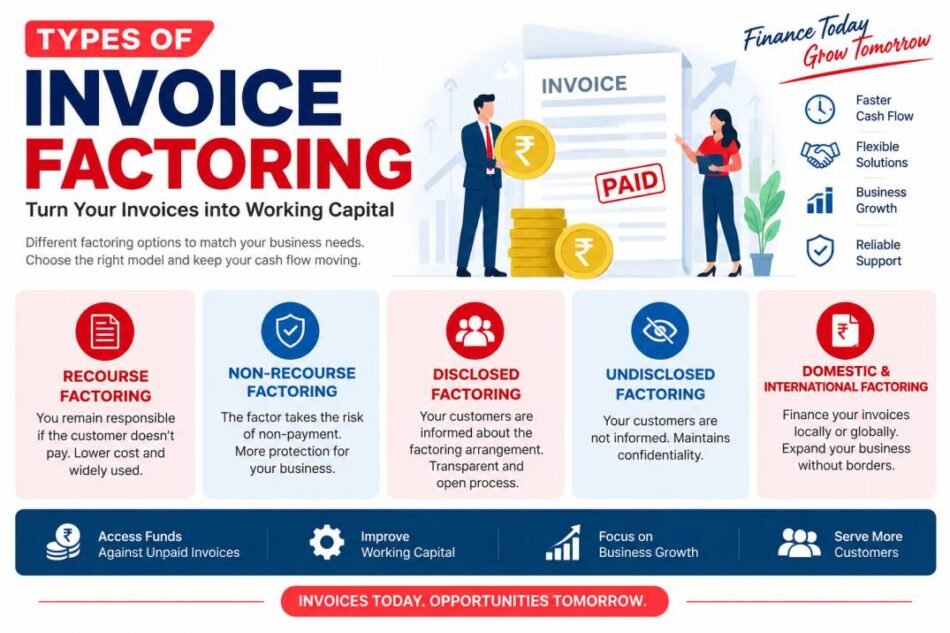
Businesses often face cash flow challenges when customers take weeks or months to pay their invoices. Even when sales are strong, delayed payments can make it difficult to manage salaries, purchase inventory, pay suppliers, and handle daily operating expenses. Invoice factoring can help businesses access funds tied up in unpaid invoices. Understanding the different Types of Invoice Factoring can help business owners choose a suitable financing option according to their cash flow requirements and risk preferences.
What Is Invoice Factoring?
Invoice factoring is a financial solution that allows a business to obtain funds against its outstanding customer invoices. Instead of waiting for customers to make payments, a business can assign eligible invoices to a factoring company. The factoring provider advances a percentage of the invoice value and releases the remaining amount, after applicable fees, when the customer pays.
This approach can provide faster access to working capital without waiting for the complete invoice payment cycle. It is commonly considered by businesses that offer credit terms to customers and regularly experience delayed receivables.
Why Businesses Use Invoice Factoring
Maintaining adequate working capital is essential for business continuity and growth. Invoice factoring can help businesses convert outstanding receivables into usable funds and manage short-term financial requirements.
Some common benefits include:
- Improved business cash flow
- Faster access to working capital
- Better ability to manage operating expenses
- Reduced pressure caused by delayed customer payments
- Support for purchasing inventory and raw materials
- Greater flexibility during periods of business expansion
- Potentially easier access to finance than some traditional options
The suitability of factoring depends on the business model, invoice quality, customer creditworthiness, fees, and agreement terms.
Major Types of Invoice Factoring
There are several Types of Invoice Factoring, and each structure works differently. The major types include recourse factoring, non-recourse factoring, disclosed factoring, confidential factoring, domestic factoring, and export factoring.
1. Recourse Invoice Factoring
Recourse factoring is one of the commonly used forms of invoice factoring. Under this arrangement, the business remains responsible if a customer fails to pay an assigned invoice within the agreed period.
Because the business retains a higher level of payment risk, recourse factoring may offer comparatively lower factoring costs. It can be suitable for businesses that work with established customers who have a reliable payment history.
Before entering into an agreement, businesses should clearly understand how overdue or unpaid invoices will be handled.
Read also: Saint Michael Clothing: Redefining Graphic Streetwear With Vintage Character
2. Non-Recourse Invoice Factoring
With non-recourse factoring, the factoring provider generally assumes specified credit risks associated with customer non-payment, subject to the terms and conditions of the agreement.
This can provide businesses with greater protection against certain customer defaults. However, non-recourse factoring may involve higher fees because the factoring company takes on additional risk.
Businesses should carefully review which circumstances are covered. Non-recourse arrangements may not protect against every reason for non-payment, such as commercial disputes, defective goods, or contractual disagreements.
3. Disclosed Invoice Factoring
In disclosed factoring, customers are informed that their invoices have been assigned or financed through a factoring company. The customer may be instructed to make payment directly to the factoring provider or a designated account.
This structure provides transparency between the business, its customers, and the factoring provider. It can work well for companies that are comfortable informing customers about their financing arrangement.
4. Confidential Invoice Factoring
Confidential factoring is structured so that customers may not be informed that the business is using invoice factoring. The business typically continues to manage customer relationships and collections according to the agreement.
This option may appeal to companies that prefer to keep their financing arrangements private. However, eligibility and operating procedures can vary between factoring providers.
5. Domestic Invoice Factoring
Domestic invoice factoring is generally used when the business and its customers operate within the same country. It can provide working capital against eligible domestic invoices.
For businesses selling products or services to other companies on credit terms, domestic factoring can help reduce the waiting period between invoicing and receiving funds.
6. Export Invoice Factoring
Export factoring is designed for businesses that sell goods or services to customers in other countries. International transactions can involve longer payment cycles, currency considerations, and additional commercial risks.
Export factoring can help exporters improve cash flow while managing international receivables. Depending on the arrangement, the factoring provider may also support receivables management and customer credit assessment.
How to Choose the Right Type of Invoice Factoring
Choosing among the Types of Invoice Factoring depends on several factors. Businesses should consider customer credit quality, invoice volume, payment terms, international exposure, confidentiality requirements, and tolerance for payment risk.
A company with reliable customers may consider recourse factoring because it can potentially offer a more cost-effective structure. A business concerned about specific customer credit risks may evaluate non-recourse factoring.
Companies involved in international trade may find export factoring more relevant, while businesses serving domestic customers may consider domestic factoring.
Invoice Factoring vs Traditional Business Loans
Invoice factoring and traditional business loans are different forms of business finance. A traditional loan generally involves borrowing a specified amount and repaying it according to an agreed schedule, often with interest.
Invoice factoring, on the other hand, is linked to outstanding customer invoices. The amount of funding available can therefore be connected to the value and eligibility of receivables.
Businesses should compare total costs, repayment obligations, eligibility requirements, documentation, and cash flow impact before selecting a financing solution.
Factors to Consider Before Using Invoice Factoring
Before choosing a factoring arrangement, businesses should carefully evaluate:
- Factoring fees and other applicable charges
- Advance percentage offered
- Customer creditworthiness requirements
- Recourse and non-recourse conditions
- Contract duration and termination terms
- Collection responsibilities
- Treatment of disputed invoices
- Minimum invoice or turnover requirements
- Confidentiality provisions
- International transaction requirements, where applicable
Reading the complete agreement and understanding all charges can help businesses make an informed decision.
Conclusion
Understanding the Types of Invoice Factoring is important for businesses looking for flexible ways to manage receivables and improve cash flow. Recourse, non-recourse, disclosed, confidential, domestic, and export factoring each have different structures, benefits, and considerations.
The right option depends on the company’s customers, invoice profile, risk tolerance, payment cycles, and financing objectives. Businesses should compare providers carefully, review all costs and contractual conditions, and select a factoring structure that supports sustainable cash flow management and long-term growth.
Frequently Asked Questions
What are the main types of invoice factoring?
The main Types of Invoice Factoring include recourse, non-recourse, disclosed, confidential, domestic, and export factoring.
Is invoice factoring suitable for small businesses?
Invoice factoring can be considered by small businesses that have eligible business-to-business invoices and customers with acceptable credit profiles. Suitability depends on the provider’s requirements and the company’s financial circumstances.
What is the difference between recourse and non-recourse factoring?
In recourse factoring, the business generally retains responsibility for certain unpaid invoices. In non-recourse factoring, the provider may assume specified credit risks, subject to the agreement.
Can exporters use invoice factoring?
Yes. Export factoring can help businesses that sell to international customers manage receivables and potentially access working capital before overseas customers complete their payments.
Does invoice factoring improve cash flow?
Invoice factoring can improve cash flow by providing access to funds against eligible outstanding invoices before customers make their payments.


