 WhatsApp Us Now

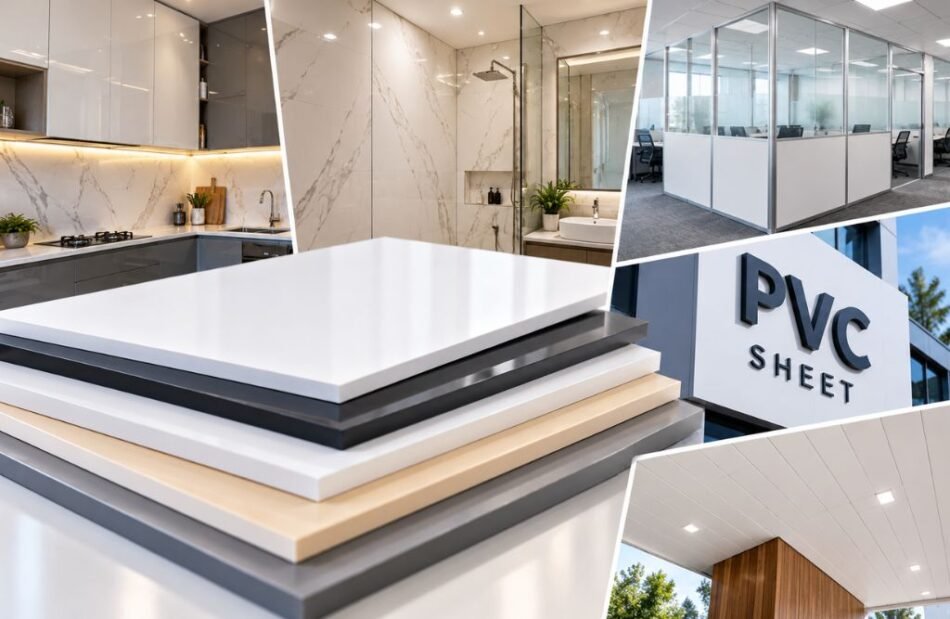
Choosing the right material for construction, renovation, or interior design can make a noticeable difference in durability, maintenance, and overall project cost. From modern kitchen interiors to commercial partitions and advertising displays, building materials need to balance functionality with appearance. One material that has gained attention across these applications is PVC.
PVC sheets are available in different thicknesses, finishes, colours, and formulations, making them suitable for a wide range of residential and commercial projects. Depending on the type selected, they can offer moisture resistance, easy maintenance, lightweight construction, and flexibility in fabrication.
However, not every PVC sheet is designed for the same purpose. Understanding its different applications and limitations can help you choose the right material for your specific requirements.
In this article, we explore the top applications of PVC sheets in residential and commercial spaces, along with their benefits and the factors to consider before purchasing them.
What Is a PVC Sheet?
PVC stands for polyvinyl chloride, a widely used plastic material found in construction, electrical products, furniture components, signage, and industrial applications.
A PVC sheet is a flat panel manufactured from this material. Depending on the manufacturing process and formulation, it may be rigid, flexible, solid, or foam-based.
Common varieties include rigid PVC sheets, PVC foam boards, and decorative PVC panels. Each type has different characteristics, so selecting the right option is essential.
For example, rigid PVC may be suitable for certain protective panels and fabricated components, while PVC foam boards are frequently used for signage, display structures, and lightweight interior applications.
If you are exploring material options for a new project, compare the specifications of a PVC sheet to understand which variety best suits your intended use.
1. Interior Wall Panelling and Decoration
One of the popular applications of PVC sheets is interior wall decoration. Homeowners and commercial property owners often look for materials that improve the appearance of walls without requiring complicated installation or extensive maintenance.
PVC wall panels are available in various colours, textures, and decorative finishes. Some products imitate the appearance of wood, marble, or other materials, allowing designers to create different interior styles.
In residential spaces, they may be used for selected living room walls, bedroom accents, corridors, and other decorative areas. In commercial environments, PVC panels can be installed in suitable office interiors, retail spaces, and reception areas.
Their relatively lightweight construction can make handling and installation easier. However, the final appearance and performance depend on the panel quality, installation method, and condition of the underlying surface.
Before choosing decorative panels, check whether the product is intended for the specific wall application and whether it meets the relevant fire-safety requirements.
2. Kitchen Cabinets and Furniture Components
Kitchens require materials that can handle regular cleaning, occasional spills, and everyday use. Certain PVC sheets and foam boards are used in cabinet components, furniture panels, and selected modular furniture applications.
Their smooth surfaces can be easy to maintain, while their availability in different finishes provides flexibility for interior design.
Depending on the product grade and construction, PVC-based boards may be used for cabinet shutters, storage units, shelving components, and decorative furniture elements.
However, kitchen furniture selection requires more than appearance alone. Heat exposure, mechanical strength, hardware attachment, and resistance to moisture must all be considered.
PVC is not automatically suitable for every cabinet structure. For areas near cooking appliances, hot surfaces, or heavy loads, check the manufacturer’s temperature limits and load-bearing specifications. The board should also be compatible with the hinges, screws, adhesives, and fittings used during fabrication.
3. Bathroom Panels and Moisture-Prone Areas
Bathrooms and utility areas are frequently exposed to moisture, making material selection particularly important.
Some PVC panels are suitable for bathroom wall coverings, selected ceiling applications, and decorative installations in damp environments. Their resistance to moisture can make them a practical alternative to certain traditional decorative materials.
PVC panels may also be used in laundry areas, utility rooms, and other locations where easy cleaning is desirable.
Nevertheless, moisture resistance does not mean that every PVC panel can be installed anywhere in a bathroom. The product must be rated for the intended environment, and joints, edges, corners, and penetrations must be properly sealed where required.
PVC wall panels should not automatically replace a complete waterproofing system behind tiled or wet-area surfaces. Follow the manufacturer’s installation instructions and local building requirements, especially in showers and areas exposed to standing water.
4. False Ceilings and Ceiling Panels
PVC ceiling panels are used in some residential and commercial interiors because they are lightweight and available in different designs.
In homes, they may be installed in selected kitchens, utility rooms, corridors, and covered areas. Commercial applications can include suitable retail interiors, offices, and service areas.
Depending on the product, PVC ceiling panels can provide a neat finish and may be relatively straightforward to clean.
They can also help conceal certain services when installed as part of a properly designed ceiling system. However, the supporting framework, access requirements, and ventilation provisions need to be planned carefully.
Fire performance is especially important for ceiling materials. Before installation, verify the product’s fire classification and suitability for the building type. PVC ceiling panels should not be selected solely because they are inexpensive or easy to install.
5. Office Partitions and Interior Dividers
Commercial spaces often need practical ways to separate work areas without creating permanent masonry walls.
Depending on the application, PVC sheets may be used as lightweight infill panels, privacy dividers, protective partitions, or components within a larger partition system.
They can be useful in selected offices, workshops, reception areas, and service spaces where easy maintenance is important.
Opaque PVC panels can provide privacy, while certain translucent varieties allow some light to pass through. The choice depends on the desired balance between visibility, lighting, and separation.
For larger partitions, the thickness, frame design, fixing method, and expected impact must be evaluated. Thin sheets should not be assumed to provide structural support or acoustic insulation.
Where partitions need to meet fire, hygiene, or workplace safety requirements, select products that have the appropriate documented performance.
6. Advertising Boards and Signage
PVC foam boards are widely used in the signage and advertising industry. Their relatively low weight and ease of fabrication make them useful for producing indoor promotional displays, shop signs, exhibition graphics, and presentation boards.
Businesses may use printed PVC boards for product promotions, directional signs, retail displays, and temporary event signage.
The material can be cut into different shapes and finished with printed graphics, vinyl lettering, or other suitable decorative treatments.
For example, a retail store may use PVC foam board to create an indoor promotional display, while an exhibition stand may incorporate lightweight panels for branding and product information.
When choosing material for signage, consider the installation location, printing compatibility, thickness, and expected service life. Outdoor signs may require a product specifically rated for UV exposure and changing weather conditions.
For long-term outdoor installations, compare PVC with other signage materials before deciding.
7. Industrial and Workshop Applications
PVC sheets are also used in certain industrial and workshop environments. Depending on their grade, they may serve as protective covers, equipment enclosures, fabricated housings, or components in chemical-handling installations.
Rigid PVC is valued in some applications for its chemical resistance and ease of fabrication. However, resistance varies depending on the chemical involved, its concentration, temperature, and duration of exposure.
In workshops, PVC panels may also be used for non-structural covers or partitions where their specific properties meet the operating requirements.
Industrial applications require careful material selection. Check chemical compatibility, operating temperature, mechanical loads, electrical properties, and applicable safety standards before installation.
A general-purpose PVC board should not be treated as an engineered component without supporting technical documentation.
8. Retail Displays and Exhibition Stands
Retailers and event organizers regularly need display materials that are easy to transport, fabricate, and install.
PVC foam boards can be useful for exhibition backdrops, promotional stands, product display panels, information boards, and temporary retail structures.
Their lightweight nature can simplify handling, particularly when displays need to be moved or updated frequently.
They can also be combined with other materials to create branded display units, provided the adhesives and fixing methods are compatible.
For temporary displays, affordability and ease of fabrication may be the main priorities. For permanent installations, durability, surface finish, and resistance to repeated handling become more important.
If the display will support heavy products, verify the structural design rather than relying on the sheet alone.
9. Doors, Decorative Panels, and Storage Solutions
Certain PVC-based products are used in selected door components, decorative inserts, and storage applications. They may be suitable for lightweight furniture, cupboard panels, utility storage, and other interior elements.
PVC products can offer a clean finish and are available in a variety of colours and surface textures. Some formulations also perform well in environments where moisture resistance is important.
However, door and furniture applications involve repeated movement, impact, and loads on hinges or fasteners. The chosen panel must be appropriate for these demands.
Check whether the sheet is intended for furniture fabrication and whether it can securely accommodate the required hardware. For high-traffic areas or heavy-duty installations, compare the performance of PVC with plywood, metal, or other engineered materials.
Key Benefits of PVC Sheets
PVC sheets offer several potential advantages, although the exact benefits depend on the product type and application.
- Lightweight construction: Many PVC panels are relatively easy to handle and install.
- Moisture resistance: Suitable grades can perform well in selected damp environments.
- Easy maintenance: Smooth surfaces can often be cleaned with mild, compatible cleaning products.
- Design flexibility: Various colours, finishes, thicknesses, and panel types are available.
- Fabrication options: Many PVC products can be cut and shaped using suitable tools and techniques.
- Application versatility: PVC products are available for decorative, commercial, industrial, and signage uses.
These benefits should always be assessed alongside the material’s limitations, including heat sensitivity, potential fire hazards, surface damage, and the performance requirements of the project.
How to Choose the Right PVC Sheet
Before purchasing a sheet, consider the following factors:
1. Application: Identify whether the material will be used for furniture, wall panelling, signage, partitions, or an industrial purpose.
2. Sheet type: Determine whether you need rigid PVC, foam board, a decorative panel, or another specialized variety.
3. Thickness and dimensions: Match the sheet size and thickness to the intended load, support structure, and installation method.
4. Environmental conditions: Consider moisture, sunlight, temperature, chemicals, and regular physical contact.
5. Safety requirements: Check fire ratings, relevant building standards, and any industry-specific requirements.
6. Total project cost: Compare material prices alongside cutting, fabrication, installation, and maintenance costs.
If you need a PVC sheet for a specific project, provide the supplier with your measurements and intended use to obtain a more suitable recommendation.
Conclusion
PVC sheets have a wide range of applications in residential and commercial projects, from decorative wall panels and selected furniture components to signage, office partitions, exhibition displays, and industrial fabrication.
Their versatility, lightweight construction, and availability in different finishes make them worth considering for many applications. However, the best results depend on choosing the correct type, thickness, and grade for the intended environment.
Before making a purchase, review the product specifications, installation requirements, and safety considerations. Comparing suitable materials and obtaining advice from a qualified supplier can help you avoid unnecessary expenses and select a solution that meets your project’s practical needs.
Frequently Asked Questions
1. What are PVC sheets commonly used for?
PVC sheets are used for wall panels, ceiling panels, selected furniture components, signage, display boards, partitions, and various fabricated industrial parts.
2. Are PVC sheets suitable for bathrooms?
Certain PVC panels are suitable for bathroom wall and ceiling applications. However, the product must be rated for the environment, and appropriate waterproofing and sealing measures must be followed.
3. Can PVC sheets be used outdoors?
Some PVC products are suitable for outdoor use, but UV exposure and weather resistance vary by grade. Always check the manufacturer’s specifications.
4. What is the difference between PVC sheet and PVC foam board?
Rigid PVC sheets are generally denser and more solid, while PVC foam boards have a cellular structure and are typically lighter. Their strength, finish, and fabrication suitability differ.
5. How do I maintain PVC sheets?
Follow the manufacturer’s cleaning instructions. In general, use a soft cloth and a compatible mild cleaning solution, and avoid abrasive products that could damage the surface.
6. How do I select the right PVC sheet thickness?
The appropriate thickness depends on the sheet type, dimensions, support, expected load, and application. Ask the supplier for technical guidance when strength or safety is important.


