 WhatsApp Us Now
When travellers picture West African textiles, bright wax-print fabrics (ankara) usually come to mind. But if you talk to artisans across Togo, they will tell you that the true heartbeat of the nation’s textile heritage is its handwoven strip cloth—known locally across diverse regions as pagne tissé, kente, or kita.
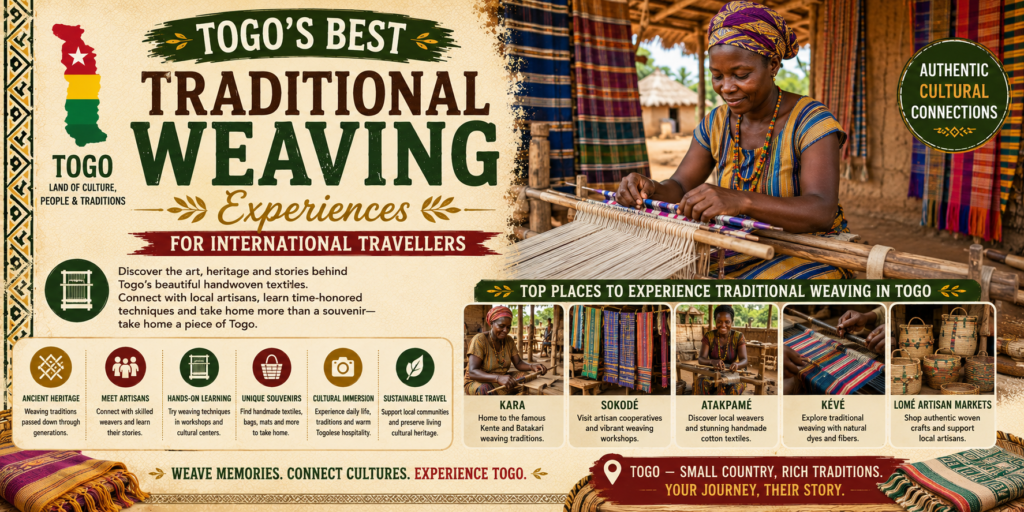
For generations, Togolese artisans have spun raw cotton into ceremonial, museum-grade cloth using rustic wooden foot-pedal looms. The rhythmic clack of the wooden shuttle, the whir of drop spindles, and the earthy aroma of fermented indigo dye make Togo an essential destination for anyone fascinated by living craft traditions.
If you are planning an authentic cultural journey across West Africa, here is your practical guide to the top traditional weaving hubs, artisan villages, and hands-on textile workshops in Togo.
Why Togo’s Handwoven Textiles Stand Out
Unlike industrial roll fabrics, Togo’s traditional textiles are produced strip by strip on narrow-band looms, rarely exceeding 4 to 6 inches in width. Master tailors then stitch dozens of these bands together by hand to create sweeping ceremonial wraps, tunics, and wall hangings.
Three elements set Togolese weaving apart:
- Indigenous Cotton: In rural communities, cotton bolls are hand-harvested, hand-carded, and spun on wooden spindles without electric machinery.
- Symbolic Color Schemes: In southern Ewe and northern Kabyé traditions, colors convey status and intent: gold signifies prosperity and royal lineage, blue reflects peace and spiritual calm, and red represents vitality and courage.
- Guild Knowledge: Loom engineering, tension mathematics, and warp configurations are passed down through family lines, safeguarding geometric symbols that carry distinct cultural proverbs.
4 Best Places to Experience Traditional Weaving in Togo
1. Village Artisanal de Kpalimé (Kloto Region)
Kpalimé, nestled in the green hills of Mount Agou about two hours north of Lomé, serves as Togo’s undisputed artistic hub. The Village Artisanal de Kpalimé is an open, friendly setting where visitors can watch master craftsmen up close.
- The Experience: Walk under shaded open-air canopies where weavers sit inside double-pedal pit looms, operating wooden treadles in fluid rhythm while shuttles glide between warp threads.
- Hands-On Opportunities: Resident weavers frequently host half-day introductory sessions. You can learn to thread a shuttle, establish consistent tension, and weave your own custom table runner or scarf to take home.
- Bonus: The village is equally acclaimed for traditional batik dyeing, wood sculpture, and pottery.
2. Le Village Artisanal & Grand Marché (Lomé)
If your itinerary stays centered in the capital, Lomé provides immediate access to both weaving guilds and heritage textile markets.
- The Experience: Stop by the Village Artisanal de Lomé along Avenue de la Nouvelle Marche. Here, weavers from southern maritime communities and northern provinces assemble strip cloths into bespoke blankets, stoles, and modern-cut fashion pieces.
- Where to Shop: Head straight into the vibrant aisles of Lomé’s legendary Grand Marché (Assigamé). While the lower levels are dominated by the famous fabric merchants (Nana Benz), the upper mezzanines and adjacent craft alleys house stalls with vintage handwoven textiles sourced from rural cooperatives.
Travel Planning Tip: If you intend to travel beyond Lomé to explore regional weaving cooperatives upcountry, make sure your entry permits are organized beforehand. You can review your requirements and verify your Togo e-Visa travel eligibility online before finalizing your overland itinerary.
3. Kara and the Kabyé Weaving Villages (Northern Togo)
Venturing north into the Kara region reveals a weaving tradition closely aligned with local agricultural and harvest rhythms.
- The Experience: Around Kara and the rocky slopes of Kozah, women clean and hand-spin raw bolls into sturdy, textured yarn. Male weavers set up long-frame looms under mango trees or open verandas to take advantage of natural light and cool breezes.
- What Makes It Special: Northern textiles are typically heavier and denser than their southern counterparts. They feature clean indigo-and-white strip patterns, unbleached ecru bases, and earthy mineral tones. Visiting a family compound here lets you witness the full lifecycle of a garment—from raw cotton flower to finished textile.
4. Sokodé & The Central Region
Sokodé is home to the Tem (Kotokoli) people, famed throughout West Africa for their ceremonial dress—most notably the grand embroidered tunics worn during the annual Gadao-Adossa festival.
- The Experience: Weavers here produce broad cotton strips that are treated in traditional indigo pits before undergoing intricate freehand embroidery. Visiting local cooperatives reveals how weaving and heritage needlework blend seamlessly.
What to Expect in a Hands-On Weaving Workshop
Booking an apprentice-style workshop at an artisan cooperative gives you an immersive look at how these pieces are created from scratch:
| Step | Activity | Key Skill Learned |
|---|---|---|
| 1. Fiber Preparation | Carding & Drop-Spindle Spinning | Drawing raw cotton into uniform, resilient thread. |
| 2. Warping the Frame | Setting Thread Tension | Calculating warp lengths and anchoring threads to maintain even pull. |
| 3. Operating the Loom | Treadle & Shuttle Coordination | Alternating foot pedals to lift the heddles while throwing the wooden shuttle. |
| 4. Finishing | Edge Binding & Fringing | Trimming the strip cleanly from the frame and finishing edges. |
Practical Note: Wear light, breathable clothing and bring bottled water, as open-air craft compounds stay warm through midday.
Respectful Etiquette for Visitors & Collectors
- Always Greet First: Politeness is fundamental in Togolese culture. Begin every encounter with a warm greeting in French (Bonjour Monsieur/Madame) or Ewe (Woezor) before asking questions or taking photos.
- Ask Before Taking Photos: Never photograph an artisan or their family compound without explicit verbal permission.
- Support Fair Wages: Modest bargaining is common in open city markets, but craft cooperative pricing reflects fair compensation for days of manual work. Paying the posted price directly supports local artisan families.
- Keep Cash on Hand: Rural workshops do not accept cards. Carry small denominations of West African CFA Francs (XOF) for purchases and tips.
Planning Your Textile Journey: Travel & Visa Essentials
Before booking hands-on workshops in Kpalimé or exploring the textile markets of Lomé, international travellers must ensure their travel paperwork and entry visas are secured. Most foreign visitors require an approved visa prior to arrival in the Republic of Togo.
Why Choose Our Travel Visa Services?
- Reliable Travel Visa Services: Our global, proven approach has guided thousands of independent travellers and cultural groups through the visa acquisition process.
- Round-the-Clock Assistance: Reach out to our dedicated support desk 24/7; our visa specialists respond quickly to ensure all questions are resolved within 72 hours.
- Experienced Visa Consultants: Receive hands-on document reviews and step-by-step guidance to ensure your application meets official entry criteria the first time.
- Efficient Visa Application Process: Skip bureaucratic confusion and apply for your visa in minutes using our clear, simplified application platform.
Ready to embark on an unforgettable cultural journey through Togo’s weaving villages? Verify your status and start your paperwork today through the Togo E-Visa Eligibility Portal.

