 WhatsApp Us Now

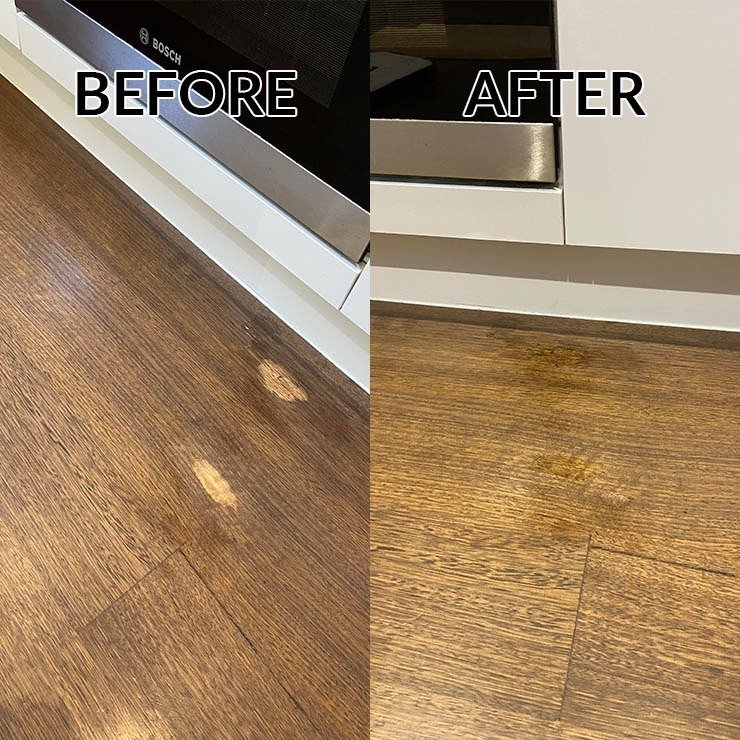
Floors face daily wear from footsteps, pets and spills. Furniture often drags across timber, dropped pots can crack tiles, and everyday grit wears down both. Replacing a whole floor is costly and disruptive. In many cases, targeted timber scratch repair restores the surface at a fraction of the price. The same is also applicable for broken tile.
Timber Scratch Repair: Matching the Method to the Damage
The first step is to judge how deep the mark runs. Run a fingernail across the scratch. If it does not catch up, the damage is likely limited to the finish. If it catches, the timber itself has been cut or dented.
Each level of damage calls for a different approach.
- Light marks: Clean the area, then buff it with a suitable polish or touch-up product to blend the finish.
- Moderate scratches: Use a wax filler stick or coloured marker that matches the timber tone, then wipe away the excess.
- Deep gouges: Fill the gap with timber filler, sand it level and apply a matching finish over the top.
Colour matching is the most common challenge. Timber ages and darkens over time, so a new product can look different from the surrounding floor. Test any filler or stain in a hidden spot first. Always work along the grain, as cross-grain sanding leaves marks that are hard to remove. Where scratches cover a large area, sanding and recoating a full section may give a more even result.

Broken Tile Repair: Fixing Chips and Cracks
Tiles are hard, but they are also brittle. A heavy impact can chip an edge or crack the surface. Movement on the floor beneath can also split a tile over time. Before any work begins, it helps to find the cause. A repair will not last if the underlying problem remains.
Small chips can often be filled with a tile repair compound or epoxy filler. The filler is tinted to match the tile, pressed into the damaged area and smoothed flat. Once cured, it can be lightly sanded for a neat finish. This approach suits minor edge damage and shallow surface marks.
Cracked or broken tiles usually need replacement. The damaged tile is carefully removed, the base is cleaned, and a new tile is set with fresh adhesive. Matching the new tile to the old one can be difficult, so keeping spare tiles from the original installation is a wise habit. Also check the grout, as cracked or missing grout lets moisture reach the base.
Tapping the surrounding tiles with a coin can reveal further problems. A hollow sound often means the tile has come loose underneath and may crack next.
When to Call a Professional
Minor marks suit a careful do-it-yourself approach. Larger jobs are different. Extensive timber damage, water-affected boards or several loose tiles all call for skilled assessment. A professional has the tools to match finishes, level surfaces and fix the cause rather than only the symptom.


