 WhatsApp Us Now
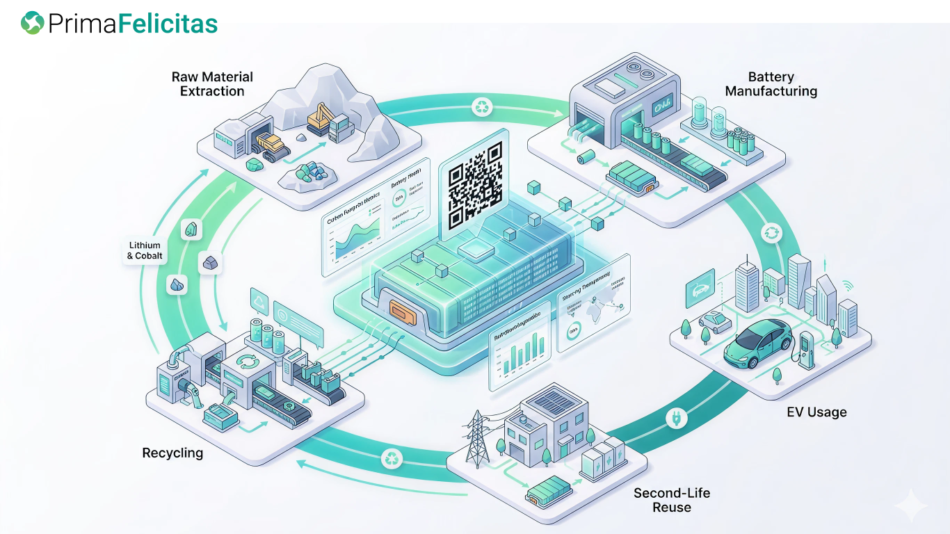
Digital battery passport solutions are reshaping the future of the electric vehicle industry by improving transparency, sustainability, and regulatory compliance across the battery lifecycle. As the global EV market continues to grow rapidly, governments and manufacturers are focusing on smarter technologies that ensure ethical sourcing, environmental responsibility, and efficient battery management. This is where the Digital Battery Passport becomes a game-changing innovation for the automotive and energy sectors.
A Digital Battery Passport is a secure digital record that stores complete information about a battery’s origin, materials, manufacturing process, carbon footprint, performance, recycling status, and lifecycle history. It helps manufacturers, suppliers, recyclers, and consumers access reliable battery data in real time. With increasing environmental regulations and sustainability goals worldwide, businesses are investing heavily in advanced Battery Passport Solutions to stay compliant and competitive.
Why EV Compliance Is Becoming More Important
The electric vehicle industry is entering a new era where compliance is no longer optional. Governments and regulatory authorities are introducing strict guidelines for battery manufacturing, recycling, and traceability. The European Union Battery Regulation, for example, emphasizes sustainability, responsible sourcing, and carbon footprint transparency for EV batteries.
Traditional tracking systems are no longer enough to manage complex battery supply chains. Businesses now require modern Battery Traceability Solutions that provide end-to-end visibility into every stage of battery production and usage. These solutions help companies monitor raw materials, reduce risks, and maintain compliance with international standards.
By implementing a powerful Battery Traceability System, manufacturers can improve operational transparency while ensuring batteries meet environmental and safety regulations. This level of traceability also helps businesses build consumer trust and strengthen their sustainability initiatives.
The Role of Digital Battery Passport Technology
The Digital Battery Passport acts as a digital identity for every battery produced. It contains critical information such as battery chemistry, supplier data, carbon emissions, maintenance records, and recycling history. This information can be securely shared across stakeholders using cloud-based technologies, blockchain integration, and smart analytics.
Modern Battery Passport Platform Development enables organizations to create intelligent systems capable of managing vast amounts of battery data efficiently. These platforms help automate compliance reporting, optimize battery performance monitoring, and support circular economy practices.
With the rise of EV adoption, companies are increasingly turning to Battery passport development solutions that provide scalable and customizable platforms for battery lifecycle management. These technologies are helping businesses future-proof their operations while simplifying complex compliance requirements.
Benefits of Battery Traceability Solutions
Advanced Battery Traceability Solutions offer several benefits for EV manufacturers, suppliers, and energy companies. One of the biggest advantages is enhanced supply chain transparency. Businesses can track every battery component from raw material sourcing to recycling, ensuring ethical and sustainable operations.
A modern Battery Traceability Solution also helps companies identify counterfeit components, improve quality control, and reduce operational risks. By using real-time data tracking and analytics, organizations can monitor battery health, optimize performance, and extend battery lifespan.
In addition, Battery Traceability Services support automated compliance management. Companies can quickly generate reports for regulators, reduce manual documentation, and maintain accurate records across the entire supply chain. This improves operational efficiency while minimizing compliance-related penalties and delays.
Another important advantage is sustainability. Battery traceability technologies support recycling and reuse initiatives by providing accurate lifecycle data. This allows manufacturers and recyclers to recover valuable materials more efficiently and reduce environmental impact.
How Battery Passport Platform Development Supports Innovation
As EV ecosystems become more advanced, businesses need scalable digital platforms that can handle increasing amounts of battery-related data. This is where Battery Passport Platform Development plays a critical role.
A well-designed battery passport platform integrates data from manufacturers, suppliers, charging networks, logistics providers, and recyclers into a centralized system. It provides real-time visibility into battery performance, ownership history, environmental impact, and maintenance activities.
Organizations investing in Battery Traceability Platform Development gain access to advanced analytics, AI-powered insights, and automated workflows that improve decision-making and operational efficiency. These platforms also help businesses comply with evolving regulations while supporting innovation in battery technology and energy management.
Custom-built solutions allow businesses to adapt platforms according to their unique operational requirements. From data security and blockchain integration to IoT connectivity and cloud infrastructure, businesses can create intelligent systems tailored to their industry needs.
Why Businesses Need Custom Digital Battery Passport Solutions
Every organization operates differently, which is why Custom digital battery passport solutions are becoming increasingly popular across the EV industry. Generic software often fails to address complex compliance requirements, supply chain structures, and sustainability goals.
Custom solutions allow businesses to design platforms that align with their specific workflows, regulatory requirements, and operational processes. These systems can integrate seamlessly with existing enterprise software, manufacturing systems, and logistics platforms.
A customized Battery Traceability System also improves data accuracy and operational efficiency by automating battery tracking and reporting processes. Businesses can gain better control over inventory management, quality assurance, and lifecycle monitoring while reducing manual errors.
Moreover, Custom digital battery passport solutions provide scalability for future growth. As regulations evolve and EV production increases, businesses can expand their systems without disrupting existing operations. This flexibility is essential for long-term digital transformation and sustainability initiatives.
The Future of Sustainable EV Ecosystems
The future of electric mobility depends heavily on sustainability, transparency, and responsible battery management. Governments, consumers, and investors are demanding more accountability from EV manufacturers and battery suppliers. Businesses that fail to adapt to these changes may struggle to remain competitive in the evolving market.
Battery Passport Solutions are expected to become a standard requirement across global EV supply chains. Companies that adopt advanced Battery Traceability Solutions today will gain a significant advantage by improving compliance readiness, operational transparency, and customer trust.
Emerging technologies such as blockchain, artificial intelligence, IoT, and cloud computing will continue to strengthen Battery Traceability Platform Development. These innovations will enable businesses to create smarter systems capable of delivering real-time insights, predictive analytics, and automated sustainability reporting.
In the coming years, Digital Battery Passport technology will also support second-life battery applications and circular economy initiatives. Batteries used in electric vehicles can be repurposed for energy storage systems, reducing waste and improving resource efficiency. Accurate lifecycle data will be critical in enabling these sustainable practices.
Choosing the Right Battery Passport Development Partner
Implementing a successful battery passport system requires expertise in software development, compliance management, data security, and supply chain integration. Businesses should partner with experienced technology providers that specialize in Battery passport development solutions and Battery Traceability Services.
The right development partner can help organizations build secure, scalable, and future-ready platforms tailored to their operational goals. From strategy and architecture design to implementation and support, expert developers ensure seamless digital transformation across EV ecosystems.
Companies should look for providers with experience in Battery Passport Platform Development, blockchain integration, cloud infrastructure, and analytics solutions. A reliable technology partner can help businesses reduce compliance risks, improve sustainability performance, and accelerate innovation.
Conclusion
The future of EV compliance starts with intelligent Digital Battery Passport technology that supports sustainability, transparency, and lifecycle management. As regulations become stricter and consumer expectations continue to rise, businesses must adopt advanced Battery Traceability Solutions to stay ahead in the competitive EV market.
From Battery Traceability System implementation to large-scale Battery Traceability Platform Development, digital innovation is transforming how batteries are tracked, managed, and recycled. Organizations investing in Battery Passport Solutions and Custom digital battery passport solutions will be better positioned to achieve compliance, optimize operations, and support long-term sustainability goals.
The EV industry is rapidly evolving, and digital transformation is no longer a choice—it is a necessity. By leveraging modern Battery Passport Platform Development and reliable Battery Traceability Services, businesses can build smarter, greener, and more transparent EV ecosystems for the future.


