 WhatsApp Us Now

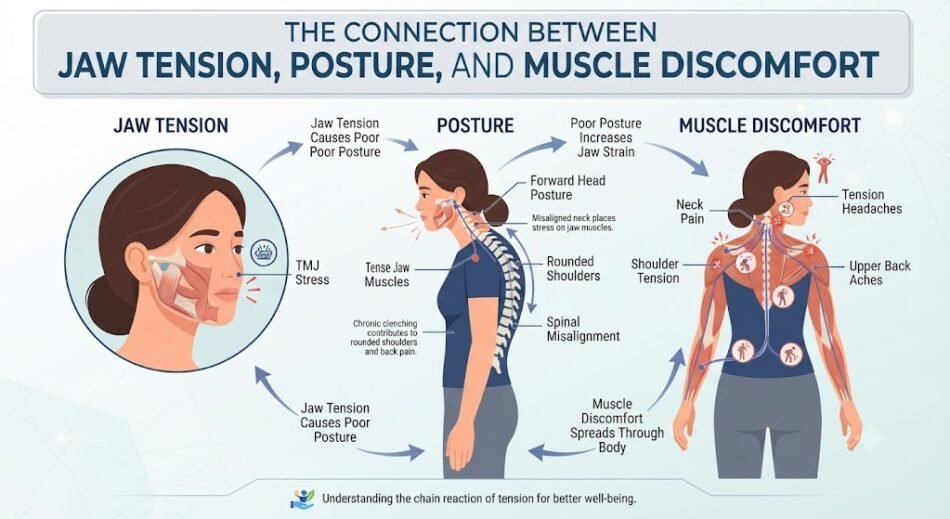
Jaw discomfort and muscle tension can affect everyday activities such as eating, speaking, working, and resting. These symptoms may develop gradually when muscles around the jaw, neck, and shoulders experience repeated strain. Daily habits, stress, sleeping positions, and body posture can all influence how these areas feel and function.
The body works as a connected system, meaning discomfort in one area can sometimes occur alongside tension in another. Understanding these relationships can help people recognise possible contributing factors and make practical changes to support their comfort and mobility. A balanced approach that considers movement, relaxation, and professional assessment can be useful when symptoms persist.
Understanding Jaw Joint Function and Muscle Tension
The temporomandibular joint connects the lower jaw to the skull and allows the mouth to open, close, and move during chewing and speaking. Healthy joint movement depends on coordination between the joint, surrounding muscles, and supporting structures.
Temporomandibular joint dysfunction describes problems affecting the jaw joint and the muscles responsible for its movement. Symptoms can include jaw clicking and stiffness, tenderness around the face, headaches, and difficulty opening the mouth comfortably. However, clicking alone does not necessarily indicate a serious problem.
Several factors may contribute to jaw discomfort, including teeth clenching, grinding, stress, previous injuries, and changes in how the jaw moves. When considering what causes tmj symptoms, it is important to recognise that different people may experience different contributing factors. A proper assessment helps distinguish temporary muscular tension from joint-related problems that may require specific treatment.
The Relationship Between Posture and Jaw Discomfort
Posture influences how the head, neck, shoulders, and upper back work together. Spending long periods looking down at a phone or leaning toward a computer screen may encourage the head to move forward. This position can increase demands on the muscles that support the head and neck.
Over time, posture-related muscle strain may contribute to neck and shoulder tightness. Some people also notice facial muscle tension when they are concentrating, feeling stressed, or holding their jaw tightly without realising it.
The relationship between posture and jaw symptoms is not identical for everyone. Poor posture does not automatically cause a jaw disorder, and improving posture alone may not resolve an underlying joint problem. Nevertheless, comfortable positioning, regular movement, and reduced muscular strain can form part of a broader approach to managing discomfort.
People seeking help for upper back pain kl may also benefit from an assessment that considers their daily working positions, neck movement, and shoulder mobility, particularly when discomfort occurs alongside jaw tension.
Everyday Habits That May Increase Muscle Discomfort
Daily routines can influence muscle activity more than people realise. Repeated clenching, chewing hard foods when the jaw is irritated, leaning forward while working, and remaining in one position for extended periods may contribute to discomfort.
Stress can also encourage unconscious jaw tightening. When this happens repeatedly, the muscles around the cheeks, temples, and jaw may feel tired or tender. Some individuals experience headaches or a sensation of pressure around the face.
These habits may overlap with upper back muscle discomfort, especially when the shoulders remain raised or the neck stays in a fixed position for long periods. Recognising these patterns provides an opportunity to make small, manageable adjustments.
A comfortable workstation, relaxed shoulders, regular breaks, and awareness of jaw clenching can help reduce unnecessary muscular effort. These measures are supportive rather than a guaranteed treatment, and persistent or worsening symptoms deserve professional attention.
Practical Ways to Support Jaw and Postural Comfort
A gentle, consistent approach is generally preferable to forcing movement through pain. The aim is to reduce unnecessary tension while maintaining comfortable everyday movement.
- Maintain a relaxed jaw: Keep the teeth slightly apart when not eating, allowing the jaw muscles to rest naturally.
- Improve workstation positioning: Place the screen at a comfortable viewing height and keep the shoulders relaxed instead of reaching forward.
- Take movement breaks: Change position regularly and gently move the neck and shoulders within a comfortable range.
- Choose comfortable foods during flare-ups: Softer foods may temporarily reduce the effort required for chewing when the jaw is painful.
- Practise relaxation: Slow breathing and other calming activities may help reduce stress-related clenching.
- Avoid aggressive stretching: Forceful jaw movements or exercises that increase pain may aggravate symptoms.
These strategies may help reduce facial muscle tension, neck and shoulder tightness, and posture-related muscle strain. Their usefulness depends on the underlying cause and the individual’s response.
Professional Assessment and Individualised Care
Persistent jaw symptoms can have several explanations, so assessment is important before beginning a treatment plan. A dentist or appropriately qualified healthcare professional can evaluate jaw movement, tenderness, and other relevant symptoms. Depending on the findings, further assessment or referral may be appropriate.
For individuals experiencing upper back pain kl alongside jaw discomfort, an evaluation of neck mobility, shoulder movement, working habits, and general posture may help identify areas that need attention.
Conservative care may include education, activity adjustments, relaxation techniques, and appropriate exercises guided by a qualified professional. Physiotherapy may be considered when muscular or movement-related factors contribute to the problem. Treatment should be tailored to the person’s symptoms rather than based on posture alone.
When exploring what causes tmj discomfort, it is equally important to consider symptoms that may require prompt medical attention. Severe or sudden pain, significant swelling, jaw locking, or difficulty eating and drinking warrants timely professional evaluation. New facial weakness, chest pain, or difficulty breathing requires urgent medical attention.
Conclusion
Jaw tension and muscle discomfort can involve several overlapping factors, including daily habits, stress, movement patterns, and posture. Paying attention to these influences may help people make informed choices about their routines and recognise when professional guidance is needed.
Take the next step toward better comfort and movement. If jaw stiffness or muscular discomfort continues to interfere with everyday activities, arrange an assessment with an appropriately qualified healthcare professional. A personalised approach can help identify contributing factors and guide suitable care.


