 WhatsApp Us Now

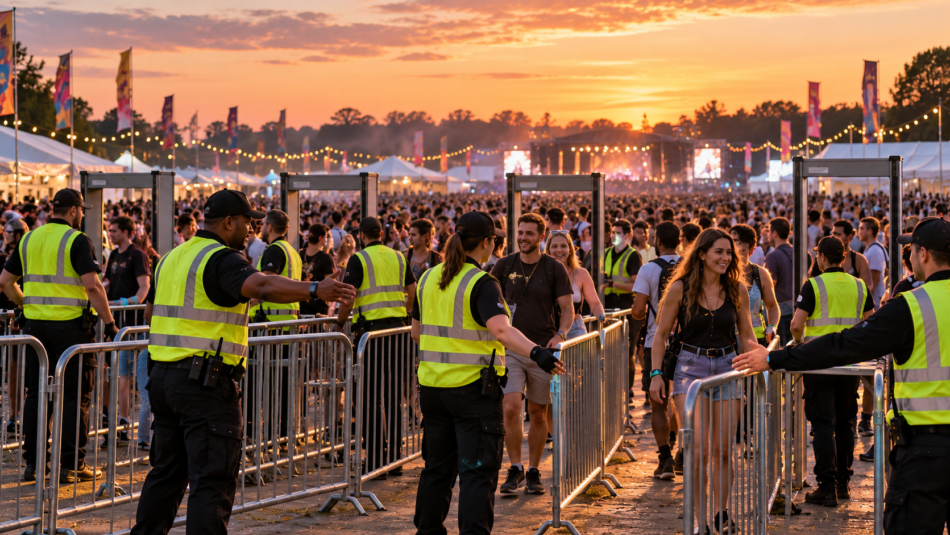
Long queues at the gate, crowded walkways and a bar that nobody can reach. These are the moments that turn a great line-up into a bad night out. For any organiser, good event security is not just about stopping trouble. It is about keeping thousands of people safe, calm and moving in the right direction.
Whether you run a festival, a concert or a busy venue, the right team makes all the difference. Working with trained event security London teams, stewards and supervisors helps you plan for crowds before they arrive. This guide explains who does what, how crowd flow works, and how to build a team that keeps your event running smoothly.
What Is the Difference Between Security Staff and Stewards?
Security staff deal with risks and threats, while stewards guide and help the crowd. Both roles matter, and most large events need a mix of the two.
Here is a simple breakdown:
- Security officers protect people, property and the venue. They deal with conflict and incidents.
- Door supervisors manage entry, check tickets and ID, and decide who can come in. In the UK, they need an SIA licence.
- Event stewards guide guests, manage queues, give directions and watch for problems.
- Supervisors and chief stewards lead teams, track crowd numbers and talk to the control room.
A clear split of roles means nobody is guessing on the day.
Why Does Crowd Flow Matter So Much?
Crowd flow is how people move into, around and out of your event. When it works, guests barely notice. When it fails, it causes frustration, delays and real safety risks.
Good crowd management focuses on the busiest moments:
- Gates opening, when large numbers arrive at once
- Headline acts, when everyone moves towards the main stage
- Bars, toilets and food areas, where queues build up fast
- Closing time, when the whole crowd leaves together
Planning for these peaks helps you place the right number of stewards in the right places. It also helps you decide where barriers, signs and extra exits are needed.
How Do You Plan Event Security for a Large Crowd?
Every strong security plan starts with a risk assessment. This looks at your venue, your audience, your timings and anything that could go wrong.
A practical plan should cover:
- Expected crowd size and how fast people will arrive
- Entry points and search or screening needs
- Busy zones where crowds may build up
- Emergency routes and how to clear the site quickly
- Communication, including radios and a clear chain of command
- Vulnerable people, such as lost children or guests who feel unwell
Share the plan with every team leader before the event. A short briefing on the day helps everyone understand their role, their zone and who to call.
How Is Martyn’s Law Changing Event Security?
Martyn’s Law (the Terrorism (Protection of Premises) Act 2025) will place new security duties on many UK venues and events. The Security Industry Authority (SIA) will act as the regulator, and enforcement is expected from 2027.
For organisers and venues, this means security planning will need to be more formal. It is a good time to:
- Review how your team would respond to a serious incident
- Check that staff are trained and know the emergency plan
- Keep clear records of your security procedures
- Work with suppliers who understand these new duties
What Makes a Good Security and Stewarding Team?
The best teams are trained, licensed and good with people. Guests remember how staff treated them, so a friendly approach matters just as much as firm control.
When choosing a team, look for:
- Valid SIA licences for security officers and door supervisors
- Training in crowd management, queue control and conflict handling
- Vetting, including DBS checks and verified references
- Experience at events of a similar size and type
- Clear communication skills, especially when things get busy
It also helps to work with the same supplier for each event. A familiar team learns your site, your standards and your audience.
What Should Happen on Event Day?
On the day itself, the plan only works if everyone follows it. A short, clear routine keeps your security team focused from the first guest to the last.
A good event-day routine includes:
- A full team briefing before gates open, covering zones, risks and radio channels
- Regular radio checks between supervisors and the control room
- Live crowd monitoring at gates, stages and bars, with staff moved where needed
- Quick incident reports, so problems are logged and dealt with fast
- A short debrief after the event to note what worked and what needs to change
These simple habits help small issues stay small, and give you useful notes for your next event.
Frequently Asked Questions
Do event stewards need an SIA licence?
Not always. Stewards who only guide crowds, manage queues and give directions usually do not need one. But anyone carrying out licensable security tasks, such as door supervision or searching guests, must hold a valid SIA licence.
How many stewards does an event need?
It depends on the crowd size, the venue layout, the type of event and the risk level. Your risk assessment should guide the numbers. An experienced security supplier can review your plans and recommend the right team.
What is crowd management at events?
Crowd management means planning and controlling how people arrive, move around and leave an event. It covers queues, routes, barriers, signs, staff positions and emergency plans, all to keep guests safe and comfortable.
When should I book security for a festival?
For festivals and large events, start planning 8 to 12 weeks ahead, or earlier for peak summer dates. This gives time for risk assessments, briefings and booking the right number of trained staff.
Final Thoughts & Conclusion
Safe events do not happen by luck. They come from good planning, the right mix of security staff and stewards, and a team that knows how crowds behave at busy moments.
Start with a clear risk assessment, plan for peak times, prepare for new duties under Martyn’s Law and choose licensed, well-trained people. Get these basics right, and your guests will remember the event for the right reasons.
If you need security officers, door supervisors or event stewards in London, Birmingham, Manchester or Liverpool, Soundboy Crew can supply trained and licensed teams, including large numbers at short notice. Check availability and get your security plan in place early.
