 WhatsApp Us Now
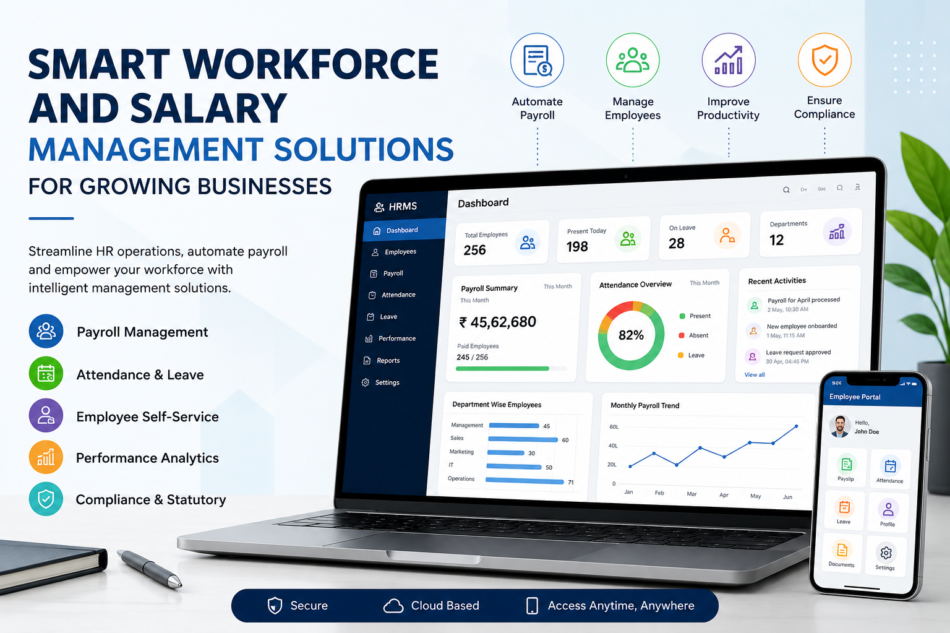
Managing employees, payroll, attendance, and compliance can become difficult as businesses grow. Companies today need smart digital solutions that simplify workforce operations while improving employee satisfaction. Modern workforce management platforms help organizations automate HR tasks, reduce manual errors, and improve productivity across departments. Businesses that invest in efficient HR systems can manage recruitment, attendance, payroll, and employee records from a single platform.
Many organizations are now adopting advanced solutions like Payroll Software Hyderabad to streamline salary processing and maintain accurate payroll records. These tools help businesses save time, improve compliance, and create a better experience for employees and HR teams alike.
The Growing Need for Smart Workforce Management
As companies expand, handling workforce operations manually becomes inefficient. HR teams often struggle with employee attendance tracking, leave approvals, payroll calculations, tax compliance, and performance management. Without proper systems, businesses may face payroll delays, compliance issues, and employee dissatisfaction.
Smart workforce management solutions automate these tasks and provide centralized access to employee information. This allows HR departments to focus more on strategic activities such as employee engagement, talent development, and organizational growth.
Businesses across industries such as manufacturing, retail, healthcare, IT, logistics, and hospitality are increasingly relying on digital HR platforms to improve operational efficiency and workforce coordination.
Simplifying Payroll Operations
Payroll management is one of the most critical responsibilities of any organization. Manual payroll processing can lead to errors in salary calculations, tax deductions, overtime tracking, and employee benefits management. Even a small mistake can affect employee trust and company compliance.
Modern payroll systems automate salary calculations based on attendance, leave records, overtime, incentives, and deductions. These solutions also generate payslips, tax reports, and compliance documents automatically, reducing administrative burden.
Automated payroll systems help businesses:
- Process salaries faster
- Reduce payroll errors
- Ensure timely employee payments
- Maintain statutory compliance
- Improve payroll transparency
- Generate accurate financial reports
With automation, HR and finance teams can avoid repetitive manual work and focus on improving overall organizational performance.
Attendance and Leave Management Made Easy
Tracking employee attendance manually can become challenging for growing companies. Traditional methods often create confusion, increase paperwork, and consume valuable HR time.
Smart attendance systems allow businesses to monitor employee working hours, shifts, overtime, and leave requests digitally. Employees can apply for leave online, while managers can approve or reject requests instantly through centralized dashboards.
Advanced attendance management solutions also support:
- Biometric integration
- Mobile attendance tracking
- GPS-based attendance
- Shift scheduling
- Remote workforce monitoring
- Real-time attendance analytics
These features help organizations maintain accurate attendance records while improving workforce accountability.
Enhancing Employee Experience
Employee satisfaction plays a major role in business growth and retention. Modern workforce management platforms improve communication, transparency, and employee engagement through self-service portals and mobile access.
Employees can easily:
- View payslips
- Check attendance records
- Apply for leave
- Update personal information
- Access company policies
- Track performance reviews
This level of accessibility reduces dependency on HR teams and improves overall employee experience.
A positive employee experience leads to better productivity, higher retention rates, and improved workplace morale.
Data-Driven HR Decision Making
Modern HR platforms provide valuable insights through analytics and reporting tools. Businesses can analyze employee performance, attendance trends, payroll expenses, turnover rates, and workforce productivity using real-time dashboards.
These insights help management teams make informed decisions regarding:
- Workforce planning
- Recruitment strategies
- Employee performance improvements
- Budget allocation
- Department productivity
- Training and development programs
Data-driven decision-making allows businesses to identify operational gaps and improve workforce efficiency over time.
Supporting Compliance and Accuracy
Compliance management is a major concern for growing businesses. Labor laws, tax regulations, and statutory requirements frequently change, making manual compliance management difficult.
Automated HR and payroll systems help organizations maintain compliance by generating accurate reports and updating tax calculations automatically. Businesses can avoid penalties, reduce legal risks, and maintain proper employee documentation with ease.
Compliance features often include:
- PF and ESI calculations
- Tax deductions
- Statutory reporting
- Employee record management
- Audit-ready documentation
- Automated alerts for deadlines
These capabilities provide businesses with greater confidence and operational security.
Scalability for Growing Businesses
One of the biggest advantages of smart workforce solutions is scalability. As businesses expand, their workforce management requirements also grow. Cloud-based HR platforms can easily adapt to increasing employee numbers, multiple office locations, and changing organizational structures.
Scalable solutions help businesses:
- Add new employees quickly
- Manage multiple branches
- Support remote teams
- Customize workflows
- Expand HR operations efficiently
This flexibility ensures that companies can continue using the same platform even as their operations become more complex.
Cloud-Based Accessibility and Security
Cloud-based workforce management systems allow businesses to access HR information securely from anywhere. This is especially important for organizations with remote employees or multiple office locations.
Cloud platforms provide:
- Secure data storage
- Real-time system access
- Automatic backups
- Reduced IT maintenance
- Better collaboration
- Remote accessibility
Employees and HR teams can access important information anytime using web or mobile applications.
Strong security measures such as encryption, role-based access, and secure login authentication help protect sensitive employee and payroll data from unauthorized access.
Improving Productivity Through Automation
Automation reduces repetitive HR tasks and minimizes administrative workload. HR teams no longer need to spend hours managing spreadsheets, calculating salaries, or tracking attendance manually.
Automated workflows improve operational efficiency by handling:
- Employee onboarding
- Salary processing
- Attendance monitoring
- Leave approvals
- Performance evaluations
- Document management
This increased efficiency helps businesses save time, reduce costs, and improve overall productivity.
The Future of Workforce Management
The future of workforce management is driven by automation, cloud technology, and artificial intelligence. Businesses are increasingly adopting intelligent HR systems to improve employee experiences and simplify operations.
Advanced platforms now offer features such as:
- AI-based recruitment
- Predictive workforce analytics
- Automated employee engagement tools
- Smart performance tracking
- Mobile-first HR management
- Integrated communication systems
Organizations that embrace modern HR technologies gain a competitive advantage by improving efficiency, employee satisfaction, and operational control.
Today, businesses looking for comprehensive HR automation are investing in solutions like HRMS Software Hyderabad to manage workforce operations more effectively while supporting long-term business growth.
Conclusion
Smart workforce and salary management solutions have become essential for growing businesses. These platforms simplify payroll processing, attendance tracking, compliance management, and employee engagement while improving operational efficiency.
By automating HR tasks and centralizing workforce data, businesses can reduce manual work, improve accuracy, and make better decisions. Modern workforce management systems not only support daily HR operations but also contribute to long-term organizational success.
As companies continue to expand and adapt to changing work environments, investing in intelligent HR and payroll solutions will remain a key strategy for sustainable growth and improved workforce management.


