 WhatsApp Us Now
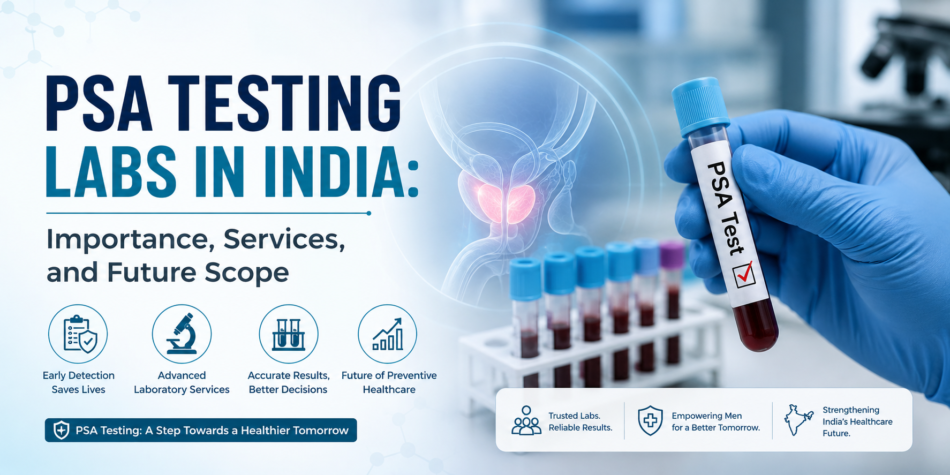
PSA testing has become an essential part of preventive healthcare and early disease diagnosis in India. With increasing awareness about prostate health among men, the demand for reliable PSA testing labs in India is growing rapidly. PSA, or Prostate-Specific Antigen, is a protein produced by the prostate gland, and elevated PSA levels may indicate prostate-related conditions such as prostate cancer, prostatitis, or benign prostatic hyperplasia (BPH).
Modern diagnostic laboratories across India now offer advanced PSA testing services with accurate reporting, fast turnaround times, and expert consultation support. These labs play a major role in helping doctors detect prostate disorders at an early stage and improve treatment outcomes.
This blog explores the importance of PSA testing labs in India, their services, technological advancements, benefits, and future opportunities in the healthcare sector.
What is PSA Testing?
PSA testing is a blood test used to measure the level of prostate-specific antigen in the bloodstream. The prostate gland naturally produces PSA, but abnormal levels may signal underlying health concerns.
Doctors usually recommend PSA tests for:
- Screening prostate cancer
- Monitoring prostate cancer treatment
- Detecting prostate enlargement
- Diagnosing prostate infections
- Evaluating urinary symptoms in men
PSA testing is especially important for men above the age of 50 or individuals with a family history of prostate cancer.
Importance of PSA Testing Labs in India
1. Early Detection of Prostate Cancer
One of the biggest advantages of PSA testing is early cancer detection. PSA testing labs in India help identify abnormal PSA levels before symptoms become severe, allowing timely medical intervention.
2. Growing Awareness About Men’s Health
Healthcare awareness campaigns and routine health checkups have increased awareness about prostate health. As a result, more people are opting for PSA testing services across the country.
3. Support for Preventive Healthcare
Preventive diagnostics are becoming a major focus in India’s healthcare system. PSA testing labs support preventive care by enabling regular screening and monitoring.
4. Advanced Diagnostic Infrastructure
Many Indian diagnostic laboratories now use modern analyzers, automated systems, and high-precision testing equipment to ensure accurate PSA results.
Types of PSA Tests Offered by Labs
1. Total PSA Test
This test measures the total amount of PSA in the blood. It is commonly used for prostate cancer screening.
2. Free PSA Test
The free PSA test measures PSA that is not attached to proteins in the blood. It helps doctors differentiate between cancer and non-cancerous prostate conditions.
3. PSA Ratio Test
This test compares free PSA to total PSA levels, improving diagnostic accuracy.
4. Ultrasensitive PSA Test
Ultrasensitive PSA testing is used for monitoring patients after prostate cancer treatment or surgery.
Services Provided by PSA Testing Labs in India
Modern PSA testing laboratories offer a wide range of diagnostic and patient support services.
1. Blood Sample Collection
Labs provide convenient blood sample collection through:
- In-lab testing
- Home sample collection
- Hospital-based collection centers
- Mobile diagnostic services
2. Fast and Accurate Reporting
Most advanced labs provide same-day or next-day reports using automated testing systems.
3. Online Report Access
Digital healthcare platforms now allow patients to access reports online through websites or mobile apps.
4. Doctor Consultation Support
Some laboratories collaborate with urologists and healthcare professionals for medical guidance after PSA testing.
5. Comprehensive Health Packages
Many diagnostic labs include PSA testing in:
- Men’s health packages
- Cancer screening packages
- Preventive health checkups
- Senior citizen wellness programs
Technologies Used in PSA Testing Labs
1. Immunoassay Technology
Most PSA tests are performed using immunoassay-based analyzers that provide highly accurate antigen detection.
2. Automated Laboratory Systems
Automation reduces human error and improves testing efficiency and consistency.
3. AI-Based Data Analysis
Artificial intelligence is gradually being integrated into diagnostic systems for improved result interpretation and predictive healthcare.
4. Cloud-Based Reporting
Modern labs use cloud systems for secure storage and fast digital report delivery.
Industries and Healthcare Sectors Benefiting from PSA Testing
1. Hospitals and Clinics
Hospitals rely on PSA testing labs for routine prostate health assessments.
2. Cancer Care Centers
Oncology centers use PSA testing for cancer detection and treatment monitoring.
3. Preventive Healthcare Programs
Corporate wellness and preventive healthcare providers include PSA testing in routine screening.
4. Telemedicine Platforms
Online healthcare platforms increasingly partner with diagnostic labs for remote PSA testing services.
Benefits of Choosing Reliable PSA Testing Labs in India
1. Accurate Diagnosis
Certified laboratories provide highly reliable PSA measurements for better clinical decisions.
2. Affordable Testing
India offers cost-effective diagnostic services compared to many international healthcare markets.
3. Wide Network Accessibility
Major diagnostic chains and regional labs ensure PSA testing availability across urban and semi-urban areas.
4. Quick Turnaround Time
Modern automation enables faster report generation and patient management.
5. NABL Accreditation
Many reputed labs are NABL-accredited, ensuring quality standards and reliable testing procedures.
Challenges Faced by PSA Testing Labs in India
Despite rapid growth, PSA testing laboratories face several challenges.
1. Limited Awareness in Rural Areas
Many people in smaller towns and villages still lack awareness about prostate health and PSA screening.
2. Variability in Testing Standards
Not all laboratories maintain the same quality standards, which can affect result consistency.
3. High-End Equipment Costs
Advanced diagnostic analyzers and automation systems require significant investment.
4. Shortage of Skilled Professionals
Trained laboratory technicians and pathology experts are essential for maintaining testing accuracy.
Future Scope of PSA Testing Labs in India
The future of PSA testing labs in India looks highly promising due to increasing healthcare awareness and technological advancement.
1. Expansion of Preventive Diagnostics
Preventive health checkups will continue driving PSA testing demand.
2. Growth of Home Healthcare Services
Home sample collection and telehealth integration are expected to grow significantly.
3. AI and Smart Diagnostics
Artificial intelligence will improve disease prediction and personalized healthcare.
4. Increased Government Healthcare Initiatives
Government programs promoting cancer awareness and early screening may increase PSA testing adoption.
5. Growth of Digital Pathology
Digital reporting and connected healthcare systems will further improve patient convenience and laboratory efficiency.
How to Choose the Best PSA Testing Lab in India
When selecting a PSA testing laboratory, patients should consider:
- NABL accreditation
- Experienced pathology team
- Advanced testing technology
- Fast report delivery
- Transparent pricing
- Home collection availability
- Positive customer reviews
Reliable laboratories ensure accurate results and better healthcare decisions.
Conclusion
PSA testing labs in India play a crucial role in early diagnosis, preventive healthcare, and prostate disease management. With growing awareness about prostate health, advanced laboratory technologies, and expanding healthcare infrastructure, PSA testing services are becoming more accessible and efficient across the country.
The future of PSA diagnostic services in India is expected to witness strong growth through automation, AI integration, digital healthcare, and preventive screening programs. Choosing a trusted and accredited PSA testing lab can significantly improve diagnostic accuracy and support timely medical treatment.
As healthcare continues to evolve, PSA testing laboratories will remain an important pillar in India’s diagnostic and preventive medicine landscape.


