 WhatsApp Us Now
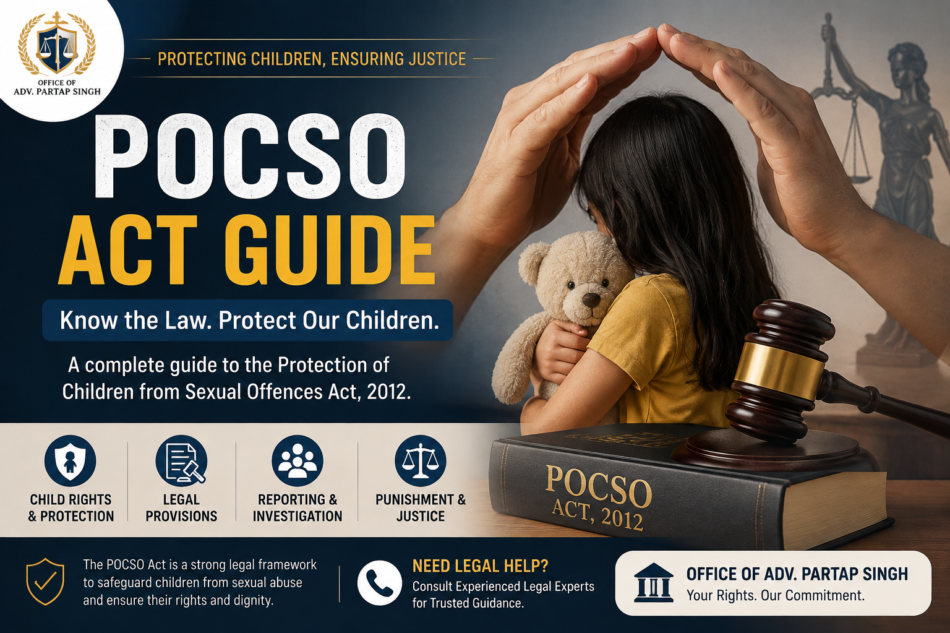
Every parent wants their child to grow up safe, confident, and protected from harm. Yet many parents in India are unaware of the legal framework that exists specifically to protect children from sexual offences. The POCSO Act, short for the Protection of Children from Sexual Offences Act, 2012, is one of the most important laws safeguarding minors in the country. Understanding this law isn’t just useful for legal professionals; it’s essential knowledge for every parent, guardian, and caregiver.
This guide breaks down the POCSO Act in plain language, explaining its key provisions, why it matters, and what steps parents should take if they ever need to act on behalf of a child. For a deeper look at how this law fits into India’s broader legal system, it’s worth exploring how it complements other child welfare and criminal statutes.
What Is the POCSO Act?
The POCSO Act was enacted in 2012 to create a comprehensive legal framework addressing offences against children, replacing the earlier reliance on general provisions of the Indian Penal Code that weren’t designed specifically for minors. The law defines a “child” as anyone below the age of 18 and applies uniformly regardless of gender.
Before this law existed, cases involving children were often processed the same way as adult cases, without recognizing the unique vulnerability of young victims. The Act changed this by introducing child-friendly procedures at every stage from reporting to investigation to trial — while also prescribing strict penalties for offenders. If you’re looking for a detailed breakdown of the POCSO Act’s full form, meaning, and legal purpose, it offers useful background for parents wanting a fuller legal picture.
Why Parents Need to Understand This Law
Many parents assume that legal matters like this are only relevant to lawyers, police officers, or school administrators. In reality, parents are usually the first line of defense and the first point of disclosure when something happens to a child. Knowing the basics of child protection laws in India helps parents:
- Recognize warning signs early
- Respond appropriately if a child discloses abuse
- Understand their legal rights and responsibilities
- Support their child through the reporting and legal process without causing additional trauma
Awareness also removes the fear and confusion that often prevents families from coming forward. A well-informed parent is a child’s strongest advocate.
Key Provisions of the POCSO Act
1. Broad Definition of Offences
The Act covers a wide spectrum of offences, including penetrative and non-penetrative sexual assault, sexual harassment, and the use of children for pornographic purposes. Each category carries its own defined punishment, and the law also recognizes “aggravated” forms of these offences, for instance, when the offender is a person in a position of trust or authority, such as a relative, teacher, or caregiver, which attract harsher sentences.
2. Mandatory Reporting Requirement
One of the most significant POCSO Act provisions is the mandatory duty to report. Under Section 19, any person, including parents, teachers, doctors, or neighbors — who has knowledge or reasonable suspicion that an offence has been committed against a child must report it to the police or a Special Juvenile Police Unit. Failure to report, in certain circumstances, can itself attract legal consequences. This provision exists to prevent silence and cover-ups, particularly within families or institutions.
3. Child-Friendly Investigation and Trial Process
The law mandates that statements be recorded in a manner that is not intimidating for the child. This includes:
- Recording the child’s statement at their residence or a place of their choice
- Ensuring a woman police officer (not below the rank of sub-inspector) records the statement
- Avoiding repeated questioning of the child
- Allowing a parent, guardian, or trusted person to be present during the recording of the statement
- Conducting trials in-camera (privately, away from public view) to protect the child’s identity
4. Special Courts and Time-Bound Trials
The Act mandates the establishment of Special Courts for the speedy trial of offences. These courts are designed to complete proceedings within a specific timeframe, recognizing that delayed justice can prolong trauma for the child and family.
5. Presumption in Favor of the Victim
Under Sections 29 and 30, the law presumes that the accused has committed the offence unless proven otherwise, effectively shifting the burden of proof onto the accused in certain cases. This is a significant departure from general criminal law and reflects the seriousness with which the legislature treats crimes against children.
6. Protection of Identity
Section 23 prohibits the media and any individual from disclosing the identity of the child victim, including their name, photograph, family details, school, or any information that could lead to identification, without permission from the Special Court. Violating this provision is a punishable offence.
7. Compensation and Rehabilitation
Beyond punishing the offender, the Act also provides for interim and final compensation to the victim for medical treatment, rehabilitation, and other needs, recognizing that recovery involves more than a legal verdict.
Parents should also be aware that the POCSO Act operates alongside other criminal law provisions, and cases involving children can sometimes intersect with related offences. For instance, in situations involving fatal negligence, it helps to understand how causing death by negligence is defined and punished under the new criminal code, since India’s evolving legal framework increasingly connects such provisions.
Recognizing Warning Signs at Home
While the law provides the legal backbone, parents also play a frontline role in prevention and early detection. Some signs that may warrant closer attention include sudden behavioral changes, withdrawal from usual activities, unexplained fear of a specific person or place, and age-inappropriate knowledge about sexual matters. It’s important to note that these signs alone don’t confirm abuse, but they are worth discussing sensitively with the child and, if needed, a trained counselor or pediatrician.
What to Do If a Child Discloses Something to You
If a child comes to you with a disclosure, how you respond matters enormously. Some general principles include:
- Stay calm. Children often gauge how serious something is by the adult’s reaction.
- Believe the child. False disclosures are rare, and disbelief can silence a child permanently.
- Avoid repeated questioning. Let trained professionals handle detailed questioning to avoid contaminating evidence or retraumatizing the child.
- Report promptly. Given the mandatory reporting requirement, timely action to the police or a Special Juvenile Police Unit is both a legal and moral responsibility.
- Seek legal guidance. Consulting a lawyer familiar with child protection cases, such as the Office Of Adv Partap Singh, can help parents understand the reporting process and their rights without navigating the system alone.
The POCSO Complaint Procedure: A Simplified Overview
Understanding the POCSO complaint procedure can reduce anxiety for parents who may otherwise hesitate out of fear of the unknown. Broadly, the process involves:
- Reporting the incident to the local police or Special Juvenile Police Unit.
- Recording of the First Information Report (FIR) and initiation of investigation. Parents unfamiliar with this stage may find it helpful to read what happens after an FIR is filed in India, which walks through the process step by step.
- Medical examination, conducted with consent and in a manner sensitive to the child’s comfort.
- Recording of the child’s statement before a Magistrate, in a supportive setting.
- Filing of the chargesheet by the investigating officer within the statutory timeframe.
- Trial before a Special Court, conducted in-camera, with the child’s identity protected throughout.
Legal professionals experienced in this area, such as the Office of Adv Partap Singh, for example, can guide families through each of these stages, ensuring procedural safeguards are respected, and the child’s welfare remains central throughout.
Building a Safer Environment for Children
Legal knowledge is one part of the equation; open communication is the other. Encouraging children to talk freely about their day, teaching them about personal boundaries and “good touch, bad touch” concepts from an early age, and maintaining approachable, non-judgmental conversations at home all contribute to a safer environment. When children know they will be believed and supported, they are far more likely to speak up when something feels wrong.
Conclusion
The POCSO Act exists to give children a fair, dignified, and protected path to justice, and understanding it empowers parents to act decisively rather than freeze in uncertainty. From mandatory reporting duties to child-friendly trial procedures and identity protection, this parents’ guide to POCSO Act essentials is meant to demystify a law that, at its heart, exists for one purpose: protecting the wellbeing of every child. Staying informed, watching for warning signs, and knowing where to turn for legal support are among the most meaningful steps any parent can take toward keeping their child safe.
If you need personalized legal guidance on a child protection matter, visit the Office Of Adv Partap Singh for experienced support tailored to your family’s situation


