 WhatsApp Us Now
With over 7,000 tropical islands, turquoise lagoons, and white-sand sandbars, the Philippines is one of the world’s premier destinations for sea adventures. From cruising through limestone cliffs in El Nido and Coron to exploring secluded coves in Siargao or diving with marine turtles in Apo Island, island hopping is the defining experience of any Philippine holiday.
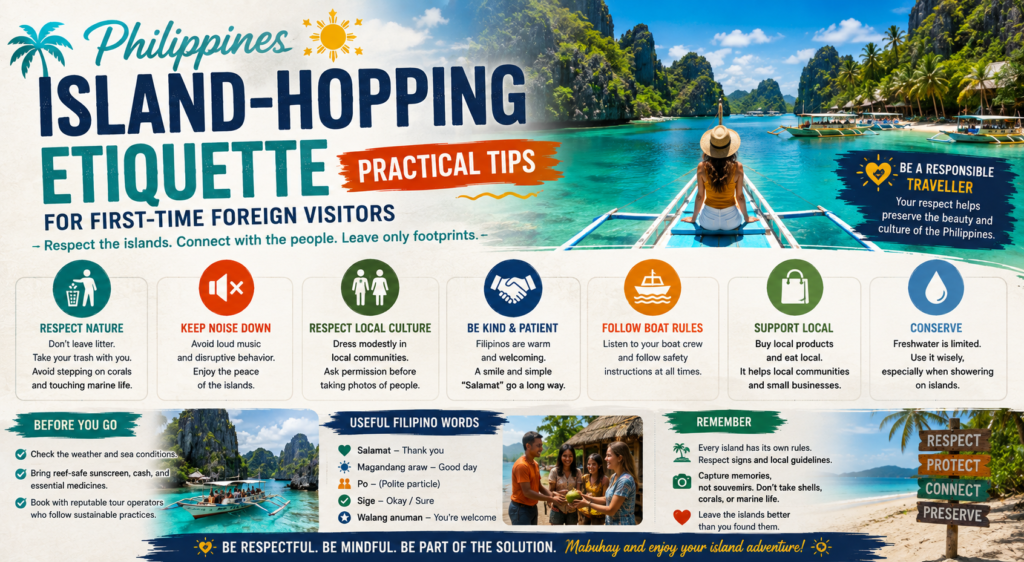
However, hopping from one remote islet to another aboard a traditional wooden bangka (outrigger boat) comes with its own set of unwritten rules, environmental laws, and cultural expectations. Being mindful of these practices ensures your safety, protects fragile marine ecosystems, and shows respect to the warm local communities hosting you.
Here is a practical, beginner-friendly guide to island-hopping etiquette in the Philippines.
1. Life on the Bangka: Boat Etiquette and Safety
The classic Philippine outrigger boat (bangka) is an engineering marvel designed for calm and choppy waters alike, featuring two long bamboo outriggers for balance. Because space is limited and conditions change quickly at sea, keep these rules in mind:
- Wear your life vest when departing: The Philippine Coast Guard (PCG) strictly enforces safety protocols. Coast Guard officers often inspect passenger boats before clearing them to leave port. Put your life jacket on when the boat pulls out; you can loosen or remove it once the captain gives the all-clear in calm waters.
- Keep the walkway clear: Bangkas have narrow wooden planks down the center. Avoid placing large backpacks, coolers, or fins in the aisles where the crew and other passengers need to step.
- Protect your electronics: Even on a sunny day, water sprays over the sides, and boarding often requires wading through waist-deep water. Invest in a sturdy dry bag (10L to 20L) before your tour.
- Mind your balance: Never stand up abruptly or lean heavily on one outrigger while the boat is in motion. If you need to move, keep low and hold on to the overhead frame.
2. Respecting Marine Sanctuaries and Wildlife
The Philippines sits in the Coral Triangle, the global epicenter of marine biodiversity. Keeping these waters pristine requires every visitor’s active cooperation.
Never Walk on or Touch Coral Reefs
Corals look like rocks, but they are delicate living animal colonies. Stepping on them crushes decades of growth and can cause painful coral cuts that infect easily.
- Avoid standing up in shallow water unless your feet are firmly on pure sand.
- While aqua shoes protect your feet from sharp rocks and sea urchins, they do not give you a license to walk across coral gardens.
Keep Wildlife in the Water
- Do not touch or lift starfish: A common sight on social media is tourists holding chocolate chip starfish or blue sea stars out of the water for photos. Exposing starfish to air suffocates them, and chemical residues from sunscreen on your fingers can harm their sensitive skin. Many municipalities levy heavy fines for this.
- Maintain distance from sea turtles and whale sharks: If you encounter sea turtles in Moalboal or Balicasag, give them a minimum buffer of 3 to 4 meters. Never chase them to the surface when they come up for air.
Choose Reef-Safe Sunscreen
Standard sunscreens containing oxybenzone and octinoxate bleach coral reefs and harm fish larvae. Switch to mineral-based sunscreens that rely on non-nano zinc oxide or titanium dioxide, or wear a long-sleeve UV rashguard to cut down on lotion use altogether.
3. The Golden Rule of Philippine Shores: Leave No Trace
Many of the most beautiful sandbars and hidden beaches have zero trash bins, meaning everything brought onto the island must leave with the boat.
- Single-use plastics are banned in many hubs: Destinations like El Nido, Coron, and Boracay enforce strict municipal bans on single-use plastic water bottles on day tours. Bring a refillable insulated tumbler; most tour operators provide a large water dispenser on board.
- Pack a small trash pouch: Keep snack wrappers, cigarette butts, and fruit peels inside your personal daypack until you return to your hotel or mainland port.
- Do not collect shells, sand, or coral pieces: Taking sand or sea shells as souvenirs is illegal in many tourist zones (including Boracay and marine protected reserves) and can lead to confiscation or fines at airport customs.
4. Dress Code: From Sandbar to Town
Filipinos are welcoming and relaxed, but everyday cultural norms lean modest, especially outside international resort zones.
- On the boat and beach: Bikinis, swim trunks, and board shorts are completely acceptable during island-hopping tours and at beach bars.
- In town and near ports: Walking through mainland villages, public markets, town centers, or local family eateries (carinderias) in only swimwear without a cover-up can be viewed as disrespectful. Slip on a dry T-shirt, sarong, or shorts once your tour boat docks.
- Visiting local churches: If your day trip includes visiting a Spanish-era heritage church or municipal hall, ensure your shoulders and knees are covered.
5. Tipping, Fees, and Supporting the Local Economy
Island-hopping tours in the Philippines are famously affordable, often including an abundant buffet lunch cooked directly on the boat by the crew. Showing appreciation for their hard work goes a long way.
- Tipping the boat crew: Tipping is not strictly mandatory, but it is deeply appreciated. A combined tip of ₱200 to ₱500 ($4 to $9 USD) per passenger, left in the boat’s tip jar or handed to the lead guide at the end of the day, is standard for group tours. For private charters, ₱500 to ₱1,000 shared among the crew is a generous gesture.
- Hold onto your Eco-Tourism Receipts: Most tourist towns collect an Environmental User Fee or Eco-Tourism Development Fee (typically ₱200 to ₱400 per person) upon arrival at the airport or main pier. Keep this paper receipt tucked into your wallet or passport pouch; tour operators must check it before boarding boats.
- Carry enough Philippine Pesos (PHP): Remote islands have no card terminals, and island ATMs frequently run out of cash during peak holiday periods. Always carry small-denomination bills (₱50, ₱100, and ₱500) for kayak rentals, fresh coconuts, and port fees.
6. Sorting Your Travel Requirements Before You Fly
Planning an unforgettable island adventure starts with smooth entry paperwork. While citizens from numerous countries enjoy short-term visa-free entry, travelers staying longer, exploring multiple regions, or coming from non-exempt nations must secure their visas before departure.
Navigating foreign immigration rules can feel overwhelming, but working with experienced specialists simplifies the entire journey.
Why Choose Us for Your Philippines Travel Visa?
- Reliable Travel Visa Services: Our global approach has assisted numerous travelers worldwide in obtaining their visas quickly and without hassle.
- Round-the-Clock Assistance: Reach out to us 24/7, and our dedicated visa experts will respond within 72 hours to answer your questions and review requirements.
- Experienced Visa Consultants: Receive professional, up-to-date guidance to maximize your chances of application approval.
- Efficient Visa Application Process: Skip stressful embassy queues and apply for your visa in minutes with our streamlined online form.
Ready to explore the white sands and crystal-clear waters of the archipelago? Apply for Philippines Visa and focus on planning your dream island-hopping itinerary.
Final Quick Checklist for Your First Island-Hopping Day
| Item | Why You Need It |
|---|---|
| 15L–20L Dry Bag | Keeps phones, wallets, and dry clothes safe from ocean spray. |
| Water Shoes (Aqua Shoes) | Protects feet against rocky seabed entries and sea urchin spines. |
| Reef-Safe Sunscreen | Prevents sunburn without poisoning fragile coral ecosystems. |
| Reusable Water Bottle | Avoids single-use plastic waste and complies with local eco-ordinances. |
| Cash in Small Pesos | Covers kayak rentals, dock taxes, and tipping the boat crew. |
| Snorkel Mask & Snorkel | Many tours rent them, but bringing your own ensures a hygienic, leak-free fit. |
By practicing basic courtesy, following safety guidelines, and treating the marine life with respect, you will not only enjoy a seamless trip—you will also help preserve the beauty of the Philippine islands for generations to come.
