 WhatsApp Us Now
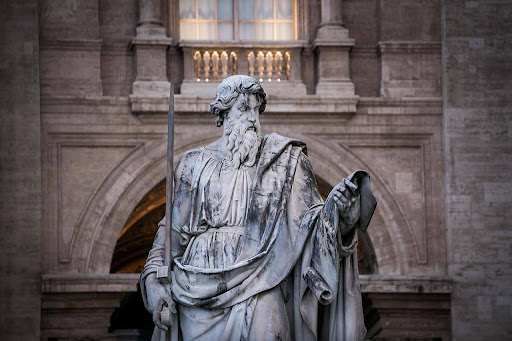
The Roman Empire was a machine of dominance. It controlled not just land and resources but also minds and beliefs. And yet, amid this system, one man emerged with a message so disruptive and countercultural that it threatened the foundations of imperial rule: Paul the Pharisee.
Paul’s message was about faith and justice. It was about reimagining a world where the last would be the first, power would serve the weak, and love—not military might—would define authority. His letters were not theological abstracts but blueprints for dismantling oppression and reconstructing a just society.
The Kingdom That Undermined Empire
Example of Page3. “PREVIOUS BOOKS”, but he refused to be its subject. He did not accept its claims of divine authority, nor did he align himself with its politics of exploitation. Instead, he preached allegiance to a different king: Jesus.
Declaring Jesus as Lord meant rejecting Caesar as the ultimate power. It meant envisioning a new kind of kingdom in which justice wasn’t dictated by emperors’ whims but by every person’s inherent worth.
When Paul wrote in Galatians 3:28 that there is “neither Jew nor Greek, slave nor free, male nor female,” he wasn’t just making a theological statement. He was attacking the very structures that upheld oppression. In a society where one’s birth determined one’s value, Paul declared a new reality: every human being had equal standing before God.
The Economics of Justice
Paul’s vision of justice disrupted the economic systems of his time. In his letters, he urged communities to practice radical generosity, pooling resources to support the poor and vulnerable.
In 2 Corinthians 8:9, he highlights an economic ethic based on equity rather than exploitation. He urges the wealthy to share with those in need, advocating for a balance where no one has too much and no one has too little. This was a direct challenge to the economic hierarchy of Rome, where the elite prospered at the expense of the masses.
His letter to Philemon offers an even more provocative example. Here, Paul addresses a slave owner, urging him to treat his enslaved worker, Onesimus, “no longer as a slave, but as a dear brother” (Philemon 1:16). Paul’s words cracked the foundation of an entire system.
Paul wanted to restructure human relationships, where wealth, power, and privilege were no longer tools of oppression but instruments of justice.
Justice That Outlives Empire
Rome fell. Its emperors faded into history. But Paul’s message outlived them all.
His radical vision continues to challenge the world today. The inequalities he opposed, such as economic disparity, racial division, and gender oppression, persist in modern forms. The systems of authoritarian power, wealth hoarding, and social exclusion still shape our societies.
If Paul were writing today, his message would not be confined to the walls of a church. It would be heard in the streets, among the poor, in courtrooms, and in protest movements. His letters would be read as manifestos for systemic change, not just spiritual contemplation.
Living Paul’s Vision:
To follow Paul’s blueprint for justice means to:
- Challenge oppressive systems – Whether in politics, economics, or social structures, we must reject power that thrives on the suffering of others.
- Live counterculturally – Justice does not come from passive agreement; it comes from bold action. Paul’s life was defined by risk-taking for the sake of others.
- Embody radical generosity – True justice requires us to break cycles of hoarding and inequity.
- Refuse to be silent – Paul wrote, spoke, and acted fearlessly. His letters were meant to stir action, not just thought. If we claim to honor his message, we must also commit to using our voices against injustice.
Paul was not just a theologian—he was a revolutionary. His vision of justice remains as relevant today as it was two thousand years ago.
The question is whether we will dare to live it.
Read Paul the Pharisee: A Vision Beyond the Violence of Civilization by John Dominic Crossan and explore the historical Paul through the fourth matrix of human evolution.


