 WhatsApp Us Now
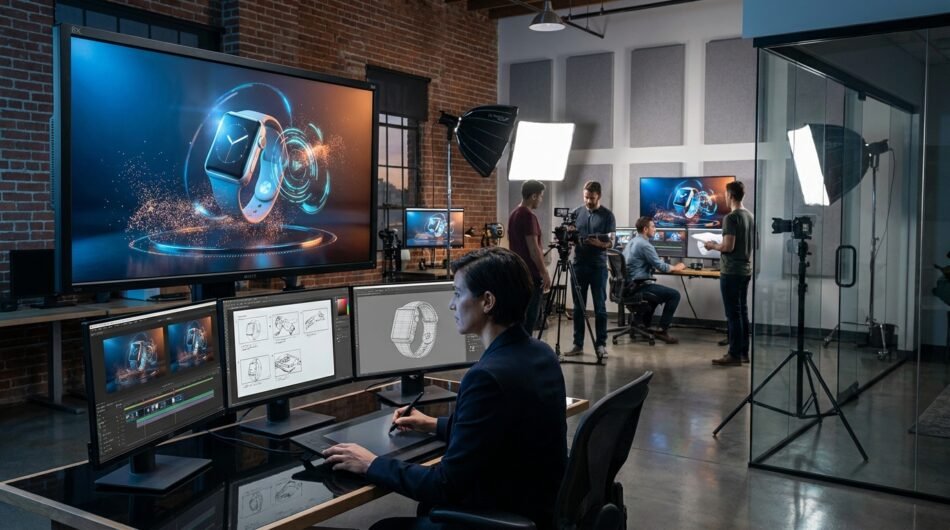
Launching a new product or introducing a major brand campaign requires more than simply announcing what is new. Businesses need to communicate the idea, explain the value, create interest, and give audiences a reason to pay attention.
Video can bring these elements together through visuals, storytelling, sound, animation, product demonstrations, and branded creative direction. For this reason, marketing video production has become an important part of many product launches and brand campaigns. Well-planned videos can explain products clearly while also helping a campaign maintain a consistent visual identity across different marketing channels.
Why Video Matters During a Product Launch
A product launch often involves introducing something that an audience has never seen before. Written descriptions can explain features, but video can demonstrate how a product looks, works, and fits into real-world situations.
A launch video can show:
- The product’s main features
- How the product works
- Problems the product is designed to solve
- Key benefits
- Different use cases
- The story behind the product
- The brand’s personality
A strong product video should focus on what the audience needs to understand rather than simply presenting attractive visuals. Product videos can be especially useful when a product requires demonstration or when its benefits are easier to communicate visually.
What Is Marketing Video Production?
Marketing video production is the process of developing video content specifically to support a marketing objective. Depending on the campaign, this may involve concept development, scripting, storyboarding, filming, animation, editing, sound design, motion graphics, and final delivery.
The production process normally begins with a clear objective. A company may want to introduce a new product, explain a service, increase awareness, communicate a brand story, or support a particular campaign.
Once the objective is established, the creative direction can be developed around the intended audience and distribution channels.
Product Launch Videos vs. Brand Campaign Videos
Although both types of content use video, their purposes can be different.
Product Launch Videos
A product launch video usually focuses on a specific product or service. It may introduce the product, demonstrate its features, or explain why it was created.
The content often needs to answer practical questions such as:
- What is the product?
- What does it do?
- Who is it for?
- What makes it different?
- How does it work?
- Where can customers learn more?
Brand Campaign Videos
A brand campaign may have a broader objective. Instead of focusing entirely on one product, it can communicate the company’s identity, values, story, personality, or relationship with its audience.
Brand campaigns can include:
- Brand films
- Social media campaigns
- Promotional videos
- Corporate storytelling
- Lifestyle content
- Customer-focused stories
- Animated campaign videos
The right format depends on the campaign’s purpose and audience.
Starting With a Clear Creative Concept
A successful video usually begins with a clear idea rather than expensive production equipment.
Before filming or animation begins, the creative team should understand what the audience should remember after watching the video.
A useful creative concept can define:
- The main message – What should the audience understand?
- The audience – Who is the video intended for?
- The tone – Should the video feel energetic, premium, emotional, technical, or informative?
- The visual direction – What type of imagery will support the message?
- The desired response – What should viewers do after watching?
This planning stage can prevent the video from becoming visually impressive but strategically unclear. HubSpot similarly emphasizes planning and collaboration as important parts of producing effective marketing videos.
Turning Product Features Into a Story
Simply listing product features may not be enough to hold an audience’s attention.
A stronger approach is to connect features with practical situations. Instead of only showing what a product contains, the video can demonstrate how those features help solve a problem or improve an experience.
For example, a technology product could be shown being used in a realistic workplace rather than presented only against a studio background.
This storytelling approach gives viewers context and makes the product easier to understand.
The Role of 3D Animation and Product Visualization
Not every product can be filmed easily. Some products may still be in development, too large to transport, technically complex, or difficult to demonstrate using conventional photography. In these situations, 3D animation and digital visualization can provide greater creative flexibility.
A 3D product video can show:
- Internal components
- Product mechanisms
- Different materials
- Product configurations
- Exploded views
- Technical processes
- Environments that would be difficult to film
For brands looking to create detailed product visuals, Hatch Studios provides 3D animation and motion graphics services that can be used to present products and ideas in engaging visual formats.
Creating Videos for Different Marketing Channels
One launch video does not necessarily need to have only one final version.
The original production can potentially be adapted into different formats for different platforms. For example, a campaign may require:
- A longer website video
- Short social media clips
- Vertical videos
- Product demonstration segments
- Paid advertising versions
- Behind-the-scenes content
- Short teaser videos
Planning these requirements before production can make it easier to capture footage and create assets that can be reused throughout the campaign.
Current video marketing research also highlights the importance of producing content for multiple platforms and formats rather than relying on a single type of video.
Maintaining Brand Consistency
A product launch may involve numerous pieces of content across websites, social media, advertising, email, presentations, and other channels.
Keeping the visual identity consistent can help connect these materials.
Elements that can contribute to consistency include:
- Typography
- Color palette
- Animation style
- Voice and narration
- Music
- Logo placement
- Graphic elements
- Photography style
- Editing approach
Consistency does not mean every video needs to look identical. Instead, the content should feel connected to the same brand identity.
Using Video Before the Product Launch
Video does not have to wait until the product is officially available.
Teaser content can introduce an upcoming product or campaign without revealing everything at once. A short video might show a detail, process, silhouette, feature, or carefully selected glimpse of the final product.
This type of content can create curiosity while giving the audience a reason to watch future campaign material.
Launch content can then reveal more information as the release date approaches.
Using Video During the Launch
The main launch video can become a central piece of campaign content.
It may appear on a landing page, social media platforms, presentations, digital advertising, or other marketing channels.
The content should make the main message easy to understand without requiring viewers to watch multiple times. Strong visual storytelling, clear narration, demonstrations, and purposeful editing can help keep the video focused.
The launch video should also match the campaign’s overall message so that the audience receives a consistent experience across different channels.
Extending the Campaign After Launch
Video content can continue to support a campaign after the launch date.
For example, the original production can be followed by:
- Product tutorials
- Customer stories
- Feature demonstrations
- Frequently asked question videos
- Behind-the-scenes content
- Short social clips
- Educational videos
- Product comparisons
This creates additional opportunities to communicate with audiences without relying entirely on the original launch announcement.
How the Production Process Works
Professional video production generally involves several stages.
Pre-Production
The first stage includes research, creative development, scripting, storyboarding, scheduling, location planning, and production preparation.
This is where the campaign’s creative direction is established.
Production
The production stage involves capturing the visual material. Depending on the project, this could include live-action filming, product photography, interviews, studio work, animation, or 3D rendering.
Post-Production
After the footage or visual assets have been created, editors assemble the video. Motion graphics, sound design, music, color correction, voice-over, animation, and other elements can then be incorporated.
Delivery and Distribution
The finished content is exported into the formats required for different platforms. Versions may be created for websites, social media, advertising, presentations, or other campaign placements.
Measuring the Performance of a Marketing Video
Creating a polished video is only one part of the campaign.
Performance should also be considered after publication. Depending on the objective, useful measurements may include:
- Views
- Watch time
- Completion rate
- Engagement
- Click-through rate
- Website traffic
- Leads
- Conversions
- Social interactions
The most relevant measurement depends on the purpose of the video. A brand awareness video and a direct-response product advertisement may require different performance indicators.
Common Mistakes to Avoid
Some problems can reduce the effectiveness of an otherwise well-produced video.
Trying to Say Too Much
A video with too many messages can become difficult to follow. One central idea is often easier for viewers to understand and remember.
Focusing Only on Visuals
Beautiful cinematography or animation cannot compensate for unclear messaging. The visual style should support the story rather than replace it.
Ignoring the Audience
A video should reflect the interests, needs, and expectations of its intended audience. What works for a technical B2B audience may not work for a consumer lifestyle campaign.
Forgetting Distribution
A video should be planned with its final platforms in mind. Aspect ratio, length, captions, sound, and framing may need to change depending on where the content will appear.
Choosing the Right Production Approach
Different campaigns require different production methods.
A small product launch may only require a short studio video and a few social clips. A major brand campaign may involve live-action filming, actors, locations, animation, visual effects, 3D production, and multiple versions.
The most suitable approach depends on:
- Campaign objectives
- Target audience
- Product complexity
- Distribution channels
- Available budget
- Timeline
- Required visual style
The goal should be to match the production approach to the communication challenge rather than simply choosing the most expensive option.
Final Thoughts
Marketing videos can play an important role in both product launches and broader brand campaigns. They can demonstrate products, explain complicated ideas, communicate brand personality, and provide adaptable content for multiple marketing channels.
Effective marketing video production starts with a clear objective and audience. From concept development and scripting to filming, animation, editing, and distribution, every stage should contribute to the same central message.
When creative storytelling is combined with thoughtful planning, video can become more than promotional content. It can become a useful communication tool that helps audiences understand a product and connect with the brand behind it.


